I stood at the glass door, watching.

Beyond the stone deck
and the birdhouse

two delicate blue eggs
lay nestled atop carefully arranged
blades of grass.

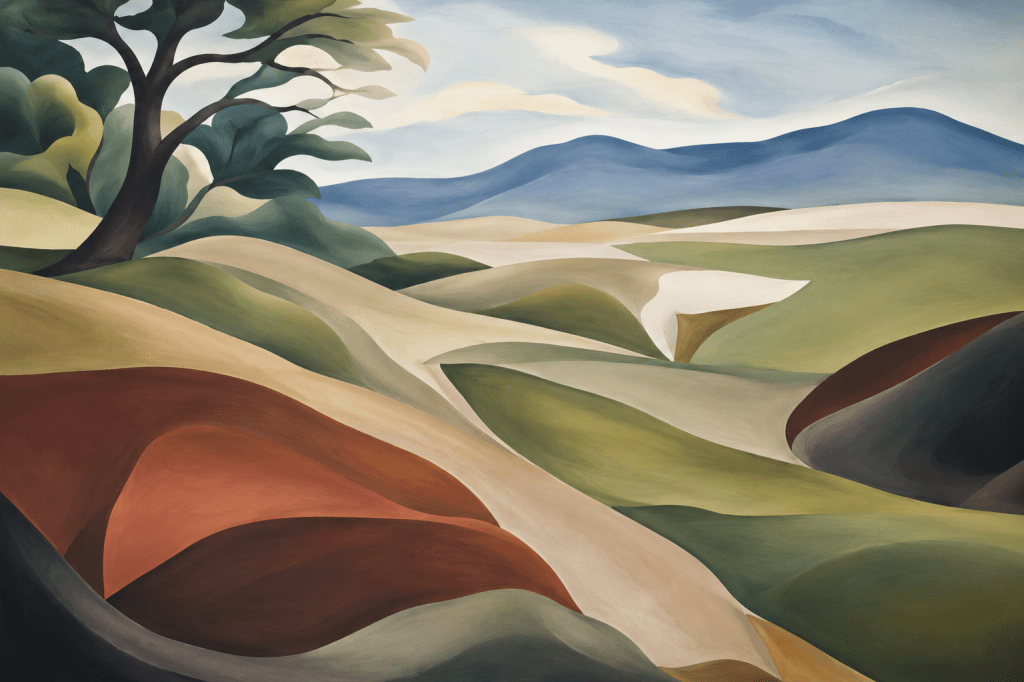
The field beyond the fence
was bright with spring.

A tree named Walter
lifted its branches into the morning.

Every tree within daily view
should have a name.

A dog bred to bear burdens
wandered lazily through the grass,

distracted by an over-dramatic cardinal

or maybe the way
the breeze had begun to smell like
spring.

The coffee in my mug tasted faintly
of hazelnut and milk.

Scrambled eggs cooled on a plate.

Cologne drifted through the kitchen.

The juice from a red grape
slid down the back of my throat.

The field was busy with singing.

Not birds alone.

Something larger.

Something hidden.

The busyness of living
moved through the grass
like wind moving through
tousled hair
or waves crossing the sea.

At the time,
I thought the field would always be there.
The eggs.
The cardinal.
Walter.
The dog.
The glass door.
The man standing somewhere behind me.

Months later
he disappeared.

Then the seasons continued
one second
one hour
one page
at a time.

Summer crossed the field.
Autumn followed.
Winter bent the grass flat.

One afternoon

I found myself standing
on the opposite side of the same field.

Far beyond the fence.

Far beyond the glass door.

Far beyond the woman
who used to stand in that kitchen
and watch.

The singing was gone.

The grass was gone.

The hill itself
seemed smaller.

Yellow machines moved through the earth

lifting,
turning,
leveling.

Steel teeth entered the ground.

Mud spread where pasture had been.

The field I remembered
was being dismantled
one scoop at a time.

A subdivision would stand there soon.

Roads.
Mailboxes.
Driveways.

Children who would never know
there had once been a field.

I watched for a long time.

Long enough for the machines
to continue their sweaty work.

Long enough to notice that
Walter was still standing.

Long enough to realize
that I was no longer looking
at the same landscape.

Or from the same place.
Or through the same eyes.

The field stretched between
what had happened

and what remained.

I stood,

watching the earth being turned over,
feeling the soil being turned over,
tasting the smoke and smothering

just a little.

"What if I take one step backward?"
I wondered.

"One more,"
I whispered.

Artifacts churned
deep and then deeper
burying and then
buried.

And I drove away
waving to Walter
in the rearview mirror.

— Iris Lennox

