The first time Jack asked why I never had children,
we were sitting by the front window of a little coffee shop where the floorboards bowed slightly toward the door and every time someone came in, a brass bell interrupted every conversation.
It was late November.
The kind of afternoon when the sky can’t decide whether to snow or watch the birds begin their migration for warmer states.
I remember because my coat was still on and my tea had gone untouched,
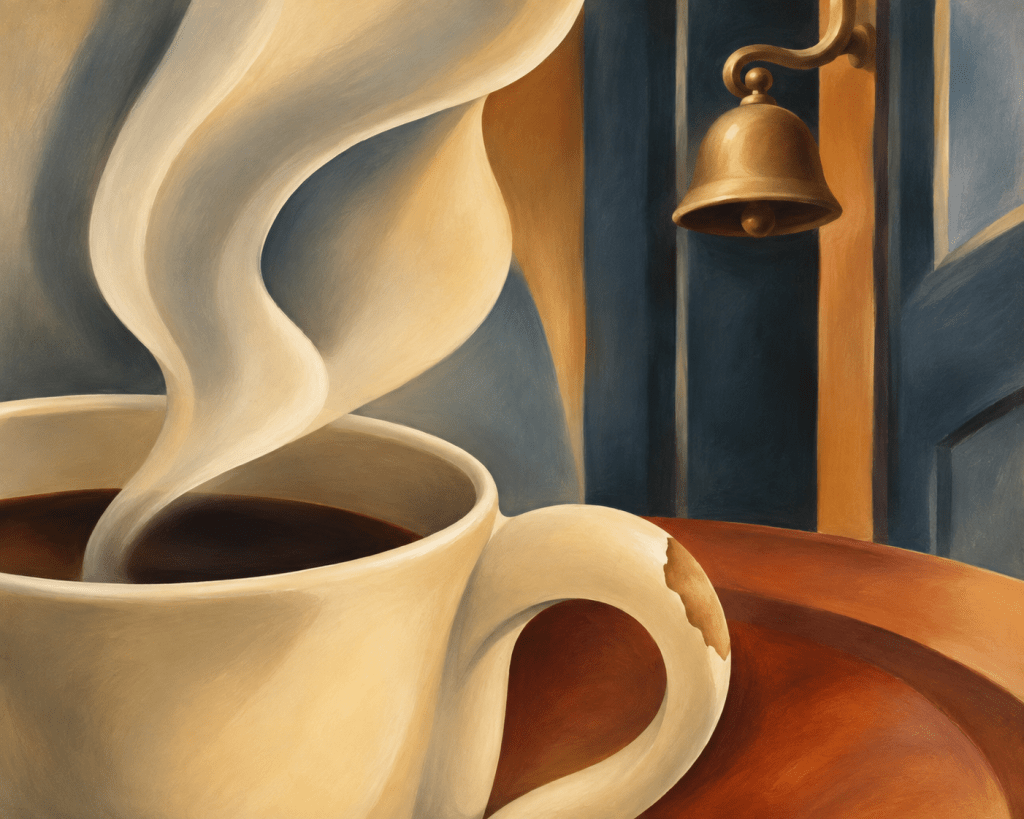
steam lifting in thin pale ribbons between us,
curling past his hands.
His cup was black.
Mine was chipped cream,
a small crescent missing from the handle where someone before me had held on too tightly or not tightly enough.
Life is that way, isn’t it?
There is more than one way to break a thing.
Outside,
a young mother pushed a stroller past the glass,
one mitten in her teeth, one shoelace loose, her little boy turned backward so he could watch something he’d already passed on the pavement but wasn’t done admiring.
Probably a bug.
Little boys tend to linger over bugs.
Then Jack asked,
Why haven’t you had children?
Not suddenly.
Not heavily.
As though he were asking whether I preferred blue to red,
or hardcovers to paperbacks,
or why I always chose the corner seat facing the door.
I smiled first.
People do that when the body is buying time.
I wrapped both hands around the mug,
felt warmth press into the center of my palms,
and said what had become second nature by then—
The Lord just hasn’t given us children. We tried for a long time. It never happened.
Jack lowered his eyes for just a moment,
thumb brushing against the folded edge of his sleeve,
as though what I’d handed him required care.
Then he looked up and smiled through two pauses and a beat.
You would have made a wonderful mother.
And something in me, quiet for years, sat up.
Or maybe tripped?
A hinge.
A draft.
A room I thought I'd already closed.
After that,
life kept happening.
Conversations that began with nothing—
music,
students,
road construction,
the shape of clouds—
and before I understood how far we’d traveled,
the man who first asked why I’d never had children
was speaking as though he already knew what ours might look like.
Months later,
there were little white pills lined up beside my bathroom sink,
half a cracker,
a glass of water,
the morning moving slowly through the blinds.
And still—
Jack spoke of blue eyes.
A crooked smile.
Long fingers.
A laugh that would sound like mine.
And somewhere between longing and nausea from the pills meant to keep her away,
our daughter had a name.
Clara.
I said it once alone in my kitchen,
bare feet on tile,
the dishwasher humming,
afternoon light moving across the counter so slowly it looked like a memory.
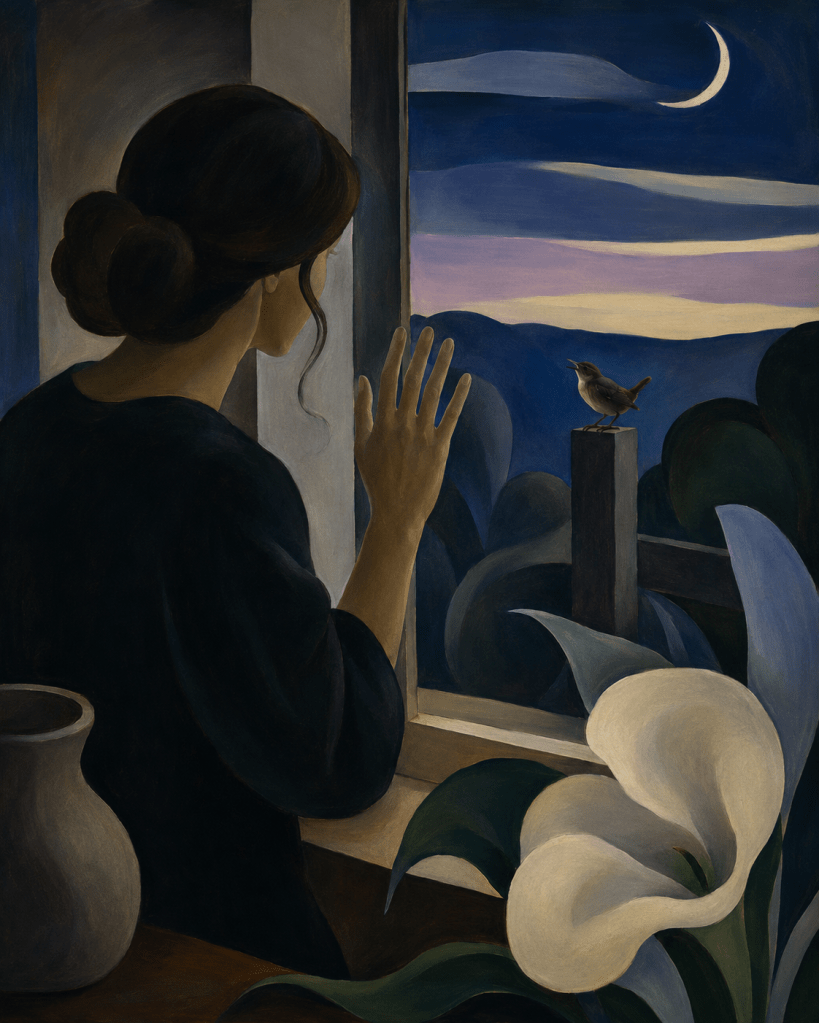
I stood at the glass door, watching.

Beyond the stone deck
and the birdhouse

two delicate blue eggs
lay nestled atop carefully arranged
blades of grass.

The field beyond the fence
was bright with spring.

A tree named Walter
lifted its branches into the morning.

Every tree within daily view
should have a name.

A dog bred to bear burdens
wandered lazily through the grass,

distracted by an over-dramatic cardinal

or maybe the way
the breeze had begun to smell like
spring.

The coffee in my mug tasted faintly
of hazelnut and milk.

Scrambled eggs cooled on a plate.

Cologne drifted through the kitchen.

The juice from a red grape
slid down the back of my throat.

The field was busy with singing.

Not birds alone.

Something larger.

Something hidden.

The busyness of living
moved through the grass
like wind moving through
tousled hair
or waves crossing the sea.

At the time,
I thought the field would always be there.
The eggs.
The cardinal.
Walter.
The dog.
The glass door.
The man standing somewhere behind me.

Months later
he disappeared.

Then the seasons continued
one second
one hour
one page
at a time.

Summer crossed the field.
Autumn followed.
Winter bent the grass flat.

One afternoon

I found myself standing
on the opposite side of the same field.

Far beyond the fence.

Far beyond the glass door.

Far beyond the woman
who used to stand in that kitchen
and watch.

The singing was gone.

The grass was gone.

The hill itself
seemed smaller.

Yellow machines moved through the earth

lifting,
turning,
leveling.

Steel teeth entered the ground.

Mud spread where pasture had been.

The field I remembered
was being dismantled
one scoop at a time.

A subdivision would stand there soon.

Roads.
Mailboxes.
Driveways.

Children who would never know
there had once been a field.

I watched for a long time.

Long enough for the machines
to continue their sweaty work.

Long enough to notice that
Walter was still standing.

Long enough to realize
that I was no longer looking
at the same landscape.

Or from the same place.
Or through the same eyes.

The field stretched between
what had happened

and what remained.

I stood,

watching the earth being turned over,
feeling the soil being turned over,
tasting the smoke and smothering

just a little.

"What if I take one step backward?"
I wondered.

"One more,"
I whispered.

Artifacts churned
deep and then deeper
burying and then
buried.

And I drove away
waving to Walter
in the rearview mirror.

— Iris Lennox
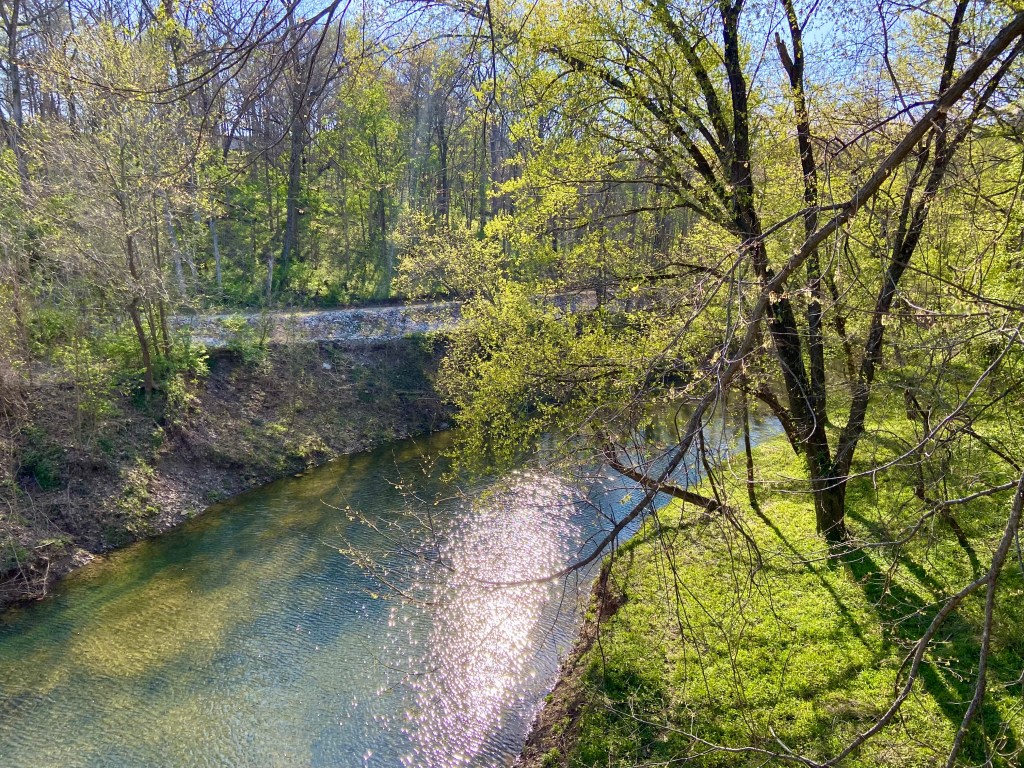
Inspired by Hamilton Creek in Wildwood, Missouri, “Hamilton Creek Bridge” is a contemporary nature poem by Iris Lennox about clear water, limestone, and the quiet forces that shape the landscape over time.
I stop where cedar shadows fall across the weathered rail, and lean above the narrow draw where water threads the shale.
It finds a seam the color of old bone beneath the moss, then slips between the sleeping stones without a splash or pause.
The creek is scarcely wide enough to trouble any map. A branch lets go. A single leaf drops through the sunlight’s trap.
It circles once in amber light, then catches in a bend where grains of sand, as bright as salt, begin their patient wend.
Rain gathers breath from oak and fern before it finds this place. It turns faintly acid as it falls against the limestone face.
Not all at once. One crystal first. One edge too small to see. A hollow deepens grain by grain beneath the sycamore tree.
A swallow skims. The bridge holds still. The afternoon grows warm. Below, the water keeps its hand around the selfsame form.
I watch it pass beneath my feet with neither haste nor sound, wearing through the living rock the way roots enter ground.
Once home to more than two thousand people, Times Beach, Missouri, is now part of Route 66 State Park, its former streets winding through grass, wetlands, and trees.
Grass grows high along the path,
seed heads bending in the July heat.
Cottonwoods lift their silver leaves
and turn them over in the wind.

Somewhere beyond the trees,
the Meramec moves brown and slow.
Cicadas start and stop.
A turkey disappears into the sumac,
leaving one branch shaking behind her.

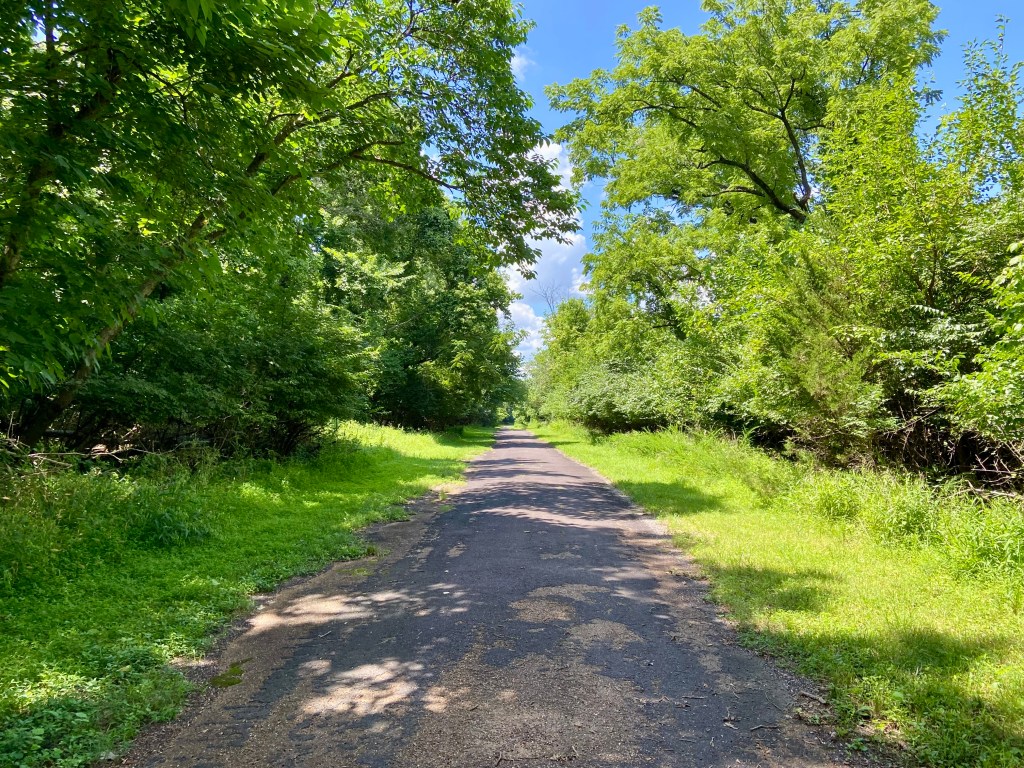
I walk where the path bends gently,
following its long, deliberate curve
through Queen Anne's lace and clover.

For years, I've assumed the curve was shaped by the land.

I think the trees have drawn it there,
that roots and rain have persuaded the path
to turn a little to the left.

But the curve was here before the trees.

This was a street.

The slightly hidden marsh beside me
had an address.
There were mailboxes here,
porch steps, garden hoses,
bicycles dropped in yards at dinner time.

A woman shakes a white sheet in the sun.
A screen door strikes its frame.
Someone calls a child home
before dusk makes the river invisible.

I hear no names being called.

Still, I stand in the middle of the old road
while cicadas stitch their noise through the trees,
and for a moment the grass seems crowded.

They sprayed the roads with oil
to keep the dust from rising.

The streets were unpaved then.
Cars sent the dry earth climbing
into open windows and onto porches,
over laundry, into kitchens,
into the mouths of children playing outside.

So they paid a man to settle it.

He came with a truck
and spread oil over the roads,
darkening the dust,
pressing it back into the earth.

Such a small sentence:

to keep the dust down.

To keep it from settling on windowsills,
on supper plates,
on the faded blue jeans drying in the sun.

The road kept what it was given,
accustomed to service.

Eleven summers pass.
Children ride bicycles over it.
Rain darkens it.
The sun warms it.
Women open their windows in April.

Then the river rises.

It enters the houses without knocking,
climbs the stairs,
lifts chairs from kitchen floors,
pulls photographs from drawers.

And when the water folds back
into its comfortable rhythm,
it leaves the secret in the mud.

I walk here now
with sunlight brushing across my shoulders.

No houses.
No mailboxes.
No white sheets rising in the wind.

Only the wetland,
the mound,
the old roads curving through the trees.

They burned the poisoned earth eventually,
two hundred and sixty-five thousand tons of it,
and buried what remained beneath the grass.

I've walked the hill where fragments of a town
turn slowly in the earth—

a blue cup without its handle,
one white button,
the rusted hinge of a closet door,
a marble lost beneath a child's bed,
the broken mouth of a jar
that once held peaches.

Things someone touched every day
without knowing there would come a day
when no one touched them again.

Now coneflowers open in the sun.
Frogs call from the water.
A red-winged blackbird bends a reed
almost to the ground.

I have walked here for three years
without knowing what was under my feet.

The streets, trails.
The mound, a hill.

I watched deer step out at dusk
where someone's back door used to be.

Today I stop beside the tall grass.

The wind passes over it
and every green blade leans
in the same direction.

Then rises.

Then leans again.

As if the earth is trying
to remember a name.

—Iris Lennox


If you'd like to know more about the town beneath these trails, I wrote about the strange history of Times Beach and its second life as Route 66 State Park here.
I’ve taken a short break from writing poetry. But I’m back now. I’ve been in a liminal space between the exhale of one season and the first inhale of the next, letting the light change as the season does, too. That’s what this poem is about.
Behind a heavy red curtain, I press one finger into the velvet where someone has patched it with black thread.
How many performances has this curtain seen? Who stood here, beneath the work light, needle between two fingers, pulling the torn edges toward each other?
Torn edges are a sign of some previous life on the tips of leaves and petals, and on curtains.
The repair is sturdy. Still, dust forms in a shock of light where the two halves almost meet.
A man dressed in black sweeps the stage and leaves one silver staple near the leg of a chair. Maybe he missed it. Maybe every room holds on to something from the people who come and go.
My name rolls around in another person’s mouth. For a moment, it belongs more to him than it does to me. My name has entered the room before I have.
A woman coughs. A program folds. Someone unwraps a mint with no care in the world. My name feels bigger than the curtain.
For now, I move stage left and stand just beyond the unforgiving patch, where I can see the light without having to enter it.
Is the light waiting for me? Or am I waiting for the light?
Later, in a parking lot beside the park, I turn the key halfway and let the radio glow.
Near the empty picnic tables, a bicycle with training wheels rolls across three parking spaces before catching itself against a curb.
Where is the child who left it upright? Does the bicycle know it has been left, or does it believe this is what bicycles do— wait beside trees until someone returns to provide the necessary weight?
The clock changes.
A dog pulls its owner toward the river.
The afternoon light stretches across the grass, climbs the legs of the picnic tables, and settles briefly on the bicycle at the curb.
By the time it reaches my window, the gold has thinned.
No one arrives.
I remain long enough for the radio to repeat a song, for the bicycle to become part of the park.
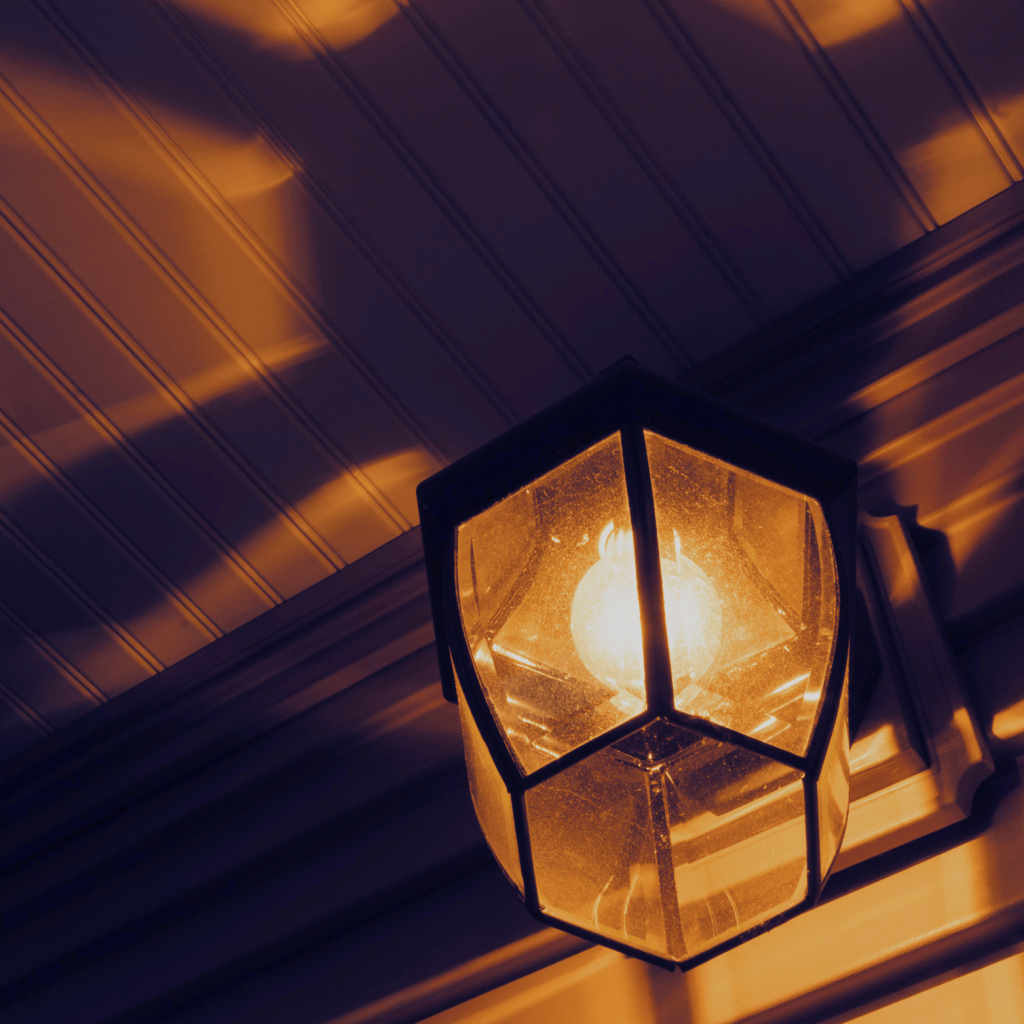
A porch light burns above a door dented by knuckles and impatient shoulders.
I lean close with one hand in my hair and rehearse the sentence that sounded better on paper.
How many people have stood here wondering which version of themselves the room will greet?
I climb two steps and count them again from the top.
Inside, a floorboard answers a bare heel. The welcome mat rests crooked against the threshold. Someone is there. Someone has crossed the room.
I lift my hand.
For one second before the house knows I have come, before the door opens and gives the moment another name,