Tag: literary poetry

  • Borrowed Earth


    At the bathroom mirror
    of a rented casita
    somewhere in Flagstaff,
    I discover
    half the desert
    came home with me.

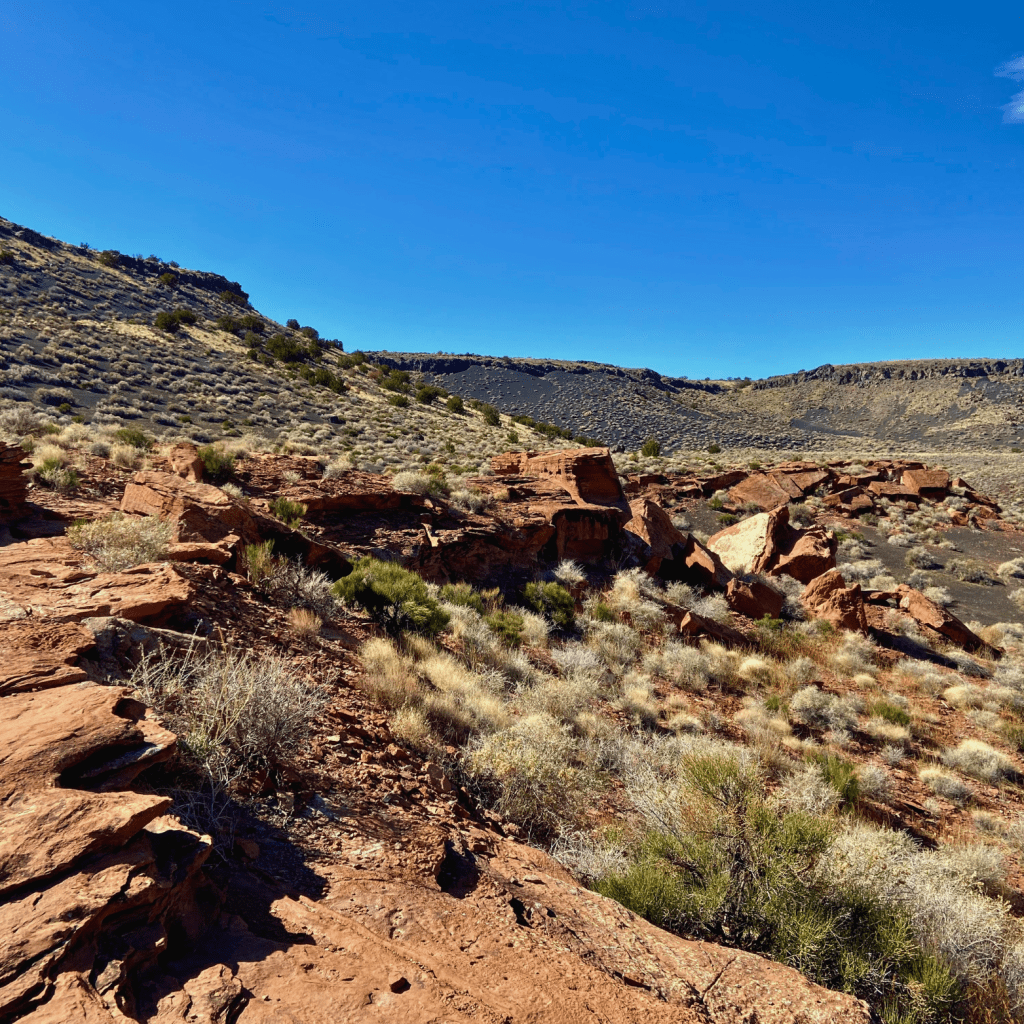
    Red dust
    gathers along my collar,
    settles into the seams
    of my brown canvas backpack,
    which used to be cream-colored,
    and fills the tiny crease
    above my sock line
    where the trail
    outsmarted me.

    When I untie my boots,
    sand pours
    onto ceramic tile
    in two soft cones.

    The room suddenly feels
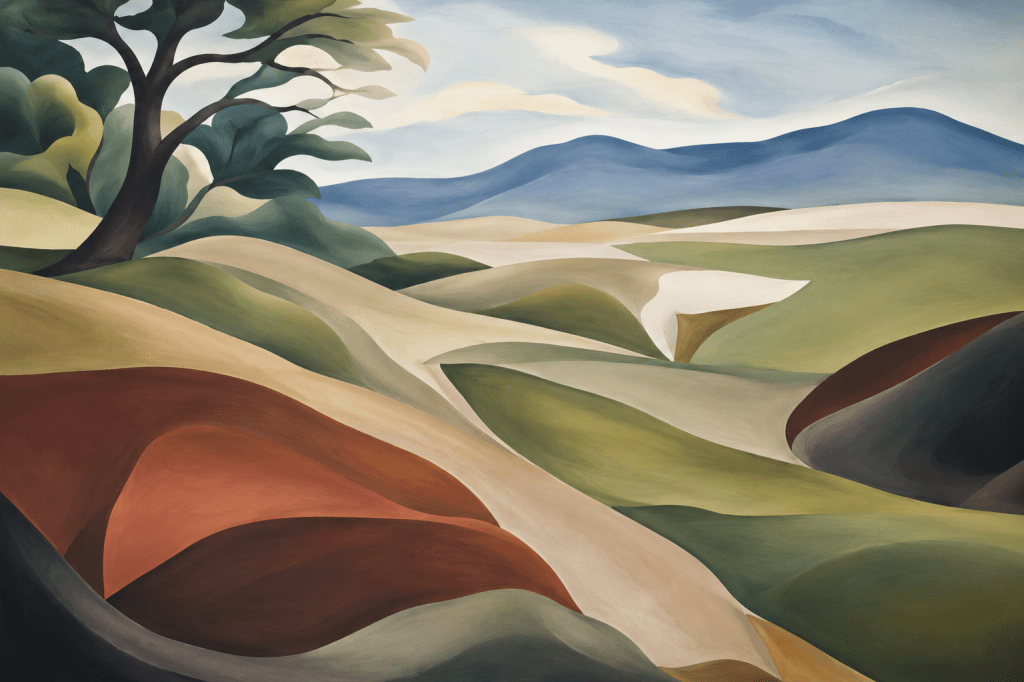
    like a painting,
    “Composition of Woman
    and Borrowed Earth.”

    Juniper pollen
    clings to the cuffs
    of my sleeves.

    There’s grit
    beneath my fingernails,
    iron-rich and stubborn,
    the color of old brick
    after rain.

    OPI might name it
    Jazz Hands In the Desert.

    I touch my scalp
    and feel dust there too,
    worked deep into my hair
    through wind,
    sweat,
    sunlight,
    and twelve miles
    of canyon trail.

    Good.

    Today earned its right
    to linger a little longer.

    Some people
    spend all day
    trying not to stain themselves.

    I understand the instinct.

    There are white couches.
    Important emails.
    Polished shoes.
    Entire industries
    built around remaining untouched.

    But somewhere between
    mile four
    and the moment
    I sat directly on a warm rock
    without checking
    for dust,
    my body remembered
    something older
    than neatness.

    Children know it first.

    Mud puddles.
    Finger paint.
    Grass stains.

    At one point
    I crouched low
    to photograph
    a cluster of desert marigolds
    forcing themselves
    through fractured stone.

    When I stood again,
    one palm carried sap,
    and a line of sweat
    ran slowly
    from my neck
    down the center
    of my spine.

    Perfect.

    By late afternoon,
    my shoulders glowed pink,
    my lips tasted faintly
    of salt and sunscreen,
    and every object
    inside my backpack
    had acquired
    the thin orange film
    of Arizona.

    Even the map.

    Especially the map.

    I ate trail mix
    with dusty fingers
    and decided
    the extra crunch
    only improved it.

    Somewhere near the ridge,
    a woman passing me said,
    “Beautiful day.”

    Then both of us
    kept walking
    without needing
    to improve
    upon the sentence.

    There's nothing important
    to say
    out there.
    Beauty speaks
    and we simply listen.

    And feel.
    And I'm convinced—

    The body experiences
    some landscapes
    on a cellular level.

    Scientists eventually
    gave the phenomenon
    a long Latin name
    after discovering
    certain microorganisms
    in the soil
    can calm the nervous system.

    Mycobacterium vaccae.
    But I think we should call it
    thereasonpeoplecry
    when kneeling in the dirt.

    Meanwhile,
    every child
    who ever came home
    with muddy shoes
    was already conducting
    the experiment.

    Back at the casita,
    the sink runs briefly
    orange-brown
    when I wash my hands.

    Dust circles the drain.

    I pull one sock
    inside out
    and enough sand falls free
    to start a small dune
    beside the bathmat.

    I hope my Airbnb rating
    doesn't take a hit.

    The shower waits.

    Still,
    I linger a moment longer
    in the mirror,
    sun-tired,
    windblown,
    grinning slightly
    at the woman
    standing there
    with desert
    still gathered
    in every visible place.

    Tonight,
    Arizona leaves slowly.

    One grain at a time.

    —Iris Lennox
  • Wars and Rumors


    There must have been mornings
    in 1351
    as the Black Death
    draped across landscapes and
    eyelids
    like a thick shroud

    when a mother
    opened her shutters
    to another cart,

    another bell,

    another street
    that smelled of smoke
    and vinegar
    and thought,

    surely

    this is how
    the world ends.

    Men standing
    on the beaches
    of Normandy
    in 1944,

    sand grinding
    between their teeth,

    salt on their lips,

    seawater
    inside their boots,

    diesel, smoke,
    and cordite
    marrying the wind,

    helmets knocking
    against trembling shoulders,

    watching boys
    become bodies
    before breakfast,

    must have wondered
    whether heaven
    had finally
    grown tired of us all.

    And in 1945
    somewhere
    beneath the ash
    of the
    atomic bombings of
    Hiroshima and Nagasaki,

    where shadows
    stayed behind
    long after people had gone,

    someone looked upward
    through a sky
    that probably looked more like
    a concrete dome

    and thought,

    this time—

    surely.

    Surely.

    And then,
    one day—

    John

    an old exile
    on an island
    looked up

    and saw

    a lamb

    standing

    as though slain.

    He saw seals
    split open.

    He heard trumpets.

    Watched stars
    fall like figs
    from a shaken tree
    and oceans darken.

    Mountains moved.

    Creatures
    with eyes
    pressed into their feathers
    like dew
    on spring grass,
    seeing forward,
    backward,
    inward,
    through things
    men call mysteries—

    And still—

    this morning,
    2026

    a woman
    in Missouri

    stands barefoot
    at her kitchen sink,
    watching squirrels
    and robins
    tumble through
    grass and mud,

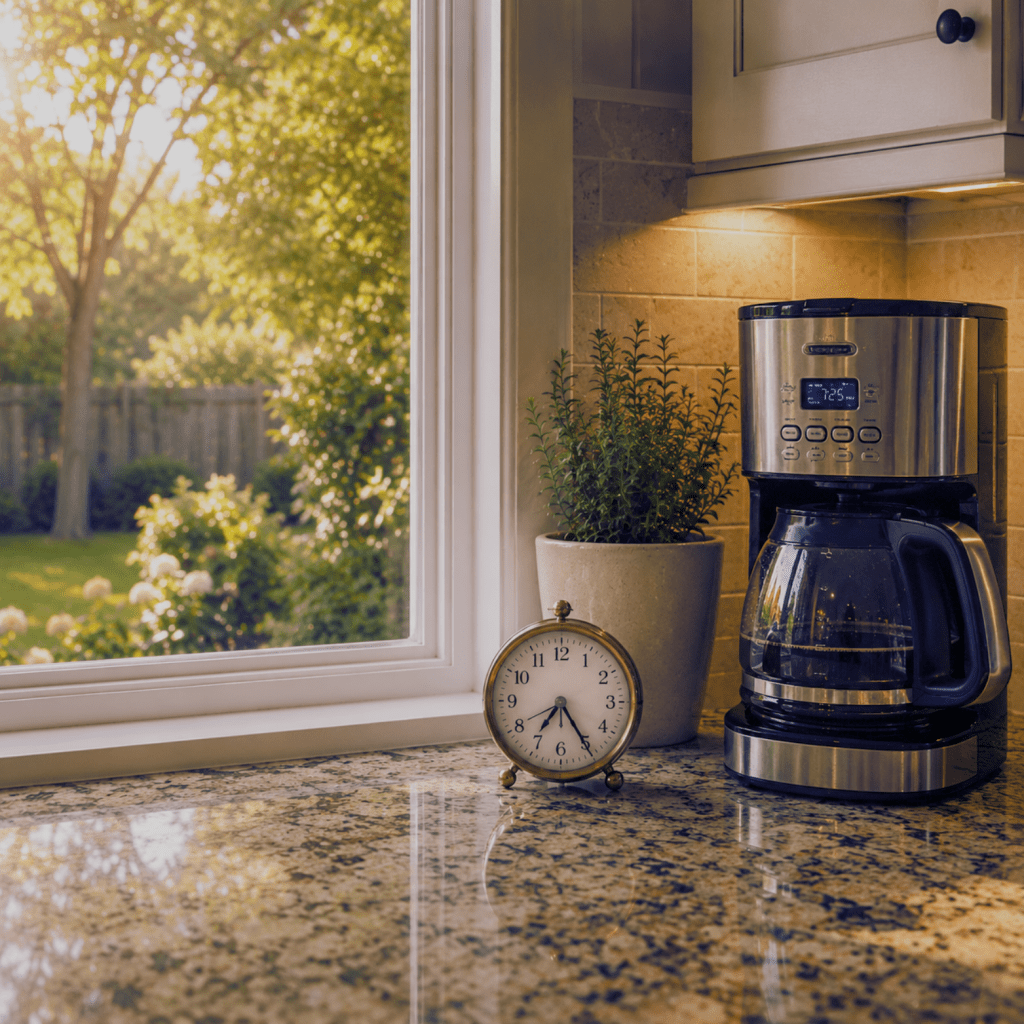
    the coffee pot gurgles
    and sighs,

    sunlight,
    with a long list of to-dos
    does
    what it always has
    through green leaves,

    a sparrow
    argues with a cardinal
    over spilt seed.

    What is inside this moment?
    The past?
    The future?
    Only now?

    Yes.

    The moment of calm.
    After and
    before
    the storm.

    —Iris Lennox
  • Builders and Destroyers


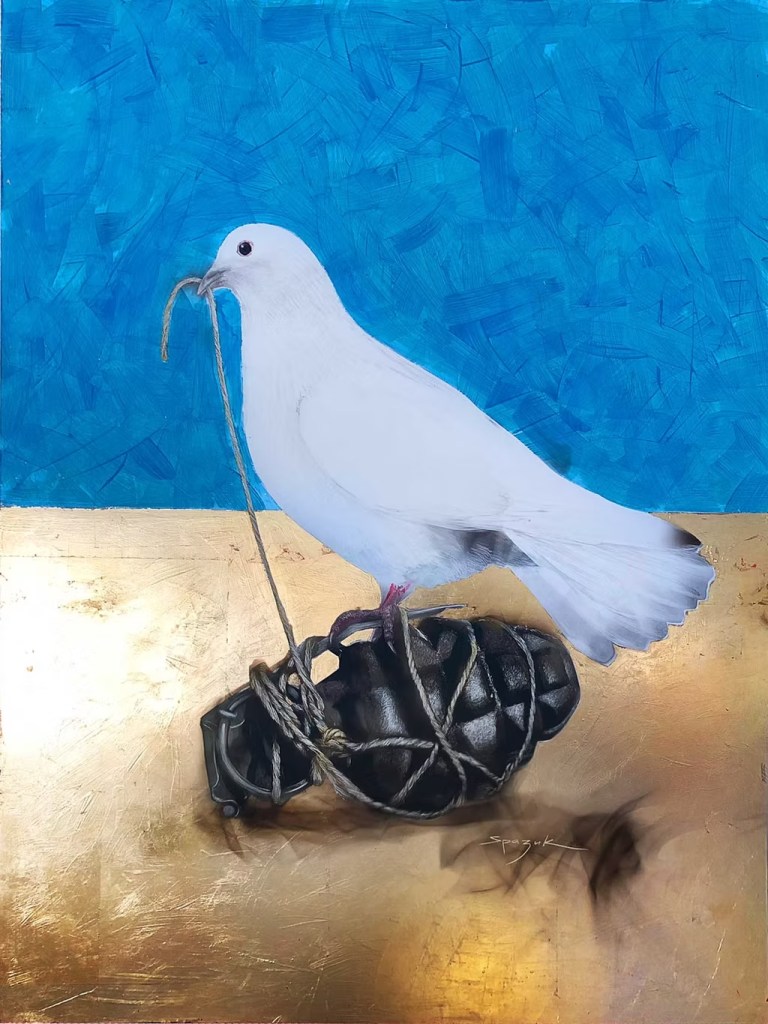
    Spazuk, a brilliant artist who paints with fire.
    There are builders and
    those who tear down.

    The builders understand the angles—
    how weight settles into a beam,
    how a line must lean
    before it can stand.

    They take the time to
    dream,
    to envision,
    to let something unfinished
    sit beside them
    like a quiet companion.

    In the late hours,
    when the world settles into dew
    and the last light leaves the window,
    they see it—
    not yet formed,
    but certain enough
    to return to.

    They move toward it slowly.

    Hands learning the material—
    the first press too hard,
    the surface pushing back,
    then giving slightly under the thumb.

    There is a patience to it—
    a willingness to begin again
    without pretending
    that nothing failed
    along the way.

    And when it sits
    just right in the place
    where positive and negative space
    hold one another—
    where the weight rests
    without shifting,

    when something rises
    that did not exist before,

    they step back
    grateful
    to recognize it—

    not as completion,
    but as process and maybe
    cohesion.

    Something new to sit beside.
    Something to enter.

    Those who tear down
    move in starts.

    They do not linger
    in spaces where people
    or places
    or ideas
    are becoming.

    They look for structures already standing
    and rest their heads against
    pillars—cracked, flaking at the edges—
    trusting what still holds
    to hold for them.

    Their attention sharpens there—
    at the point where structure meets strain,
    where something held together
    might give way—
    a thumb pressed once
    at the weakened place.

    They have no questions—
    not how it was made,
    not why.

    They do not stay long enough
    to understand
    what it required to stand at all.

    Instead, they borrow from what surrounds them—
    picking up a word already spoken,
    wearing it as if their name were stitched inside,

    and hold it
    just long enough
    for the next voice
    to take its place.

    They wait
    for the world
    to hand them a reflection
    they can accept
    without question.

    And while they wait,

    they pull—

    at the edge,
    where the fabric thins,
    at the seam
    where threads begin to separate,

    at the place
    where something is most alive
    and therefore
    most vulnerable.

    It does not take long.

    What took time
    to imagine,
    to hold,
    to bring into form—

    can be undone
    in a moment—
    a shift,
    a break in tension—
    and it gives.

    —Iris Lennox