Tag: Time

  • The Dig


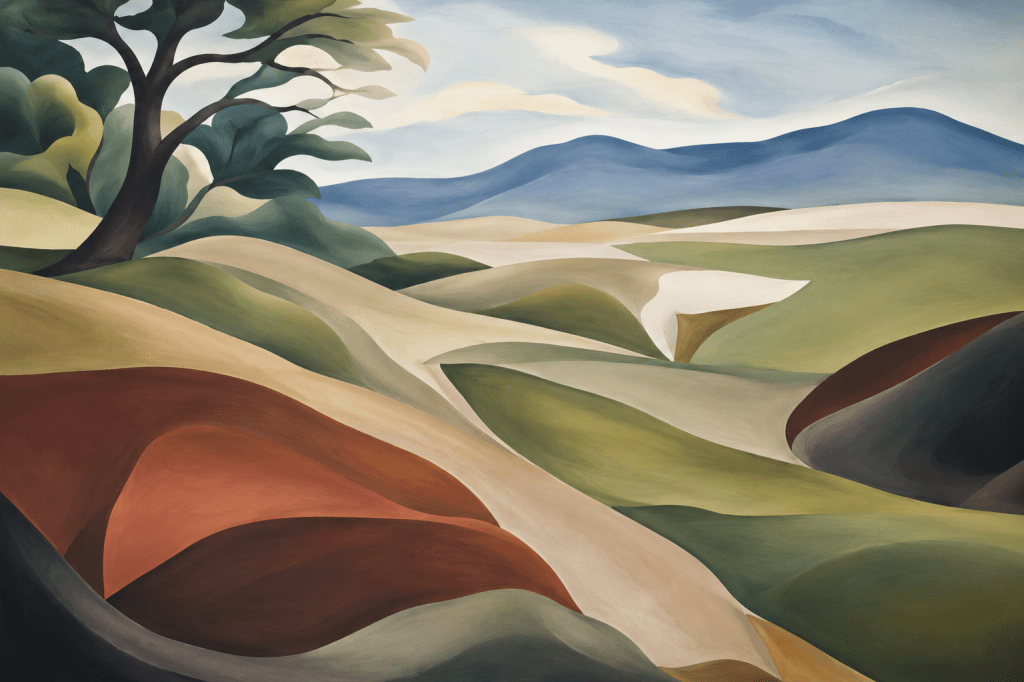
    Abstract landscape painting with rolling hills, a solitary tree, and layered fields in muted greens, creams, blues, and warm earth tones beneath a soft sky. The flowing forms evoke memory, changing landscapes, and the passage of time.
    I stood at the glass door, watching.
    
    Beyond the stone deck
    and the birdhouse
    
    two delicate blue eggs
    lay nestled atop carefully arranged
    blades of grass.
    
    The field beyond the fence
    was bright with spring.
    
    A tree named Walter
    lifted its branches into the morning.
    
    Every tree within daily view
    should have a name.
    
    A dog bred to bear burdens
    wandered lazily through the grass,
    
    distracted by an over-dramatic cardinal
    
    or maybe the way
    the breeze had begun to smell like
    spring.
    
    The coffee in my mug tasted faintly
    of hazelnut and milk.
    
    Scrambled eggs cooled on a plate.
    
    Cologne drifted through the kitchen.
    
    The juice from a red grape
    slid down the back of my throat.
    
    The field was busy with singing.
    
    Not birds alone.
    
    Something larger.
    
    Something hidden.
    
    The busyness of living
    moved through the grass
    like wind moving through
    tousled hair
    or waves crossing the sea.
    
    At the time,
    I thought the field would always be there.
    The eggs.
    The cardinal.
    Walter.
    The dog.
    The glass door.
    The man standing somewhere behind me.
    
    Months later
    he disappeared.
    
    Then the seasons continued
    one second
    one hour
    one page
    at a time.
    
    Summer crossed the field.
    Autumn followed.
    Winter bent the grass flat.
    
    One afternoon
    
    I found myself standing
    on the opposite side of the same field.
    
    Far beyond the fence.
    
    Far beyond the glass door.
    
    Far beyond the woman
    who used to stand in that kitchen
    and watch.
    
    The singing was gone.
    
    The grass was gone.
    
    The hill itself
    seemed smaller.
    
    Yellow machines moved through the earth
    
    lifting,
    turning,
    leveling.
    
    Steel teeth entered the ground.
    
    Mud spread where pasture had been.
    
    The field I remembered
    was being dismantled
    one scoop at a time.
    
    A subdivision would stand there soon.
    
    Roads.
    Mailboxes.
    Driveways.
    
    Children who would never know
    there had once been a field.
    
    I watched for a long time.
    
    Long enough for the machines
    to continue their sweaty work.
    
    Long enough to notice that
    Walter was still standing.
    
    Long enough to realize
    that I was no longer looking
    at the same landscape.
    
    Or from the same place.
    Or through the same eyes.
    
    The field stretched between
    what had happened
    
    and what remained.
    
    I stood,
    
    watching the earth being turned over,
    feeling the soil being turned over,
    tasting the smoke and smothering
    
    just a little.
    
    "What if I take one step backward?"
    I wondered.
    
    "One more,"
    I whispered.
    
    Artifacts churned
    deep and then deeper
    burying and then
    buried.
    
    And I drove away
    waving to Walter
    in the rearview mirror.
    
    — Iris Lennox
  • The Wren Comes Once a Year


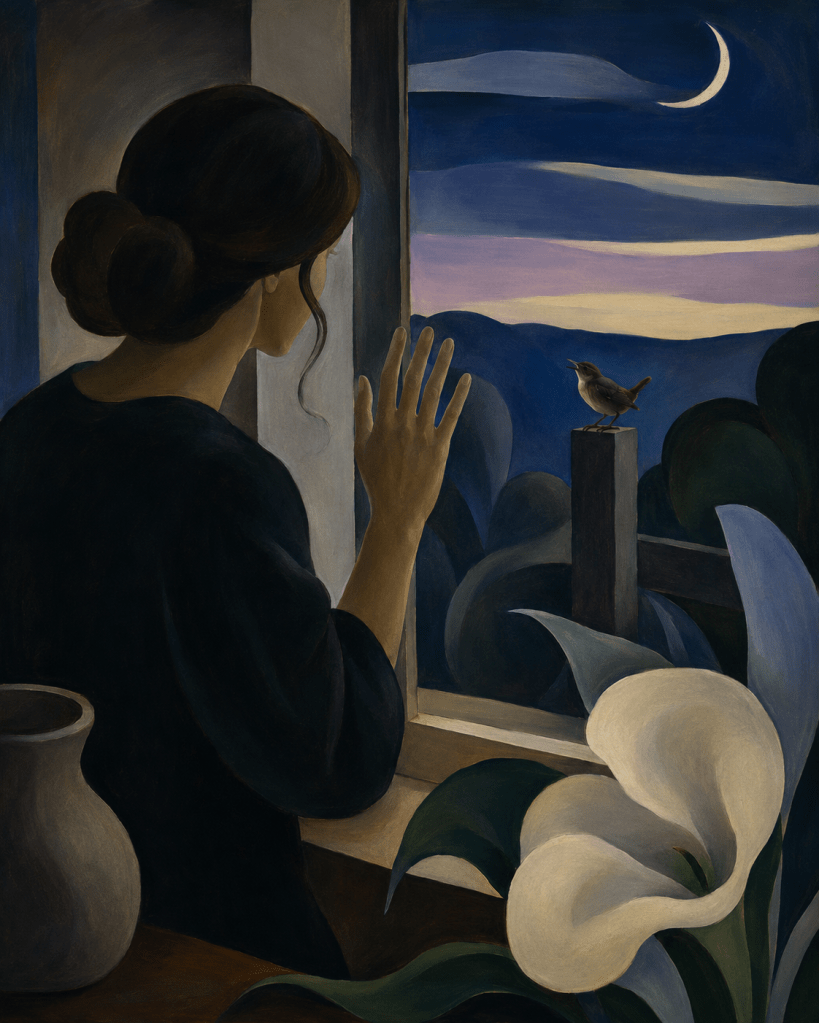
    The wren comes once a year to me,
    in July, toward the close of day,
    when heat still trembles in the trees
    and all the shadows stretch away.

    He chooses neither branch nor wire
    but lands upon the weathered gate,
    his little breast a pulse of fire,
    as if a bird could carry a date.

    I stand inside. I do not move.
    The glass is warm beneath my hand.
    He lifts his throat into the grove
    and sings what I don't understand.

    Last year, I wrote a lyric here
    when this same wren sang into night.
    Tomorrow lingered, soft and near,
    inside his handful of twilight.

    This year he comes. I write a poem.
    He tips his head and sings once more.
    I do not ask how he has known
    to find the same July-lit door.

    This year I keep the window closed.
    The curtain stirs against my wrist.
    Outside, the evening bends and folds;
    the hedge turns blue beneath the mist.

    The wren knows nothing of before.
    He doesn't count what I have kept.
    He sings beside the garden door
    where last year's fallen petals slept.

    Perhaps he came for no one here.
    Perhaps the gate was simply near.
    Perhaps a wren comes once a year.

    And still I wait until he's gone
    before I move or breathe again,
    while dusk collects across the lawn
    and one small branch remembers the wren.

    —Iris Lennox
  • Route 66


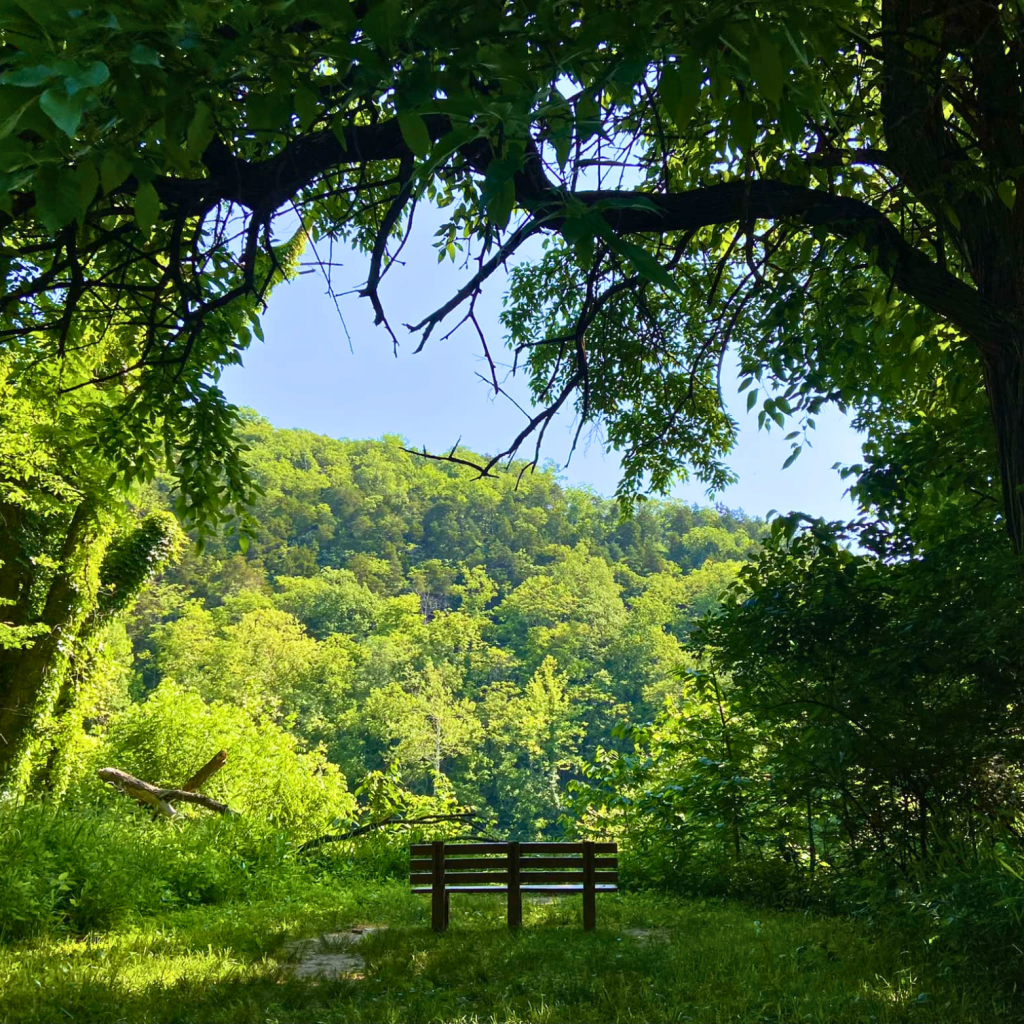
    A bench possesses very few options.

    It cannot follow the river
    when the Meramec rises beyond its banks.

    It cannot seek shade in July
    or shelter in January.

    It cannot complain about mosquitoes,
    cottonwood fluff,
    fallen branches,
    or the weight of snow.

    Someone chose its view:
    One sliver of sky.
    The trees.
    A long curve of water
    moving northeast toward someplace else.

    When I first photograph it
    in Route 66 State Park,
    I do not yet know we will spend
    a year together.

    I am only walking a trail.

    The bench is only a bench.

    The river is moving quickly that day,
    green with spring runoff.

    Leaves unfold overhead.

    Somewhere beyond the trees,
    a train sounds its horn.

    I take a photograph and continue on.

    Then I return.

    A few days later.
    A few weeks later.

    Again.

    Again.

    The river lowers.
    The air grows thick enough to wear.
    Vines climb fallen tree trunks.
    Grass thickens.

    The air hums with insects
    so determined in their purpose
    they seem incapable of doubt.

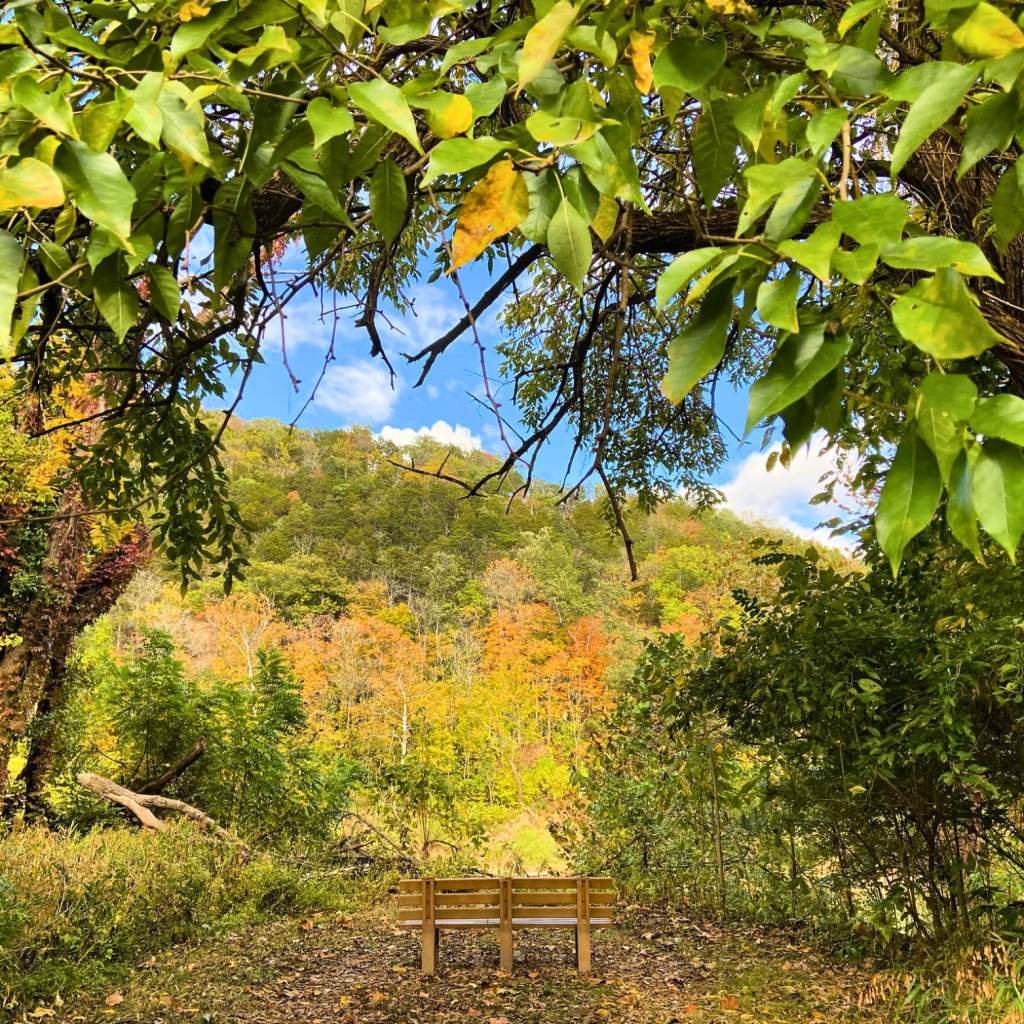
    Autumn arrives carrying its familiar tools.

    Gold.
    Copper.
    Rust.

    Leaves gather around the legs
    and drift across the seat.
    The birds change shifts in the air
    and the shadows lengthen below.

    Then winter.

    The kind that introduces itself quietly at first.
    A single hard frost.
    Bare branches.
    A thin skin of ice.

    Then snow.

    Then wind.

    Then the sort of cold
    that makes a bright blue scarf question
    perfectly reasonable decisions.

    I walk a mile through a wind chill
    of thirteen below zero
    to take another photograph.

    The bench, meanwhile,
    has traveled nowhere at all.

    By then,
    a question has begun following me
    up and down the trail.

    At what point does a bench
    become an acquaintance?


    Not a friend.
    That would be absurd.

    The bench knows nothing about me.
    It cannot recognize my footsteps.
    It has never once asked
    how I am doing.

    Yet I find myself looking for it
    before I look for the river.

    I notice when a branch falls nearby.
    I wonder how it fared
    when tornado sirens blared.
    I am relieved to find it waiting
    where I left it.

    The year continues assembling itself.

    Rain after rain.

    Season after season.

    Photograph after photograph.

    One afternoon I stand beside it
    and look across the water.

    A hawk flies overhead,
    followed by a kettle of vultures,
    circling.

    "Something is about to be eaten,"
    I say out loud to no one,
    and I'm a little bit surprised
    there is no answer.

    The trees are busy becoming
    whatever comes after this.

    For a moment,
    neither of us is in a hurry.

    Above the river,
    a branch sways gently in the wind.

    And light moves across the bench
    like a hand.

    —Iris Lennox

  • Wars and Rumors


    There must have been mornings
    in 1351
    as the Black Death
    draped across landscapes and
    eyelids
    like a thick shroud

    when a mother
    opened her shutters
    to another cart,

    another bell,

    another street
    that smelled of smoke
    and vinegar
    and thought,

    surely

    this is how
    the world ends.

    Men standing
    on the beaches
    of Normandy
    in 1944,

    sand grinding
    between their teeth,

    salt on their lips,

    seawater
    inside their boots,

    diesel, smoke,
    and cordite
    marrying the wind,

    helmets knocking
    against trembling shoulders,

    watching boys
    become bodies
    before breakfast,

    must have wondered
    whether heaven
    had finally
    grown tired of us all.

    And in 1945
    somewhere
    beneath the ash
    of the
    atomic bombings of
    Hiroshima and Nagasaki,

    where shadows
    stayed behind
    long after people had gone,

    someone looked upward
    through a sky
    that probably looked more like
    a concrete dome

    and thought,

    this time—

    surely.

    Surely.

    And then,
    one day—

    John

    an old exile
    on an island
    looked up

    and saw

    a lamb

    standing

    as though slain.

    He saw seals
    split open.

    He heard trumpets.

    Watched stars
    fall like figs
    from a shaken tree
    and oceans darken.

    Mountains moved.

    Creatures
    with eyes
    pressed into their feathers
    like dew
    on spring grass,
    seeing forward,
    backward,
    inward,
    through things
    men call mysteries—

    And still—

    this morning,
    2026

    a woman
    in Missouri

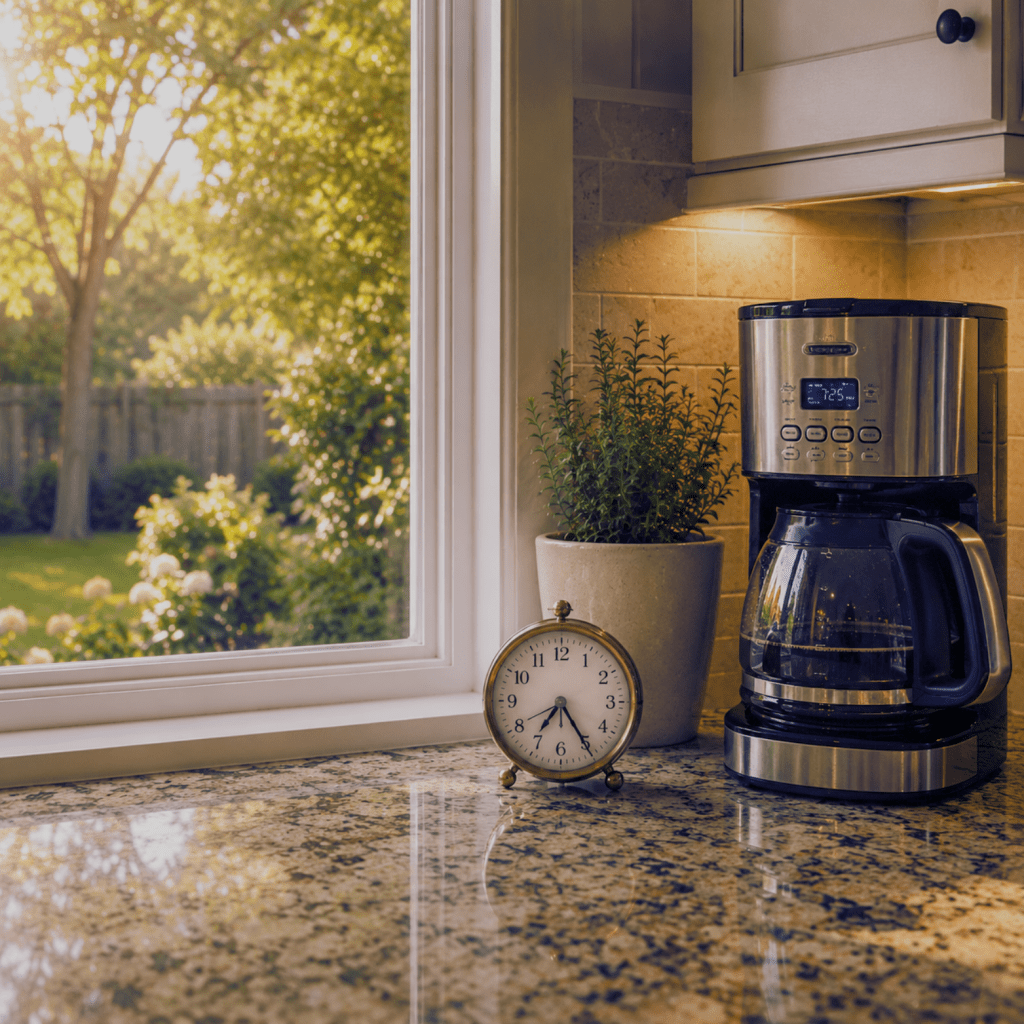
    stands barefoot
    at her kitchen sink,
    watching squirrels
    and robins
    tumble through
    grass and mud,

    the coffee pot gurgles
    and sighs,

    sunlight,
    with a long list of to-dos
    does
    what it always has
    through green leaves,

    a sparrow
    argues with a cardinal
    over spilt seed.

    What is inside this moment?
    The past?
    The future?
    Only now?

    Yes.

    The moment of calm.
    After and
    before
    the storm.

    —Iris Lennox
  • In Our Tracks


    The things that slow us down 
    can't be manufactured.

    They have to come—
    arrive—
    without warning
    and before
    or after
    we're ready.

    Today maybe it's a train
    rattling through your car
    and the wind it leaves behind
    picking up the ends of your hair
    and pulling you back into
    something
    some time
    when a train was in the distance—
    was it home,
    or something like it?
    When the whistle of the train—

    Or a phone call
    where the C-word is uttered
    and everyone in the room
    collapses,
    but underneath.
    On the inside.
    The push and the pull of,
    "But wait. Just one second ago
    life was about this or that
    and now
    this." Or

    a man catches your eye down the hall,
    a woman laughs with a crinkle in her nose—
    had it been there before?
    Maybe only today
    and then a series of
    wonderings
    when wandering is no place to stay, or

    sitting on a rock in the desert
    not asking questions and
    questions begin
    to ask themselves
    in the form of prayers you couldn't hear
    during this morning's coffee.

    When does a prayer begin
    and when does it end?

    Where was I when I was the one
    who took the breath
    inward
    to address God on an exhale
    and why am I still breathing
    in one elongated breath since—
    when?—
    Was I seven?
    Or forty-three?

    And who was I when I thought
    or felt
    or began
    "Dear Lord . . ."?

    What is movement
    but our footsteps being heavier
    than air
    but lighter than
    we expected
    because the weight of now
    never lands
    until we look back.

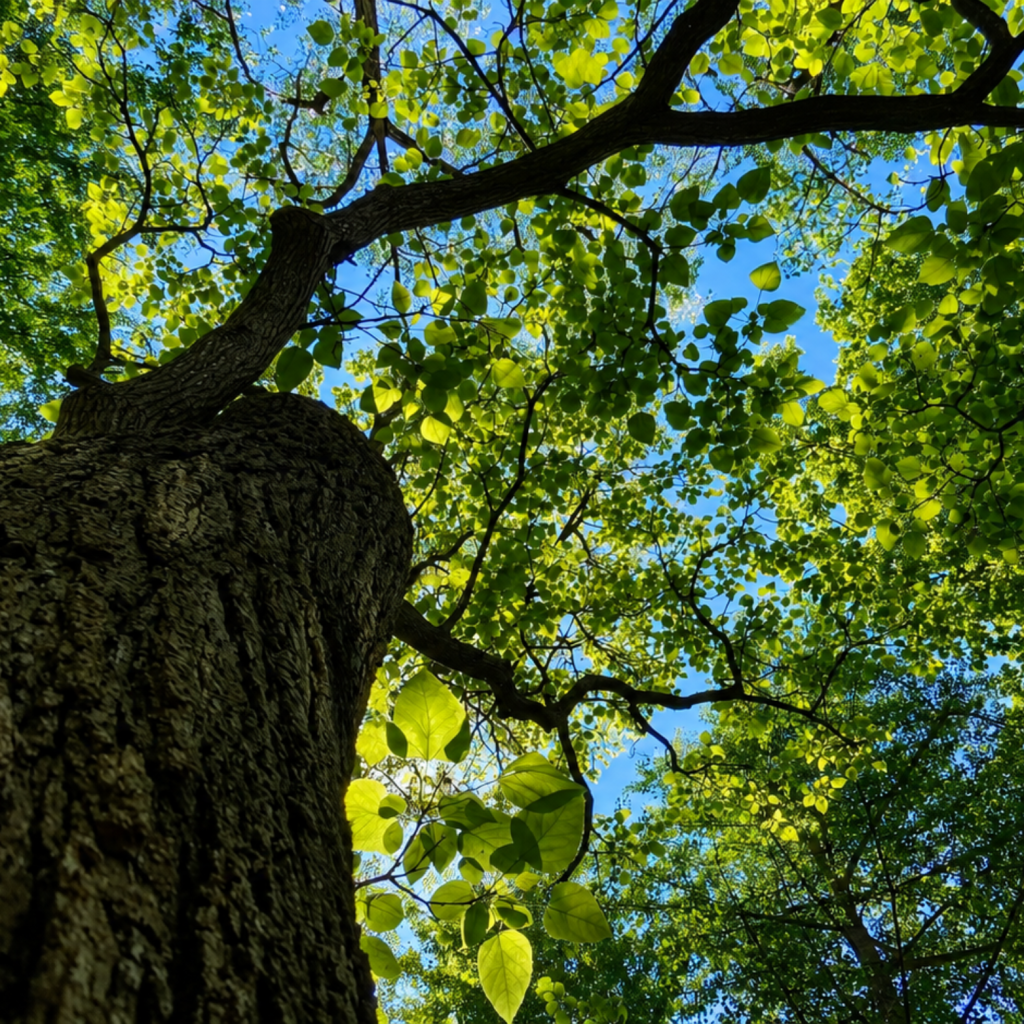
    Today I looked up into the trees
    in a place I know well
    and I saw the sunlight weave
    itself through every leaf
    and all the way down,
    just as it has before
    and there was a moment
    when all I could do was forget
    where I was
    forget what I was thinking
    and maybe I breathed
    but who is to say

    because mostly I just
    watched.

    —Iris Lennox


  • The Curve of Time


    You might as well befriend the moon—
    embrace her clouded peekaboos.
    And music…

    Receive the tune—
    no time to choose—
    alone in a crowd
    or no one in view.
    And a smell…

    Wafts past your nose—
    what was that?
    Or who?

    Perfume on skin
    or a place that you knew.

    Pause.

    No need to wonder—
    you know who that was—
    and who you are
    as nostalgia winds
    the second hand round.

    “Time is a straight line,” said he.
    “It moves consecutively,
    watches as it goes
    behind and below,
    like walking a path
    that winds into—
    well—
    no one knows.”

    “No one knows,
    that’s right,” said she.
    “Simply put, I do agree.
    But there’s no line to speak of.
    Time bends—not like a knee—
    more like a finger touching its thumb
    or a rainbow finding its spherical end
    and answering with a gentle, Come.”

    Time returns to the places we’ve been.

    One says, “That memory is far.”
    Another, “The moment is here.”

    Yesterday can be set down,
    but the nows of that day
    rise from the ground
    without notice
    or sound—

    to delight or confound—
    it depends on the seconds
    into which they were bound.

    Moments become recollections.
    Recollections, seeds
    with a life of their own.

    Promises and hope,
    gentleness and rage,
    a touch, a glance,
    a well-appointed room
    or a half-written page—

    all sown into skin,
    finding rest in
    smiles and tears,
    repose and toil,
    love and loss,
    freedom and cost,
    and the way sunlight lay
    across the earth
    at the end
    or when it all began.

    “That was back then,” said he.
    “That is today,” said she.

    The minutes listened.

    “There is wisdom in both.”

    Time smiled—
    crouched, quiet—
    behind an autumn tree,
    waiting
    for the final leaf to fall.
    —Iris Lennox