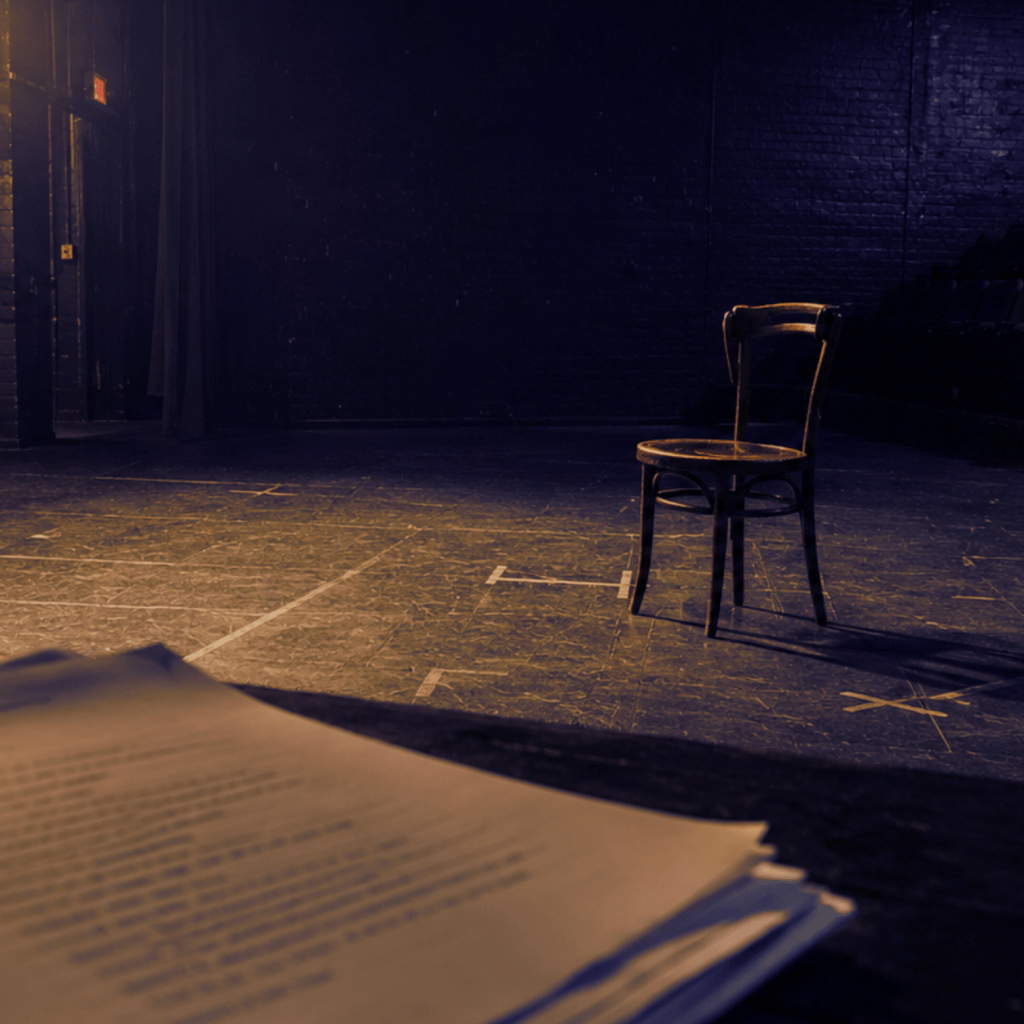
I spread the pages across my kitchen table, one hand on oak, the other on language.
Afternoon light finds the margins first, then the staples, then the black strokes of my name pressed hard enough to leave its mark three sheets down.
Good.
Some truths deserve depth.
The paper remembers dates.
It remembers names.
It remembers who stood where, who reached first, who kept speaking, who went silent, who needed silence to feel safe.
The ceiling fan turns.
Edges lift, but dare not fly away.
They stay. Pressure makes some run and others stay.
A throat is made of cartilage, muscle, membrane, two pale folds opening and closing over air.
Pressure meets tissue.
Even a whisper requires force.
I know this.
I have taught students to plant their feet, unlock their knees, drop their shoulders, open their ribs, and send a line to the back wall without asking the room for permission.
Never ask for permission.
I have watched a frightened girl find her stomach and then her voice.
I have watched boys speak one true sentence without laughing and become men.
I have watched language enter the body and change the way a person stands.
So when the hand came, when the pressure came, when silence came to wrap around, to shut me down, to choke me—
I know what a voice is.
The larynx bruises.
The breath adjusts.
Once, I lost it.
But don’t worry about me.
I just drink the tea, bite down on the Ricola, and breathe.
Shakespeare told us long ago,
“Speak the speech, I pray you, trippingly on the tongue,”
And I tripped.
A little.
Then I got back up.
And spoke until cartilage, muscle, membrane, air, ink, oak, paper, rooms, whispers, and men who mistake women for little girls
had to listen.
They reached for an instrument they didn't understand.
So I took what the body knew, what the stage taught, what the page required, what courage costs,
and I used all of it.
Outside, water climbs through xylem, one molecule pulling another.
 Iris Lennox