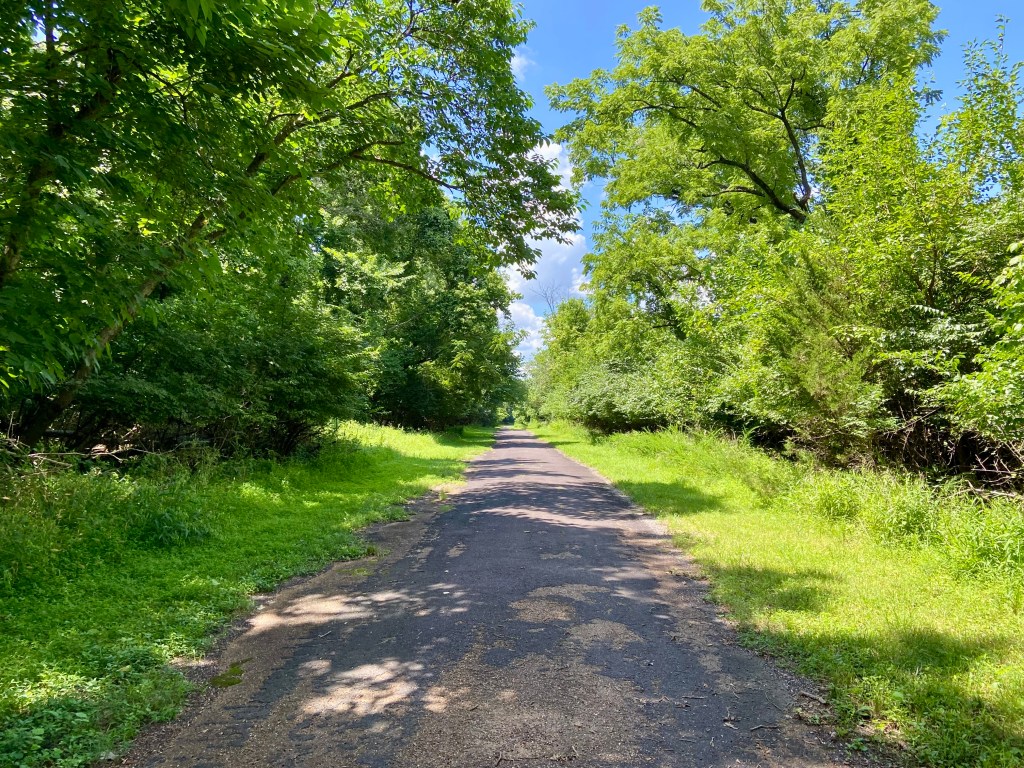
Once home to more than two thousand people, Times Beach, Missouri, is now part of Route 66 State Park, its former streets winding through grass, wetlands, and trees.
Grass grows high along the path,
seed heads bending in the July heat.
Cottonwoods lift their silver leaves
and turn them over in the wind.

Somewhere beyond the trees,
the Meramec moves brown and slow.
Cicadas start and stop.
A turkey disappears into the sumac,
leaving one branch shaking behind her.

I walk where the path bends gently,
following its long, deliberate curve
through Queen Anne's lace and clover.

For years, I've assumed the curve was shaped by the land.

I think the trees have drawn it there,
that roots and rain have persuaded the path
to turn a little to the left.

But the curve was here before the trees.

This was a street.

The slightly hidden marsh beside me
had an address.
There were mailboxes here,
porch steps, garden hoses,
bicycles dropped in yards at dinner time.

A woman shakes a white sheet in the sun.
A screen door strikes its frame.
Someone calls a child home
before dusk makes the river invisible.

I hear no names being called.

Still, I stand in the middle of the old road
while cicadas stitch their noise through the trees,
and for a moment the grass seems crowded.

They sprayed the roads with oil
to keep the dust from rising.

The streets were unpaved then.
Cars sent the dry earth climbing
into open windows and onto porches,
over laundry, into kitchens,
into the mouths of children playing outside.

So they paid a man to settle it.

He came with a truck
and spread oil over the roads,
darkening the dust,
pressing it back into the earth.

Such a small sentence:

to keep the dust down.

To keep it from settling on windowsills,
on supper plates,
on the faded blue jeans drying in the sun.

The road kept what it was given,
accustomed to service.

Eleven summers pass.
Children ride bicycles over it.
Rain darkens it.
The sun warms it.
Women open their windows in April.

Then the river rises.

It enters the houses without knocking,
climbs the stairs,
lifts chairs from kitchen floors,
pulls photographs from drawers.

And when the water folds back
into its comfortable rhythm,
it leaves the secret in the mud.

I walk here now
with sunlight brushing across my shoulders.

No houses.
No mailboxes.
No white sheets rising in the wind.

Only the wetland,
the mound,
the old roads curving through the trees.

They burned the poisoned earth eventually,
two hundred and sixty-five thousand tons of it,
and buried what remained beneath the grass.

I've walked the hill where fragments of a town
turn slowly in the earth—

a blue cup without its handle,
one white button,
the rusted hinge of a closet door,
a marble lost beneath a child's bed,
the broken mouth of a jar
that once held peaches.

Things someone touched every day
without knowing there would come a day
when no one touched them again.

Now coneflowers open in the sun.
Frogs call from the water.
A red-winged blackbird bends a reed
almost to the ground.

I have walked here for three years
without knowing what was under my feet.

The streets, trails.
The mound, a hill.

I watched deer step out at dusk
where someone's back door used to be.

Today I stop beside the tall grass.

The wind passes over it
and every green blade leans
in the same direction.

Then rises.

Then leans again.

As if the earth is trying
to remember a name.

—Iris Lennox


If you'd like to know more about the town beneath these trails, I wrote about the strange history of Times Beach and its second life as Route 66 State Park here.
I’ve taken a short break from writing poetry. But I’m back now. I’ve been in a liminal space between the exhale of one season and the first inhale of the next, letting the light change as the season does, too. That’s what this poem is about.
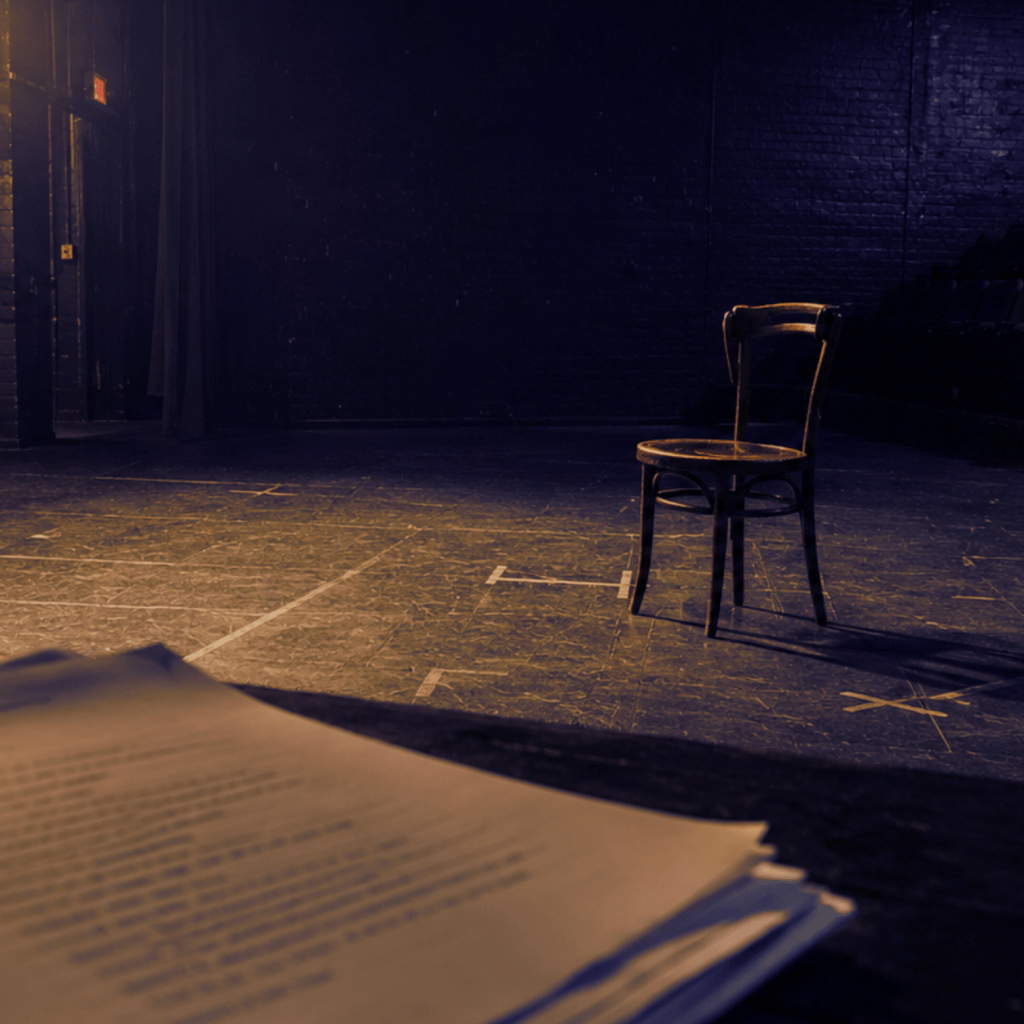
Behind a heavy red curtain, I press one finger into the velvet where someone has patched it with black thread.
How many performances has this curtain seen? Who stood here, beneath the work light, needle between two fingers, pulling the torn edges toward each other?
Torn edges are a sign of some previous life on the tips of leaves and petals, and on curtains.
The repair is sturdy. Still, dust forms in a shock of light where the two halves almost meet.
A man dressed in black sweeps the stage and leaves one silver staple near the leg of a chair. Maybe he missed it. Maybe every room holds on to something from the people who come and go.
My name rolls around in another person’s mouth. For a moment, it belongs more to him than it does to me. My name has entered the room before I have.
A woman coughs. A program folds. Someone unwraps a mint with no care in the world. My name feels bigger than the curtain.
For now, I move stage left and stand just beyond the unforgiving patch, where I can see the light without having to enter it.
Is the light waiting for me? Or am I waiting for the light?
Later, in a parking lot beside the park, I turn the key halfway and let the radio glow.
Near the empty picnic tables, a bicycle with training wheels rolls across three parking spaces before catching itself against a curb.
Where is the child who left it upright? Does the bicycle know it has been left, or does it believe this is what bicycles do— wait beside trees until someone returns to provide the necessary weight?
The clock changes.
A dog pulls its owner toward the river.
The afternoon light stretches across the grass, climbs the legs of the picnic tables, and settles briefly on the bicycle at the curb.
By the time it reaches my window, the gold has thinned.
No one arrives.
I remain long enough for the radio to repeat a song, for the bicycle to become part of the park.
A porch light burns above a door dented by knuckles and impatient shoulders.
I lean close with one hand in my hair and rehearse the sentence that sounded better on paper.
How many people have stood here wondering which version of themselves the room will greet?
I climb two steps and count them again from the top.
Inside, a floorboard answers a bare heel. The welcome mat rests crooked against the threshold. Someone is there. Someone has crossed the room.
I lift my hand.
For one second before the house knows I have come, before the door opens and gives the moment another name,
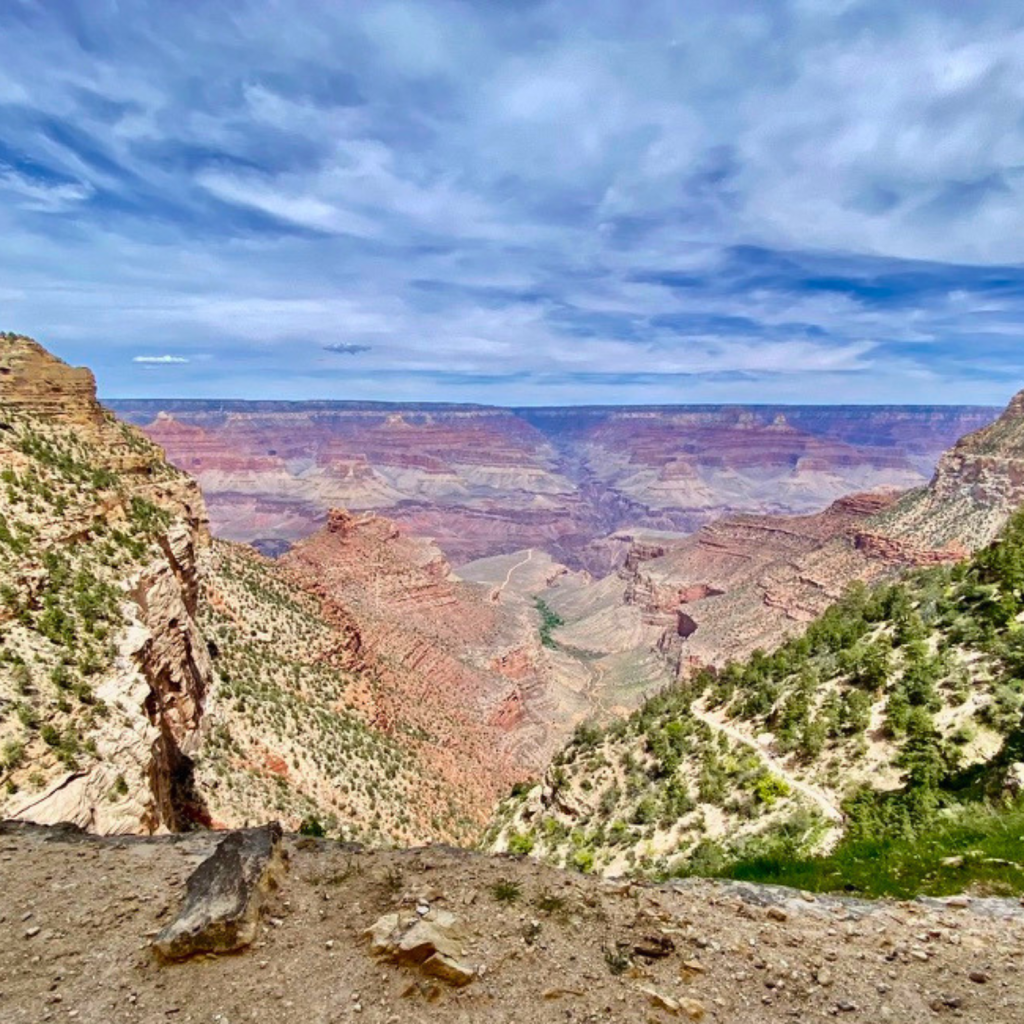
Grand Canyon landscape reflecting recurring themes of resilience, transformation, spiritual geography, and memory in the poetry of Iris Lennox.
I recently created a new page called The Poetry and Themes of Iris Lennox, which explores some of the recurring imagery, spiritual landscapes, and questions that continue to shape the work.
The page traces themes of resilience, voice, desert geography, memory, theatre, and the sacred hidden inside ordinary life. It also gathers together several poems that have become central to the collection over time.
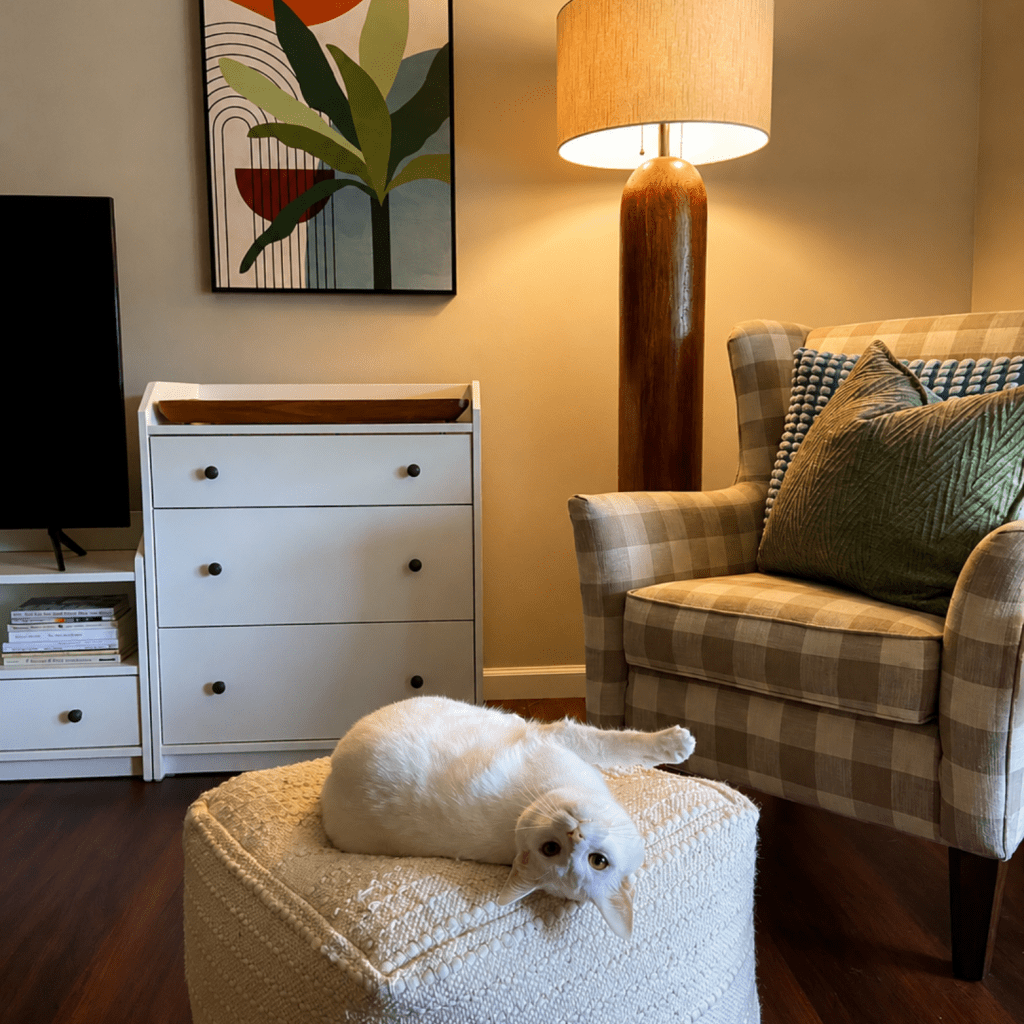
My little white cat stands at every doorway before she enters. Perhaps it is fear but I think it’s manners, and questions that steady her upon the threshold.
Is there anything here worth the risk it takes to leave the safety of the hallway, and what will I miss if I do?
No noise behind her, but I sit typing at my desk while she considers, a tiny pink nose weighing her options—
I say hello, which changes nothing, and now I weigh my kindness against her indifference as a thread moves across the floor, the air purifier beckoning it closer.
My little white cat enters not to see me but to inspect the thread and to maybe prove the room deserves her presence.
Patience by Iris Lennox
Moose Tracks are easier to eat in a bowl, but not nearly as engaging as racing to the drips spilling over the sides of my cone and knowing there are peanut butter cups gathering in the middle.
Why do the sweetest parts hide in the center?
No one eats M&Ms for the color, and you’d embarrass yourself if you dared say, “the peel is better than the orange.”
We all know some things ask to be opened— the banana from the stem, the shells at the baseball game, the foil around warm chocolate you forgot was in your pocket.
At least, for me, for today, for this moment,
all I need to do is taste sweetness with the patience of a toddler, unaware of the nature of stickiness,
and save the middle for later.
Father by Iris Lennox
He left before his first Father’s Day and mine.
But at least he left in style, with my mother’s car, all her cash, and glasses wrapped in a towel because they were worth keeping.
He worked in a bar and, from what I hear, he lived like he did.
At least that’s what strangers told me, each one carrying another adventure.
Someone up north. Another on the west coast. Then the east before he landed in Las Vegas.
The land of dreams won and lost all in the same night.
Sounds about right.
I met my father for the first time and the last one month before he died,
and every Father’s Day I try not to care.
Written in response to three words: curiosity, patience, father.
I spread the pages across my kitchen table, one hand on oak, the other on language.
Afternoon light finds the margins first, then the staples, then the black strokes of my name pressed hard enough to leave its mark three sheets down.
Good.
Some truths deserve depth.
The paper remembers dates.
It remembers names.
It remembers who stood where, who reached first, who kept speaking, who went silent, who needed silence to feel safe.
The ceiling fan turns.
Edges lift, but dare not fly away.
They stay. Pressure makes some run and others stay.
A throat is made of cartilage, muscle, membrane, two pale folds opening and closing over air.
Pressure meets tissue.
Even a whisper requires force.
I know this.
I have taught students to plant their feet, unlock their knees, drop their shoulders, open their ribs, and send a line to the back wall without asking the room for permission.
Never ask for permission.
I have watched a frightened girl find her stomach and then her voice.
I have watched boys speak one true sentence without laughing and become men.
I have watched language enter the body and change the way a person stands.
So when the hand came, when the pressure came, when silence came to wrap around, to shut me down, to choke me—
I know what a voice is.
The larynx bruises.
The breath adjusts.
Once, I lost it.
But don’t worry about me.
I just drink the tea, bite down on the Ricola, and breathe.
Shakespeare told us long ago,
“Speak the speech, I pray you, trippingly on the tongue,”
And I tripped.
A little.
Then I got back up.
And spoke until cartilage, muscle, membrane, air, ink, oak, paper, rooms, whispers, and men who mistake women for little girls
had to listen.
They reached for an instrument they didn't understand.
So I took what the body knew, what the stage taught, what the page required, what courage costs,
and I used all of it.
Outside, water climbs through xylem, one molecule pulling another.
Roots enter limestone by touch.
A seed splits in darkness
and takes root.
What does paper know of life?
Only what we tell it.
—Iris Lennox literary pen name of Jill Szoo Wilson
The things that slow us down can't be manufactured.
They have to come— arrive— without warning and before or after we're ready.
Today maybe it's a train rattling through your car and the wind it leaves behind picking up the ends of your hair and pulling you back into something some time when a train was in the distance— was it home, or something like it? When the whistle of the train—
Or a phone call where the C-word is uttered and everyone in the room collapses, but underneath. On the inside. The push and the pull of, "But wait. Just one second ago life was about this or that and now this." Or
a man catches your eye down the hall, a woman laughs with a crinkle in her nose— had it been there before? Maybe only today and then a series of wonderings when wandering is no place to stay, or
sitting on a rock in the desert not asking questions and questions begin to ask themselves in the form of prayers you couldn't hear during this morning's coffee.
When does a prayer begin and when does it end?
Where was I when I was the one who took the breath inward to address God on an exhale and why am I still breathing in one elongated breath since— when?— Was I seven? Or forty-three?
And who was I when I thought or felt or began "Dear Lord . . ."?
What is movement but our footsteps being heavier than air but lighter than we expected because the weight of now never lands until we look back.
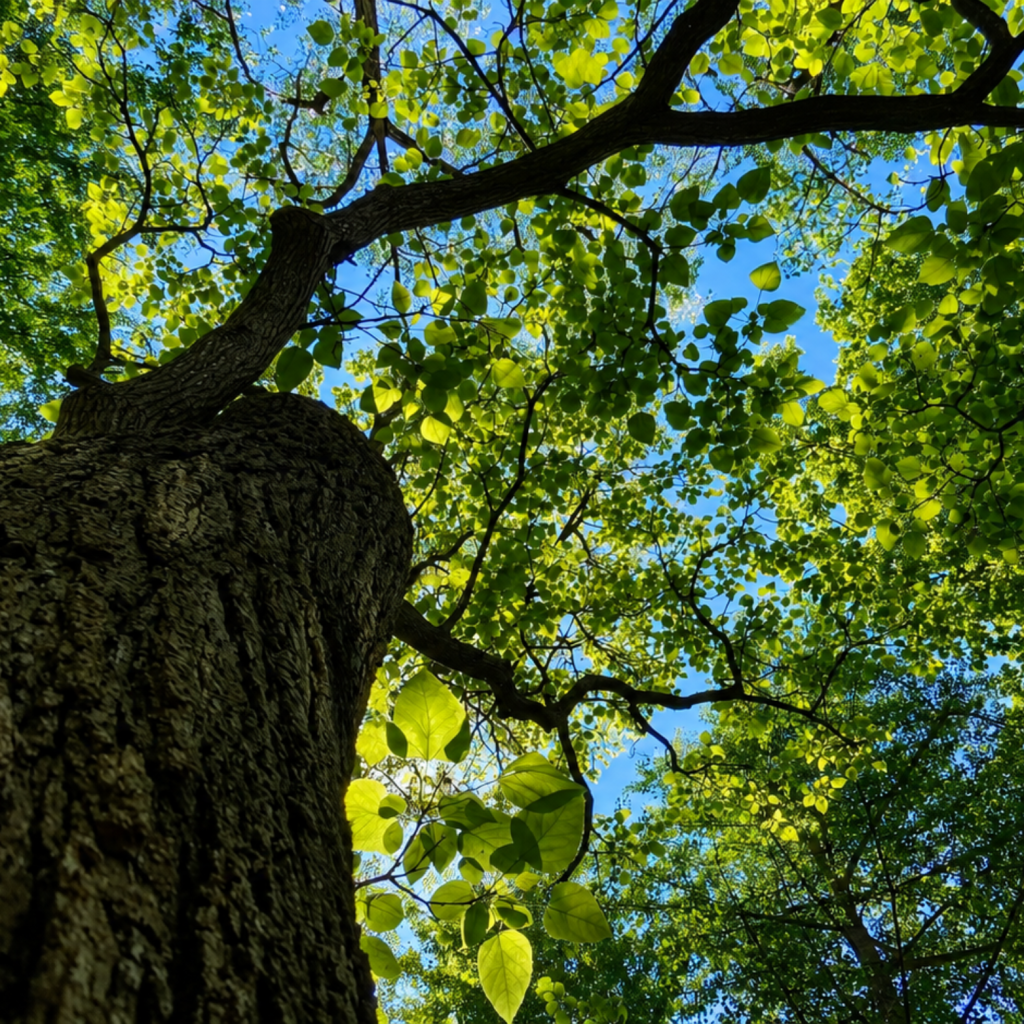
Today I looked up into the trees in a place I know well and I saw the sunlight weave itself through every leaf and all the way down, just as it has before and there was a moment when all I could do was forget where I was forget what I was thinking and maybe I breathed but who is to say