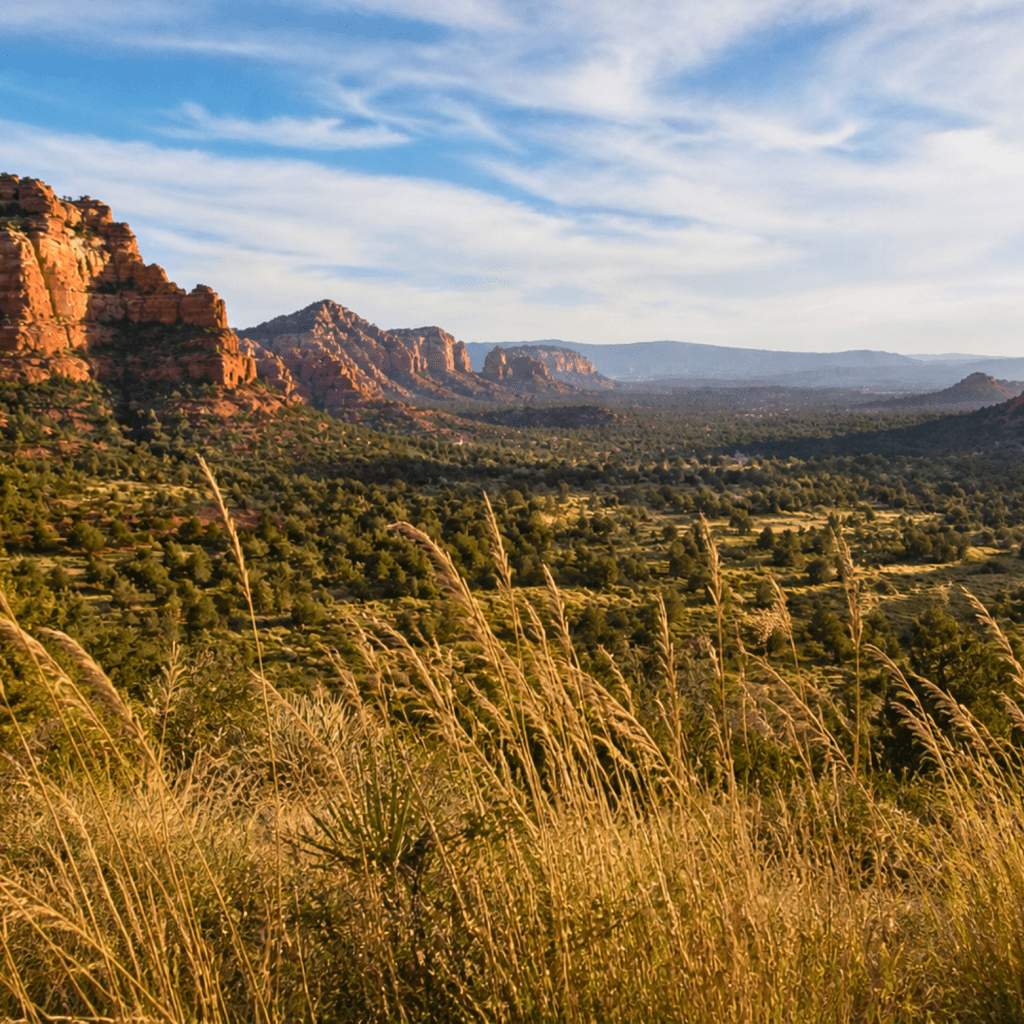
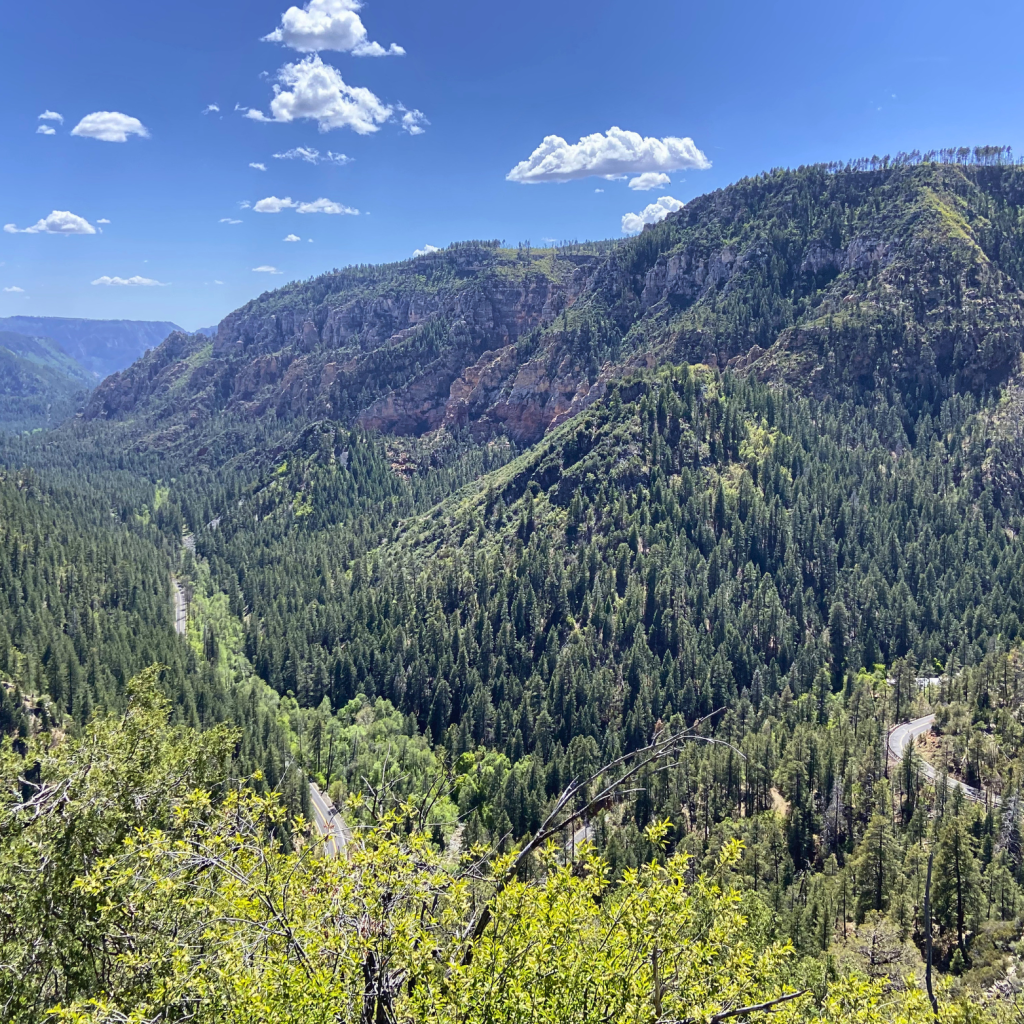
At the bathroom mirror of a rented casita somewhere in Flagstaff, I discover half the desert came home with me.
Red dust gathers along my collar, settles into the seams of my brown canvas backpack, which used to be cream-colored, and fills the tiny crease above my sock line where the trail outsmarted me.
When I untie my boots, sand pours onto ceramic tile in two soft cones.
The room suddenly feels like a painting, “Composition of Woman and Borrowed Earth.”
Juniper pollen clings to the cuffs of my sleeves.
There’s grit beneath my fingernails, iron-rich and stubborn, the color of old brick after rain.
OPI might name it Jazz Hands In the Desert.
I touch my scalp and feel dust there too, worked deep into my hair through wind, sweat, sunlight, and twelve miles of canyon trail.
Good.
Today earned its right to linger a little longer.
Some people spend all day trying not to stain themselves.
I understand the instinct.
There are white couches. Important emails. Polished shoes. Entire industries built around remaining untouched.
But somewhere between mile four and the moment I sat directly on a warm rock without checking for dust, my body remembered something older than neatness.
Children know it first.
Mud puddles. Finger paint. Grass stains.
At one point I crouched low to photograph a cluster of desert marigolds forcing themselves through fractured stone.
When I stood again, one palm carried sap, and a line of sweat ran slowly from my neck down the center of my spine.
Perfect.
By late afternoon, my shoulders glowed pink, my lips tasted faintly of salt and sunscreen, and every object inside my backpack had acquired the thin orange film of Arizona.
Even the map.
Especially the map.
I ate trail mix with dusty fingers and decided the extra crunch only improved it.
Somewhere near the ridge, a woman passing me said, “Beautiful day.”
Then both of us kept walking without needing to improve upon the sentence.
There's nothing important to say out there. Beauty speaks and we simply listen.
And feel. And I'm convinced—
The body experiences some landscapes on a cellular level.
Scientists eventually gave the phenomenon a long Latin name after discovering certain microorganisms in the soil can calm the nervous system.
Mycobacterium vaccae. But I think we should call it thereasonpeoplecry when kneeling in the dirt.
Meanwhile, every child who ever came home with muddy shoes was already conducting the experiment.
Back at the casita, the sink runs briefly orange-brown when I wash my hands.
Dust circles the drain.
I pull one sock inside out and enough sand falls free to start a small dune beside the bathmat.
I hope my Airbnb rating doesn't take a hit.
The shower waits.
Still, I linger a moment longer in the mirror, sun-tired, windblown, grinning slightly at the woman standing there with desert still gathered in every visible place.
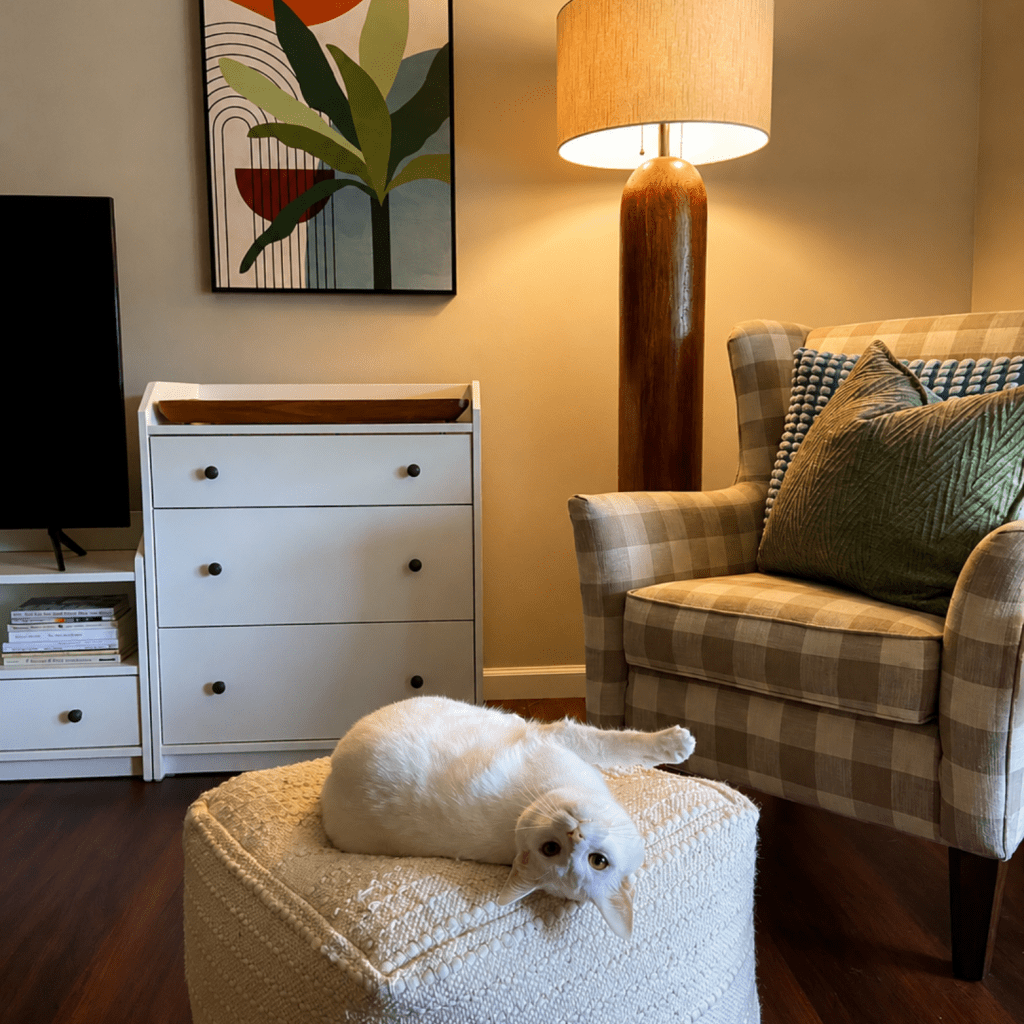
My little white cat stands at every doorway before she enters. Perhaps it is fear but I think it’s manners, and questions that steady her upon the threshold.
Is there anything here worth the risk it takes to leave the safety of the hallway, and what will I miss if I do?
No noise behind her, but I sit typing at my desk while she considers, a tiny pink nose weighing her options—
I say hello, which changes nothing, and now I weigh my kindness against her indifference as a thread moves across the floor, the air purifier beckoning it closer.
My little white cat enters not to see me but to inspect the thread and to maybe prove the room deserves her presence.
Patience by Iris Lennox
Moose Tracks are easier to eat in a bowl, but not nearly as engaging as racing to the drips spilling over the sides of my cone and knowing there are peanut butter cups gathering in the middle.
Why do the sweetest parts hide in the center?
No one eats M&Ms for the color, and you’d embarrass yourself if you dared say, “the peel is better than the orange.”
We all know some things ask to be opened— the banana from the stem, the shells at the baseball game, the foil around warm chocolate you forgot was in your pocket.
At least, for me, for today, for this moment,
all I need to do is taste sweetness with the patience of a toddler, unaware of the nature of stickiness,
and save the middle for later.
Father by Iris Lennox
He left before his first Father’s Day and mine.
But at least he left in style, with my mother’s car, all her cash, and glasses wrapped in a towel because they were worth keeping.
He worked in a bar and, from what I hear, he lived like he did.
At least that’s what strangers told me, each one carrying another adventure.
Someone up north. Another on the west coast. Then the east before he landed in Las Vegas.
The land of dreams won and lost all in the same night.
Sounds about right.
I met my father for the first time and the last one month before he died,
and every Father’s Day I try not to care.
Written in response to three words: curiosity, patience, father.
I spread the pages across my kitchen table, one hand on oak, the other on language.
Afternoon light finds the margins first, then the staples, then the black strokes of my name pressed hard enough to leave its mark three sheets down.
Good.
Some truths deserve depth.
The paper remembers dates.
It remembers names.
It remembers who stood where, who reached first, who kept speaking, who went silent, who needed silence to feel safe.
The ceiling fan turns.
Edges lift, but dare not fly away.
They stay. Pressure makes some run and others stay.
A throat is made of cartilage, muscle, membrane, two pale folds opening and closing over air.
Pressure meets tissue.
Even a whisper requires force.
I know this.
I have taught students to plant their feet, unlock their knees, drop their shoulders, open their ribs, and send a line to the back wall without asking the room for permission.
Never ask for permission.
I have watched a frightened girl find her stomach and then her voice.
I have watched boys speak one true sentence without laughing and become men.
I have watched language enter the body and change the way a person stands.
So when the hand came, when the pressure came, when silence came to wrap around, to shut me down, to choke me—
I know what a voice is.
The larynx bruises.
The breath adjusts.
Once, I lost it.
But don’t worry about me.
I just drink the tea, bite down on the Ricola, and breathe.
Shakespeare told us long ago,
“Speak the speech, I pray you, trippingly on the tongue,”
And I tripped.
A little.
Then I got back up.
And spoke until cartilage, muscle, membrane, air, ink, oak, paper, rooms, whispers, and men who mistake women for little girls
had to listen.
They reached for an instrument they didn't understand.
So I took what the body knew, what the stage taught, what the page required, what courage costs,
and I used all of it.
Outside, water climbs through xylem, one molecule pulling another.
Roots enter limestone by touch.
A seed splits in darkness
and takes root.
What does paper know of life?
Only what we tell it.
—Iris Lennox literary pen name of Jill Szoo Wilson
The things that slow us down can't be manufactured.
They have to come— arrive— without warning and before or after we're ready.
Today maybe it's a train rattling through your car and the wind it leaves behind picking up the ends of your hair and pulling you back into something some time when a train was in the distance— was it home, or something like it? When the whistle of the train—
Or a phone call where the C-word is uttered and everyone in the room collapses, but underneath. On the inside. The push and the pull of, "But wait. Just one second ago life was about this or that and now this." Or
a man catches your eye down the hall, a woman laughs with a crinkle in her nose— had it been there before? Maybe only today and then a series of wonderings when wandering is no place to stay, or
sitting on a rock in the desert not asking questions and questions begin to ask themselves in the form of prayers you couldn't hear during this morning's coffee.
When does a prayer begin and when does it end?
Where was I when I was the one who took the breath inward to address God on an exhale and why am I still breathing in one elongated breath since— when?— Was I seven? Or forty-three?
And who was I when I thought or felt or began "Dear Lord . . ."?
What is movement but our footsteps being heavier than air but lighter than we expected because the weight of now never lands until we look back.
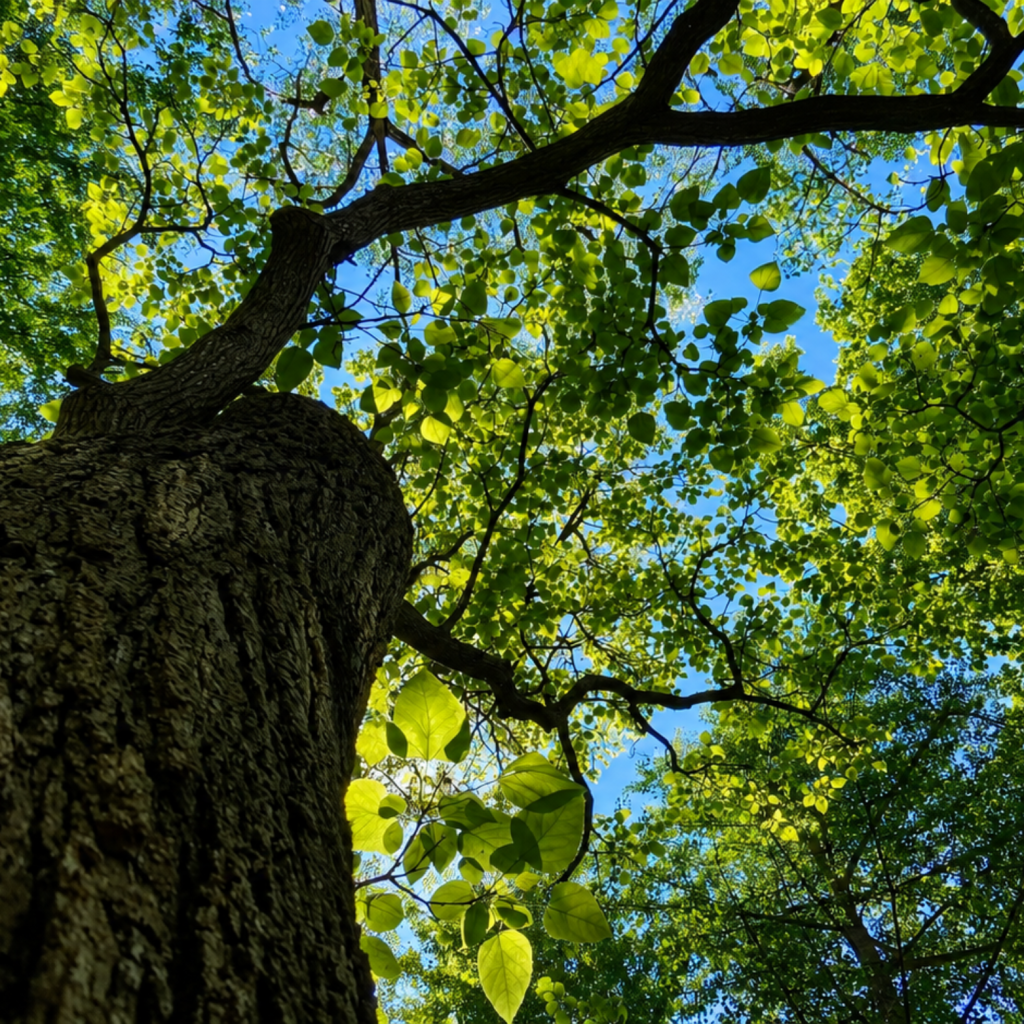
Today I looked up into the trees in a place I know well and I saw the sunlight weave itself through every leaf and all the way down, just as it has before and there was a moment when all I could do was forget where I was forget what I was thinking and maybe I breathed but who is to say
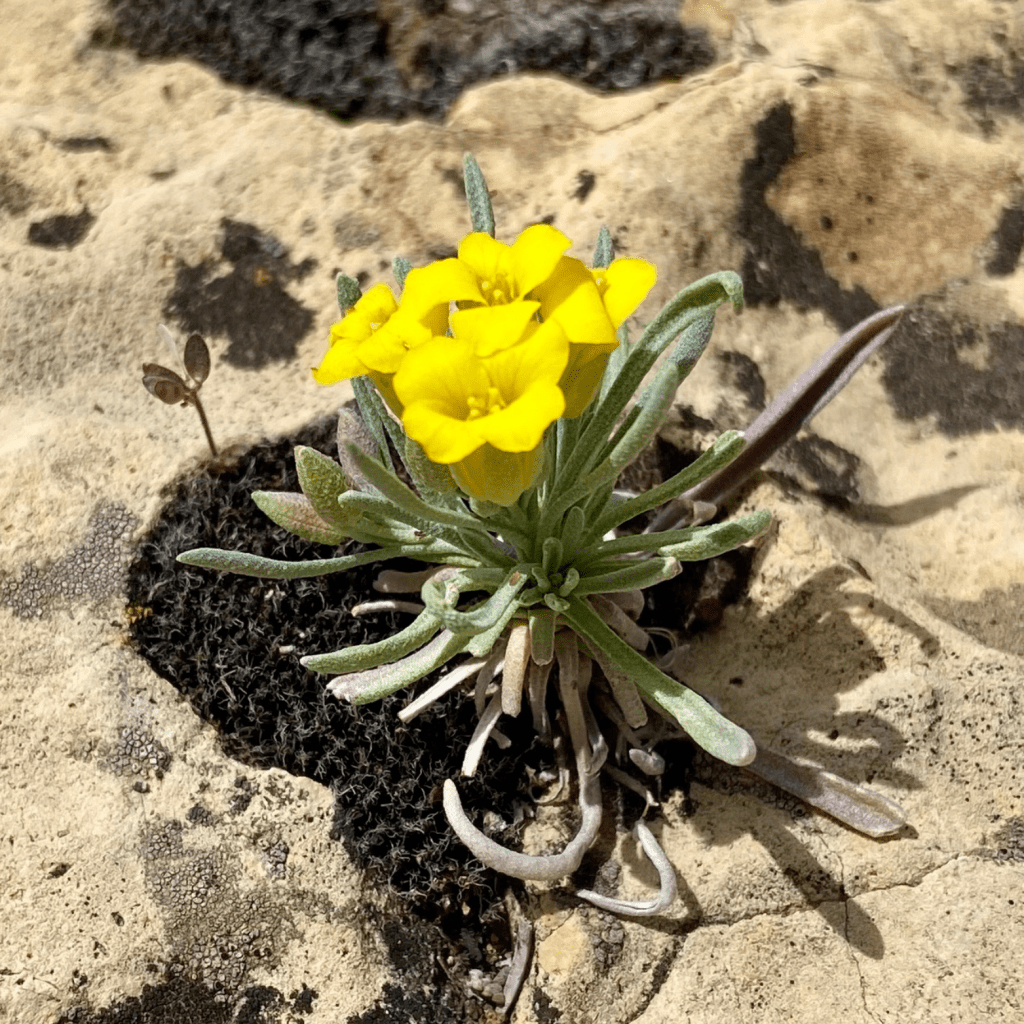
I crouch where the sandstone breaks into shallow shelves the color of old bone, one knee in dust, the other on loose grain that slides downhill with every shift of my weight.
The rock is so warm I imagine an ancient woman setting a kettle here and boiling water for tea.
Emerging from the crevice—
yellow.
I admire the Painter through the painted and wonder at the Breath and the breath it takes to stay, in this place,
alive.
Four open cups lifting from a seam no wider than the edge of my thumb, petals folded back shamelessly in the morning light.
I lean so close I can smell the yellow. Or is that the bone? I've never smelled either so it's hard to say.
My hair falls forward and brushes the soil, one strand catching on a blade of green— I feel like an intruder,
slowly, hooking it behind my ear, then lower my face again— this time with more care— close enough to see grains of pollen caught in the folds, gold dust gathered at the center.
Treasure left out in the open.
A bee was here.
Maybe an hour ago. Maybe it's only been ten seconds.
How long do bees stay gone? Quickly,
I peer below the bloom. Silver leaves spiral outward in every direction, coated in tiny hairs that catch dust, light, and whatever the wind decides to leave behind.
I run one finger along the stem—
green at first, then red, then pale where the shadow begins and sunlight never quite made the turn.
I guess there are things even the sun never sees.
The stem narrows, twists once, then disappears into a seam too thin for my fingernail.
Still— there it goes.
Down through lime, through grit, through powdered shell, through pockets of black soil pressed deep between layers of stone older than language.
Roots no thicker than thread find water that probably does not splash.
I sit back on my heels, dust coating my jeans, my hand still warm from the rock, and watch one yellow cup
tilt upward another fraction toward the sun.
—Iris Lennox literary pen name of Jill Szoo Wilson
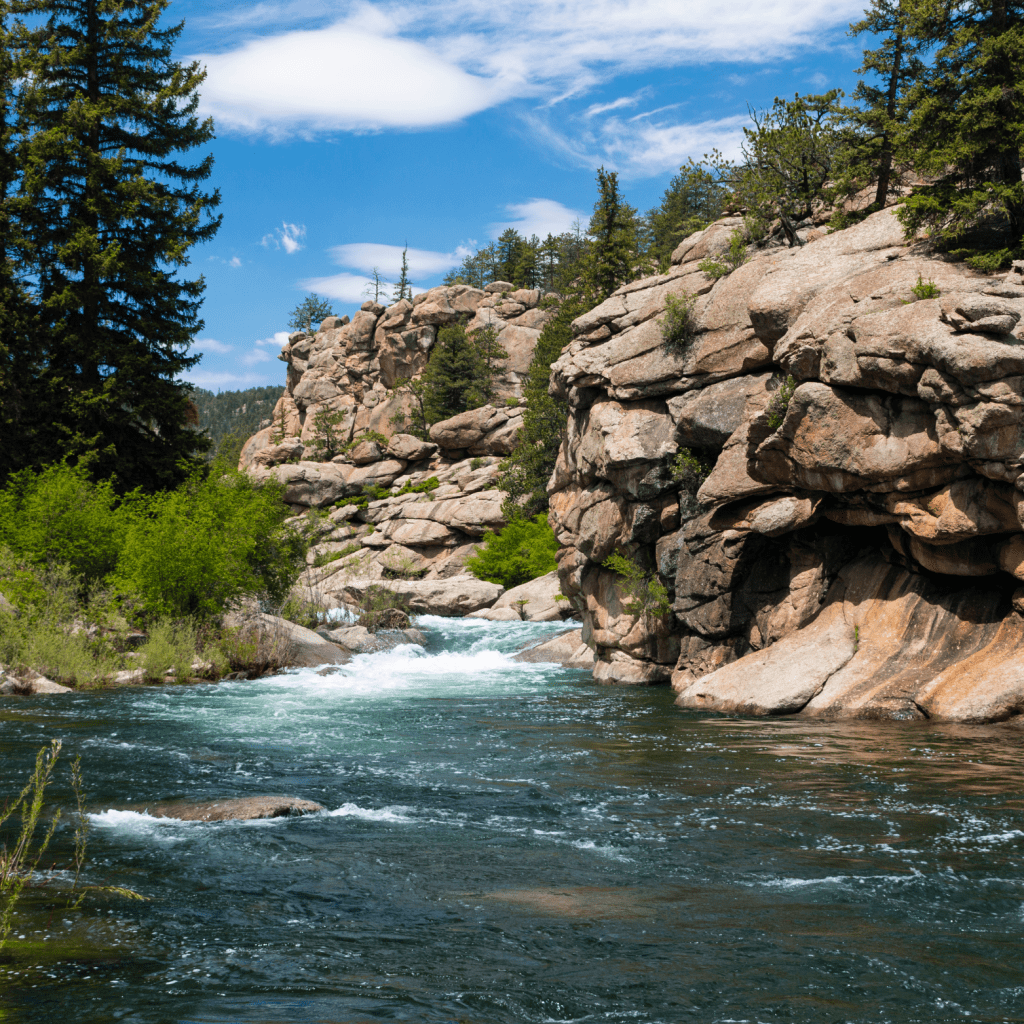
I sit on the splintered bench
where the trail drops close
to the river’s edge,
one boot untied,
laces dark from morning grass.

The wood pricks through my jeans
only when I swing my legs
so I have to choose between
comfort and carefree—
the mosquito zigzagging
around my wrist
reminds me to
slow down.

Below me, water folds over stone,
slides around a half-sunken branch,
catches for a second
on something I cannot see,
then keeps moving.

A world within a
world
within a
world.
Each with its own
beginning, middle, and
end.

I rest my elbows on my knees
and watch cottonwood seeds
land on the surface,
play Russian roulette
with the current and sometimes lose.

But sometimes they win.

There used to be an island here
but now
only swimming for fish
and food for one crane whose beak
was made for moments
like this.

Across the bank,
a sycamore leans like a dancer—
if I tried that move I might hurt myself.
But the sycamore—
graceful,
roots half exposed,
holding a wall of mud
through another season of rain.

What happens here at night?
Does the dancer feel lonely?

I run my thumb
along the groove
someone carved into the bench
years before I found it.
There used to be a heart
scribbled here.
Was it time
or circumstance
that rubbed it away?

Where do all the lovers go
who leave their hearts
on benches
in trees
and in one another's hands?

The river keeps carrying
branches, leaves, foam,
the occasional flash of silver,

and twenty feet downstream
a man in a fishing boat
has a pole for an arm,
a hat for eyes,
and a dream I cannot see—

I stay on the splintered bench
swinging my legs
watching the sunlight

feeling the shade.

—Iris Lennox
literary pen name of Jill Szoo Wilson
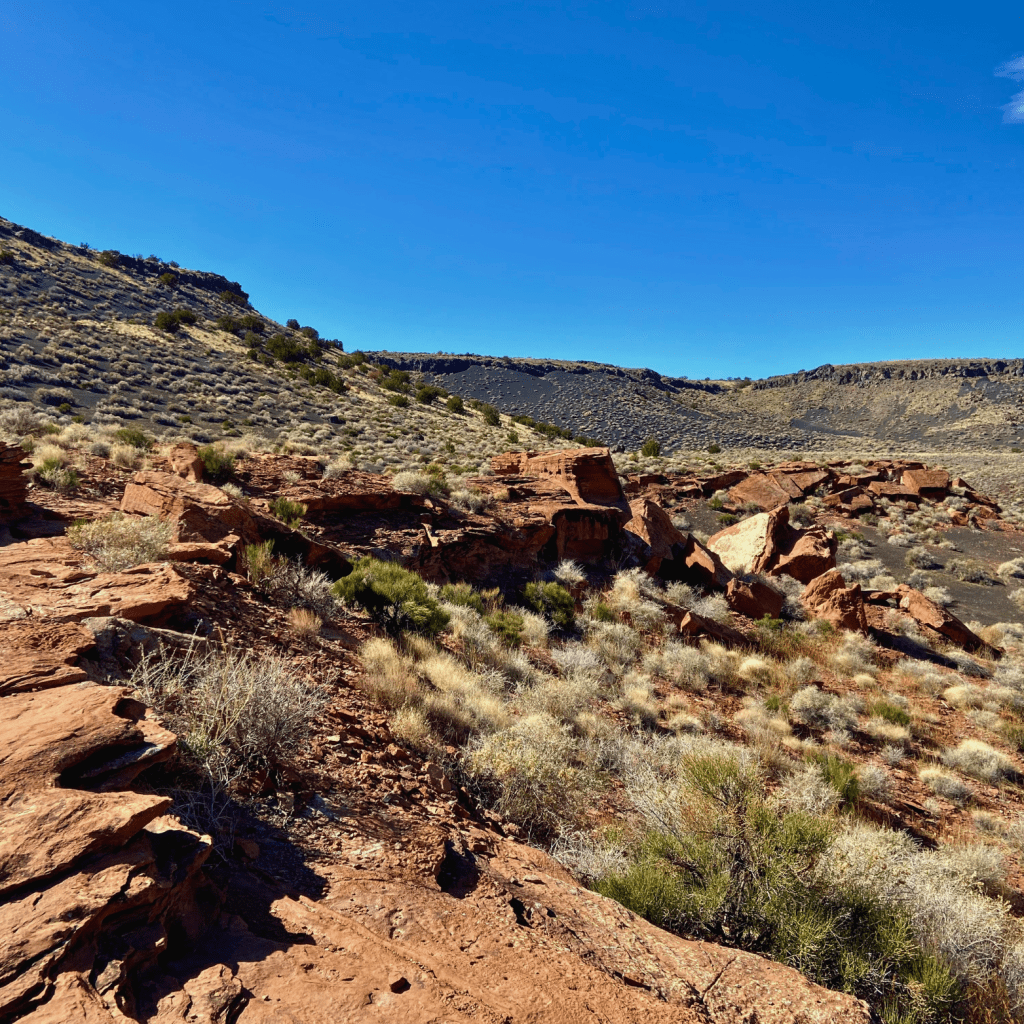
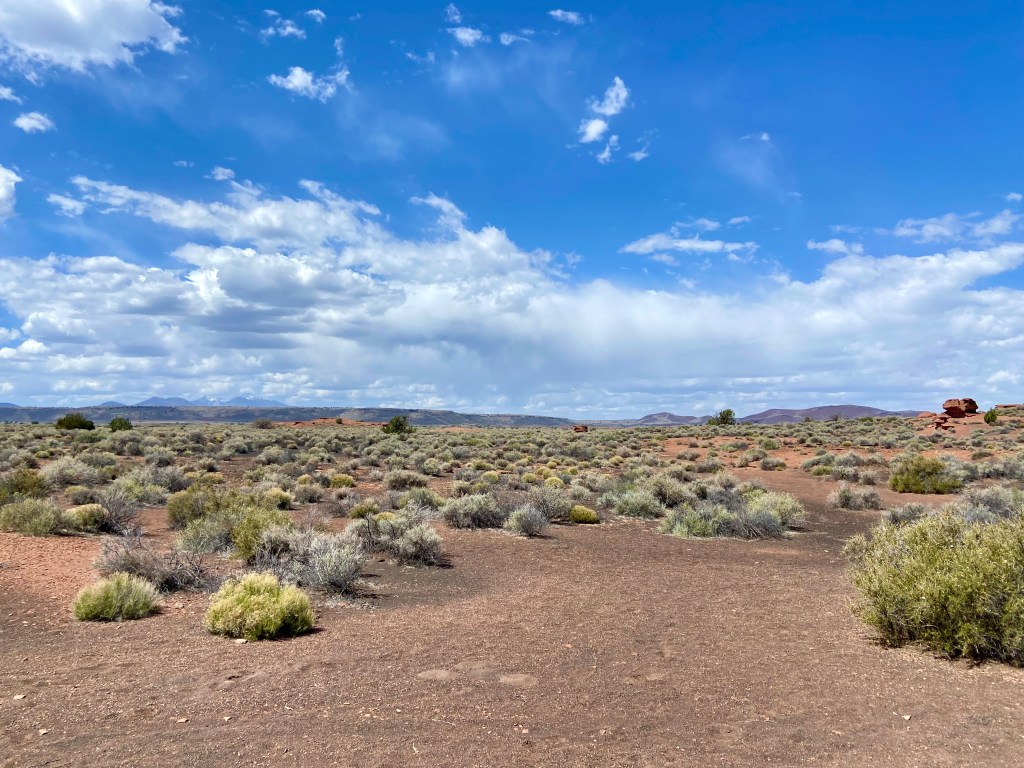
Morning lifts from the desert just before noon. I immediately regret each moment I missed— where was I when the sun rose here?
Light moves across basalt, sage, rabbitbrush, the red earth reflects warmth back into the blue.
Sunshine and earth, a love affair.
A strand of hair crosses my mouth and tickles my nose— as I swipe it away, I discover heat-burnished tenderness.
Sunshine, earth, and me— a love affair.
When I first arrived, I heard the crunch of my boots and all I brought with me. Water and ice sloshing against steel.
Also
half-finished conversations. A list. A sentence. A prayer, still wanting to know Him more.
Then the wind rises through the sage
and every branch answers.
Not all at once. Antiphonal. There must be a conductor here somewhere.
One stem, then another, then a hundred more clicking, brushing, rattling in no hurry to finish the song.
I have a feeling the song began at the beginning and will go on forever— it is a gift to hear this movement.
A Common Raven crosses low over the wash,
wings opening like someone who knows me and awaits my approach to the threshold.
Clearly, I am welcome here.
Higher still, a White-throated Swift not to be outdone cuts through the blue so quickly I hear the turn before I find the bird.
At my feet, a bee disappears into yellow rabbitbrush, comes out dusted, and goes right back in.
I'm proud of the bee and respect it enough to be a little scared, too.
Farther out, a Horned Lark drops three clean notes into the open country and flies off again. I'm struck by his boldness in speaking and not waiting— tell the truth, then let the echoes do the work.
Beauty and truth— companions from here to Kingdom come.
Even the grasshopper seems to understand.
Click. Up. Moving on. Trust.
And between all of it—
space.
Wide, sunlit, unoccupied space.
The kind that only exists here and anywhere there is desert. Around the globe but this one is mine, today.
I stand until my thoughts up. Click. Moving on. Standing still—
This was the answer when I asked one of my high school–aged acting students to give me an example of something that is “just one thing.”
“Yep, that’s correct,” I agreed. “Give me another.”
He thought for a moment. “Heaven is good, hell is bad.”
“Yes. Now let’s turn our attention to the horizontal. People, places, and things we can touch and see. Give me an example of something that is just one thing.”
“A car is just a car. A tree is just a tree. This building is just this building. My mom is just my mom.”
I wrinkled my nose when he made the final assertion. A tale as old as time. He stopped and waited for my response.
“Your mom isn’t only your mom. But also, a car isn’t only a car. A tree isn’t only a tree. This building isn’t only a building. Try again.”
A smirk grew across his face. I couldn’t tell if he was amused or annoyed. Maybe both.
“God is good. The devil is bad.”
I laughed. “That’s right. Why do you think you have to keep going into the spiritual realm to give me examples of things that are just one thing? Angels, demons. God, Satan. Why is that?”
He thought for a moment. “Because even though people go back and forth between those two kingdoms, the kingdoms themselves don’t change. We do, but they don’t.”
It was a good answer.
“When I’m coaching students to play villains,” I said, “one of the first things we talk about is the fact that villains don’t see themselves as villains. They see themselves as heroes.” Michael Shurtleff makes this point in his book Audition when he reminds us that if one thing is present in a scene, the opposite is also present. If Sally hates Peter, she probably also loves Peter. If Simon is grieving Teresa, it’s because he remembers their happiness.
We live in tensions. Between here and there. Then and now. Who we are and who we might be.
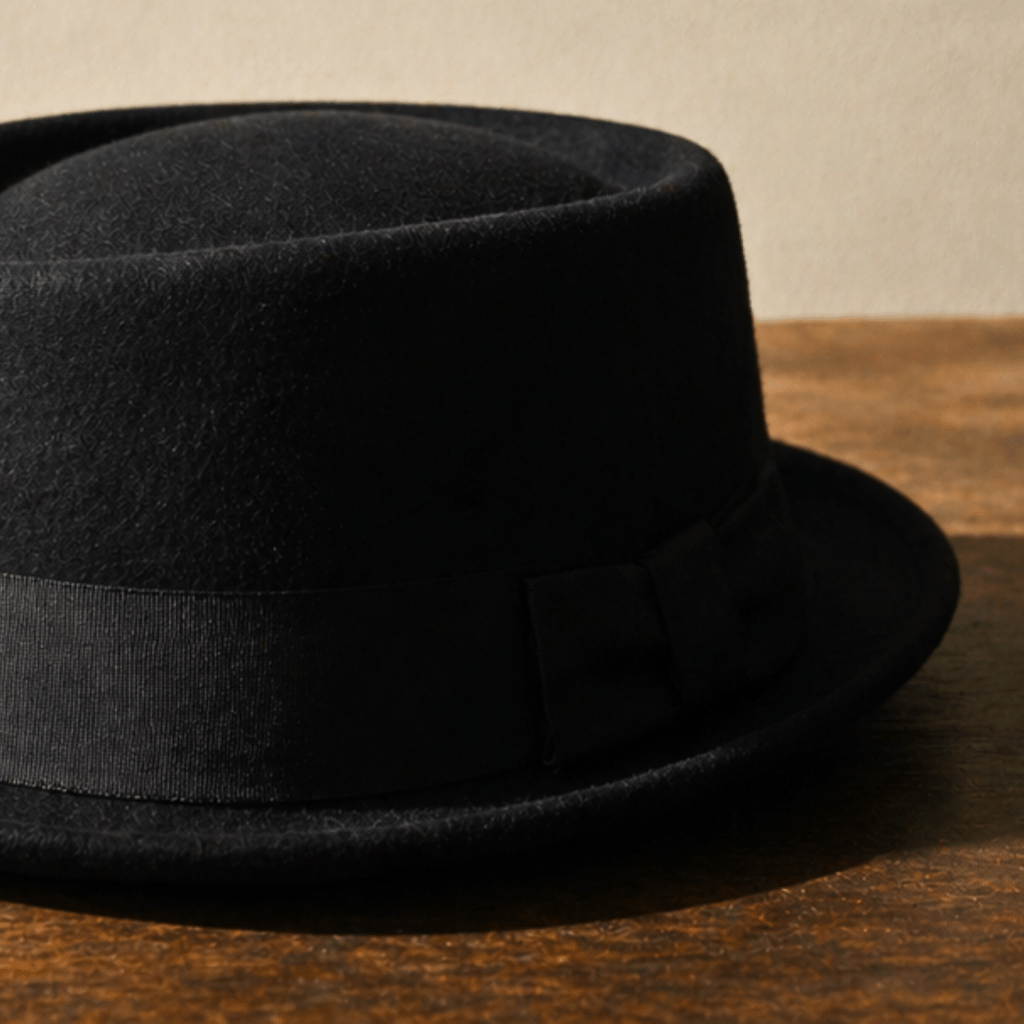
Take Walter White in the best series of all time, Breaking Bad. He begins as a high school chemistry teacher. Then comes the diagnosis. The bills. The fear of leaving his family with nothing. He starts cooking meth to provide for them, to secure a future that will outlast him.
And then something shifts.
He discovers he’s good at it. The work begins to fill an empty place inside himself. A need for control, for significance, for power. In one of his most famous lines, Walter White reminisces about his drug-lording days and concludes, “I did it for me. I liked it. I was good at it. And… I was really… I was alive.”
Is Walter White a villain? Or a hero? Both?
What makes him a villain? The drug that harms other people? The lies? The control he begins to exert over others? The blood that clings to the money he brings home?
What makes him a hero? The motivations with which he acted early on? The care his son receives? The fact that he’s working to build a future? The moments when he protects the people he loves?
Ask Walter, and he’ll tell you he’s a hero. Especially when he believes his objective is to provide for his family. That is the story he tells himself.
And still, the bodies pile up around him.
Aleksandr Solzhenitsyn writes in The Gulag Archipelago:
“The line dividing good and evil cuts through the heart of every human being.”
I turned back to my student.
“Think of your worst moment. A time when you chose to be cruel. Did you allow yourself to realize you were being cruel, or did you try to convince yourself you weren’t that bad?”
He didn’t hesitate. “I justified it. I knew I was wrong, but I made excuses. I compared myself to people who are worse than I am.”
“You chose something dark and still looked for light. What did you do to relieve that tension?”
“I tried not to think about it. Oh! And, I helped more at home. I told people I was volunteering at church. I stayed busy doing good things, so other people didn’t think I was a jerk. I guess I was also trying to switch back into a good person.”
I nodded.
“So you were a villain. And you acted like a hero.”
“Yeah.”
“So you weren’t God or the devil. You were aware of both. And you chose, moment by moment, how to move toward what you wanted while carrying both at once.”
“Yeah.”
The wheels of thought whirred.
Nothing is ever just one thing.
When you’re playing a bad guy, you still have to know what he’s moving toward. Somewhere inside that pursuit, something he recognizes as good is leading him forward.