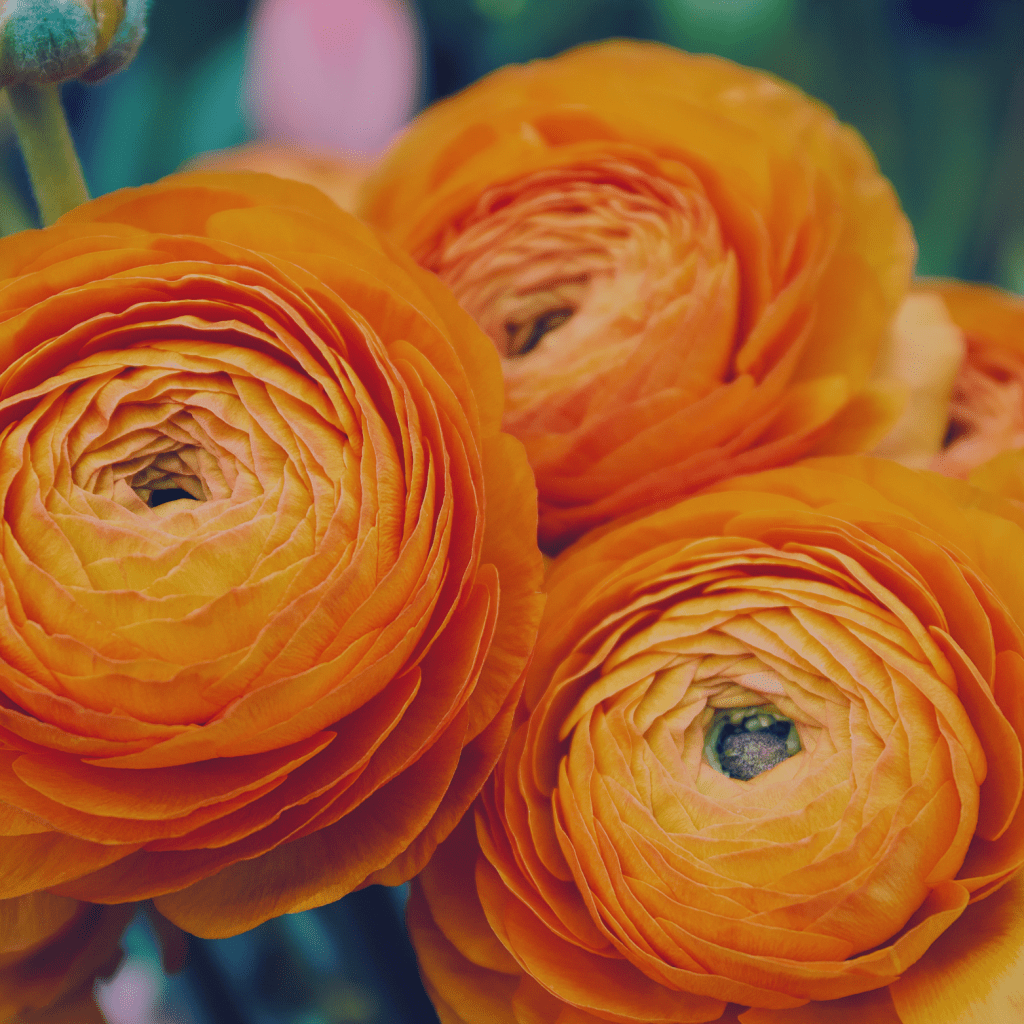
They say it’s a flower.

And it is.

Set in a glass jar on the table,
stems cut at an angle,
water rising just past the leaves.

Still—

what is it, exactly,
that keeps arranging itself
in this particular way?

Petal beside petal,
all with backs arched, stretching,
yawning in fullness of sound,
breath released.

I would like to ask it
when the first layer
became the second.

Whether there was a moment
of decision—

or whether it was inevitable.

Look closely:

one curve gathers light,
another releases it,
a third holds both
in histrionic embrace.

If you turn the jar,
the color shifts.

Orange, certainly.
Yellow, also.
Something between them
that lights a cigar in the backroom
and waits for you to come to the door.

It would be tempting to say
the center contains the answer.

But then—

why does each outer layer
have its own beginning, middle,
and end?

Why does nothing collapse
once the inside appears?

Perhaps the truth behaves
like this.

Not hidden, exactly.

Distributed.

You could begin anywhere.

Here, for instance—
with the outermost petal,
thin as it is,
still holding its place.

Or here—
closer in,
where the folds tighten
without strangling away
the once upon a time.

Or here—
where the color deepens
just enough
to suggest another version.

Each would be accurate.

Each would leave something out.

There must have been
a first unfolding.

A moment
when one surface
made room for another.

Or perhaps
they arrived together,
agreeing in advance
to share the same space.

A ranunculus is no children's book.

Layer beside layer,
each one present
at the same time.

And we,
standing at the table,

decide where to look first.

— Iris Lennox, 2026
 Iris Lennox