Tag: Flowers

  • Justice


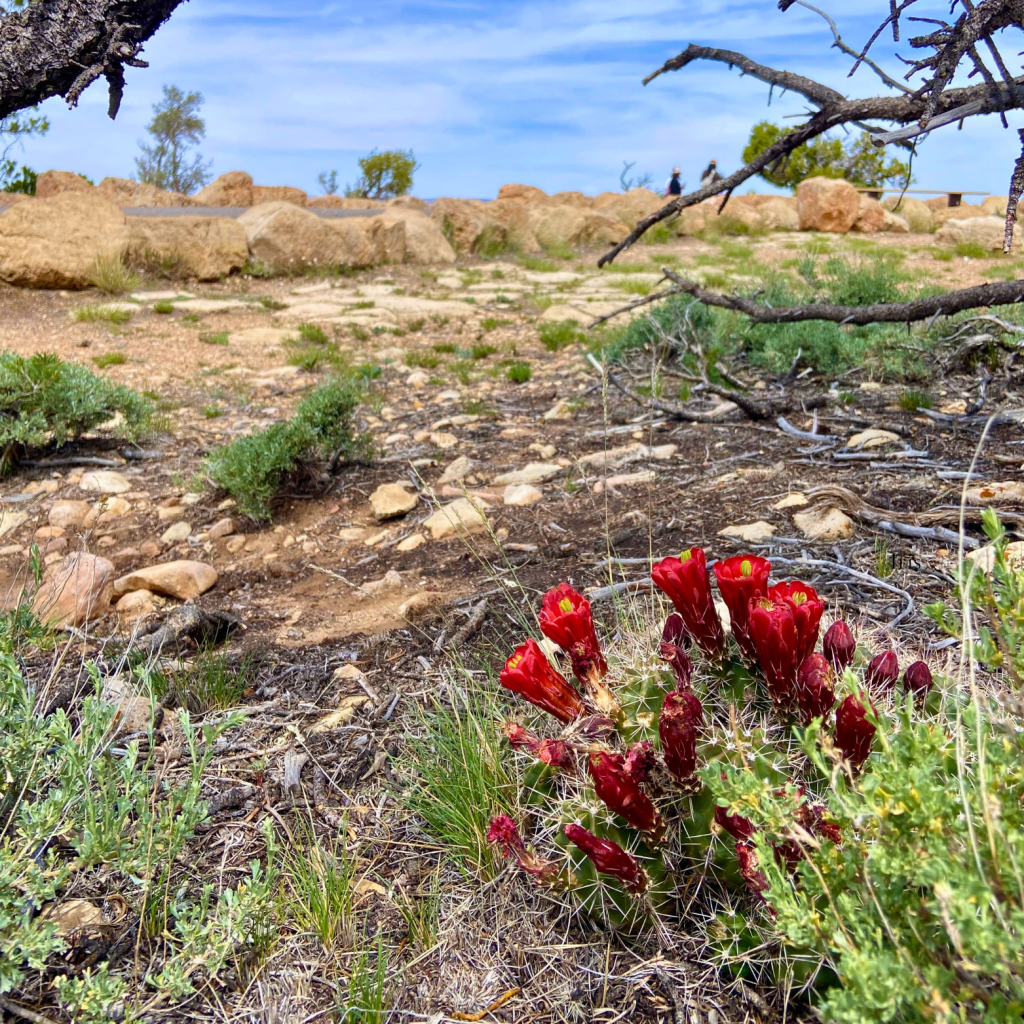
    At the rim of the Grand Canyon,
    Without widening, announcing, or calling the eye—
    it gathers.

    Close to the ground,
    armed at every point,
    it holds what little comes—
    light taken in,
    water kept,
    time pressed inward
    until it thickens.

    In the long discipline of it—
    through heat, through absence,
    through the steady refusal of the earth to give—
    a form is made
    that does not bend outward.

    It keeps its boundary.

    And then—
    at the very places of defense—
    a breaking open.

    Not of the structure,
    but from within it.

    Red, rising at the tips,
    petals pushing through
    the same points that once kept distance,
    softness unfurling precisely
    where sharpness was required.

    The form remains—
    spine, circle,
    the careful architecture of survival—

    and yet, from that same design,
    another shape appears.

    On the surface—
    color, sudden,
    plain to the eye.

    Beneath—
    a long keeping,
    a measure held
    without witness,
    without haste.

    The cactus carries both at once,
    dividing nothing,
    choosing neither.

    And we, drawn to what widens,
    what opens easily to us,
    pass by—
    standing at the edge of what is vast,
    naming that grandeur,
    and missing what has taken form
    among the spines.

    In the keeping of it,
    in the exactness of boundary
    and the timing of its release,
    God gives:

    what holds its form,
    what keeps its boundary
    under pressure,
    without collapse—

    and what opens
    only where it has been formed to open,

    until what has been gathered in silence
    appears,
    not everywhere,
    but precisely—

    at its edge
    where strength
    becomes visible.

    —Iris Lennox

  • Ranunculus


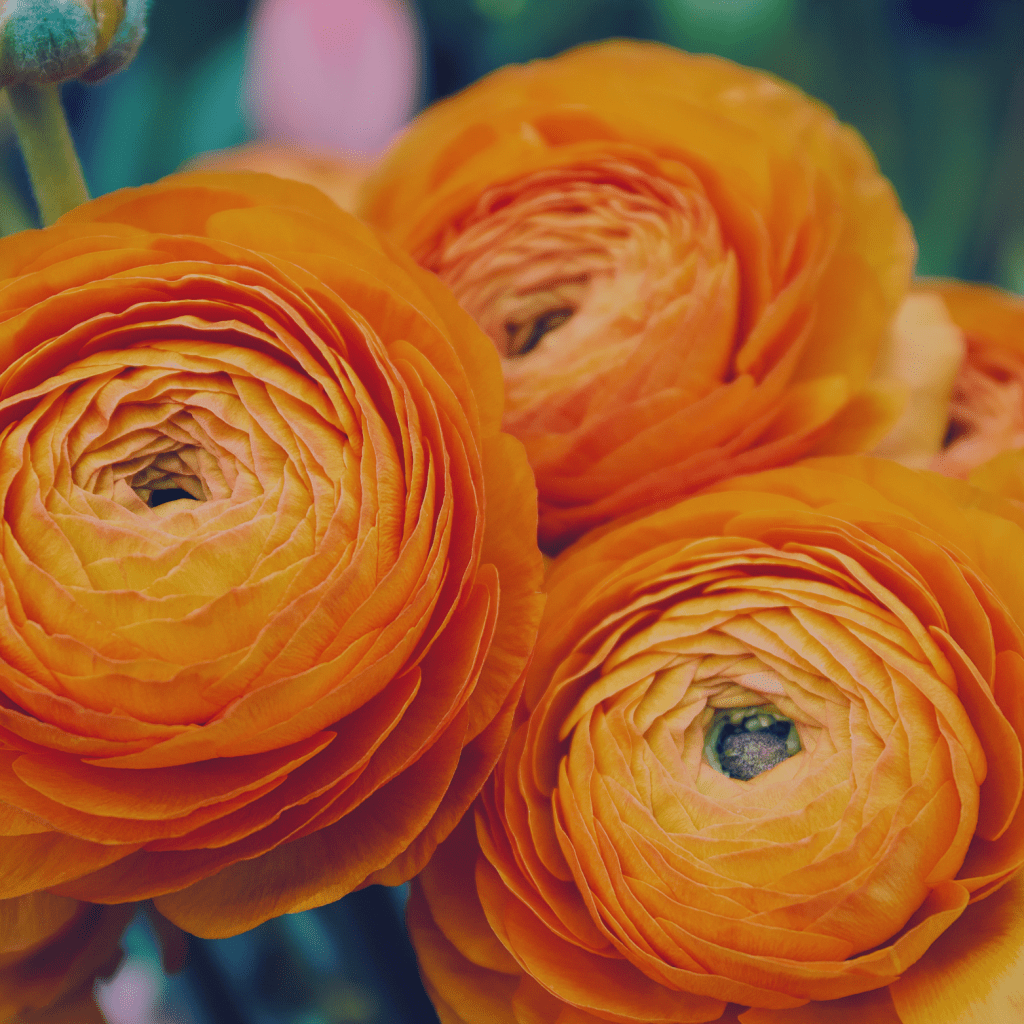
    They say it’s a flower.

    And it is.

    Set in a glass jar on the table,
    stems cut at an angle,
    water rising just past the leaves.

    Still—

    what is it, exactly,
    that keeps arranging itself
    in this particular way?

    Petal beside petal,
    all with backs arched, stretching,
    yawning in fullness of sound,
    breath released.

    I would like to ask it
    when the first layer
    became the second.

    Whether there was a moment
    of decision—

    or whether it was inevitable.

    Look closely:

    one curve gathers light,
    another releases it,
    a third holds both
    in histrionic embrace.

    If you turn the jar,
    the color shifts.

    Orange, certainly.
    Yellow, also.
    Something between them
    that lights a cigar in the backroom
    and waits for you to come to the door.

    It would be tempting to say
    the center contains the answer.

    But then—

    why does each outer layer
    have its own beginning, middle,
    and end?

    Why does nothing collapse
    once the inside appears?

    Perhaps the truth behaves
    like this.

    Not hidden, exactly.

    Distributed.

    You could begin anywhere.

    Here, for instance—
    with the outermost petal,
    thin as it is,
    still holding its place.

    Or here—
    closer in,
    where the folds tighten
    without strangling away
    the once upon a time.

    Or here—
    where the color deepens
    just enough
    to suggest another version.

    Each would be accurate.

    Each would leave something out.

    There must have been
    a first unfolding.

    A moment
    when one surface
    made room for another.

    Or perhaps
    they arrived together,
    agreeing in advance
    to share the same space.

    A ranunculus is no children's book.

    Layer beside layer,
    each one present
    at the same time.

    And we,
    standing at the table,

    decide where to look first.

    — Iris Lennox
  • African Violets


    Despite the absence of any reliable signal—
    no drooping worthy of alarm, no crisping at the edges,
    no official declaration of thirst—
    the plant insists on requiring water
    at some precise and undisclosed moment.

    Its leaves offer only minor adjustments,
    a change so slight it could be attributed
    to lighting, mood, or coincidence—
    the kind of evidence that refuses to testify.

    And yet, water must be given.

    Too early, and the roots object in silence.
    Too late, and the same silence deepens,
    as though agreement had been reached
    without my participation.

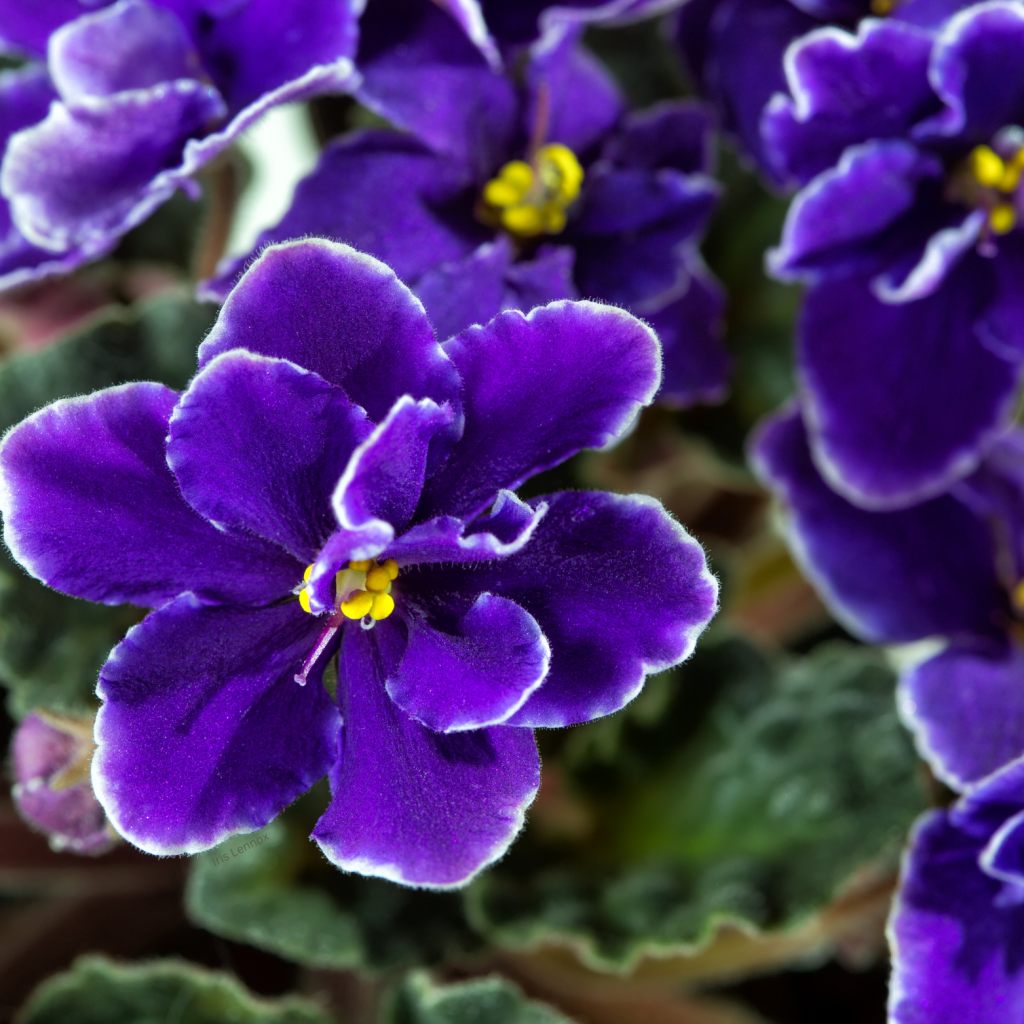
    The purple one presents no difficulty.
    Six blooms at once,
    as if it had already reviewed the conditions of the room
    and signed without revision.

    The pink one remains undecided.
    One bloom, paused indefinitely,
    neither withdrawn nor committed—
    a position I recognize.

    There are, apparently, forms of life
    that do not improve under observation.
    This complicates matters.

    My grandmother knew when to water them.
    Not through measurement, not by schedule,
    and certainly not by consulting the leaves for clarity.
    She stood near them, which was enough.

    I stand near them with coffee.
    Again with afternoon tea.

    The water disappears from the tray
    without acknowledgment or correction.
    No confirmation is issued.

    The purple one continues,
    untroubled by my involvement.

    The pink one—
    after a period of complete inaction,
    with no visible shift in circumstance—
    opens.
    —Iris Lennox
  • Namesake


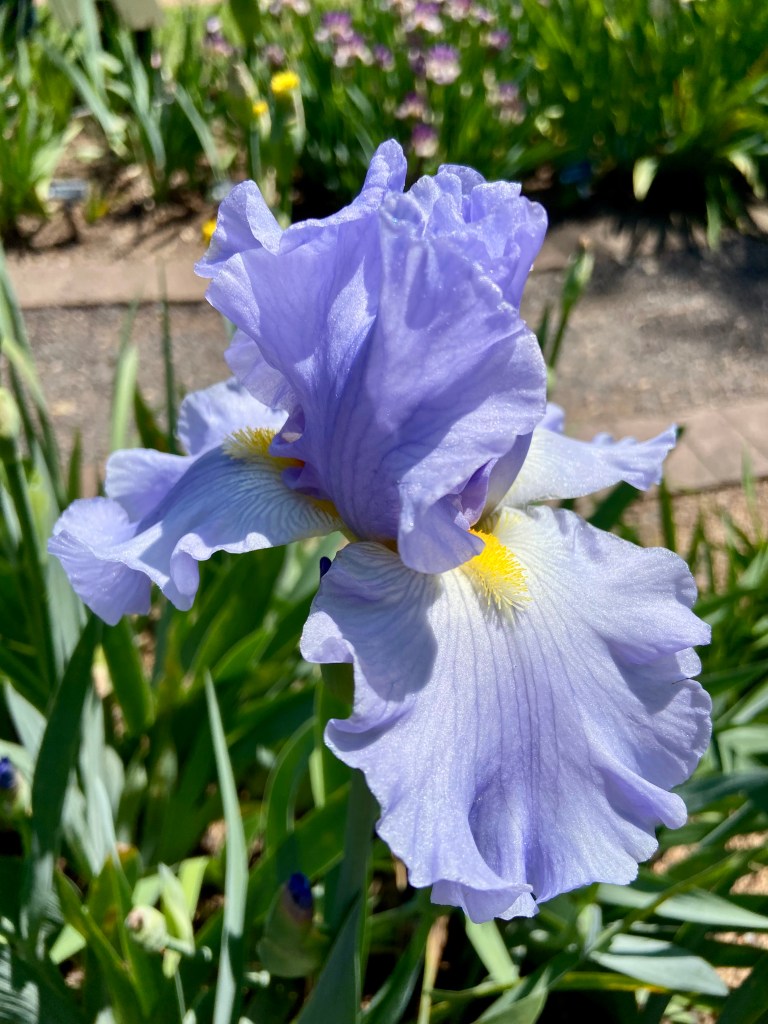
    This one did not arrive gently.

    The edges remember something—
    a pressure,
    a folding back,
    as if each petal had to argue
    for its place in the light.

    Nothing about it is smooth.

    The ruffles hold.
    The color deepens where it was once hidden.
    Even the softness has weight to it.

    You could say it opened.

    But that would miss
    what it endured to become open.

    There are days
    the sky lowers itself without warning,
    and everything living is asked
    to stay.

    No explanation is offered.
    No promise of outcome.
    Just weather.

    Still, something in the root
    keeps drawing what it can.

    Still, something in the stem
    lifts what it has been given.

    And when it is finally visible—
    the pale, steady unfolding—
    no one sees the storms.

    Only the shape they left behind.

    Only the quiet fact
    that it did not close again.

    Only the way it stands
    as if the breaking of it
    was never the end.

    —Iris Lennox