Tag: hiking

  • Route 66


    A bench possesses very few options.

    It cannot follow the river
    when the Meramec rises beyond its banks.

    It cannot seek shade in July
    or shelter in January.

    It cannot complain about mosquitoes,
    cottonwood fluff,
    fallen branches,
    or the weight of snow.

    Someone chose its view:
    One sliver of sky.
    The trees.
    A long curve of water
    moving northeast toward someplace else.

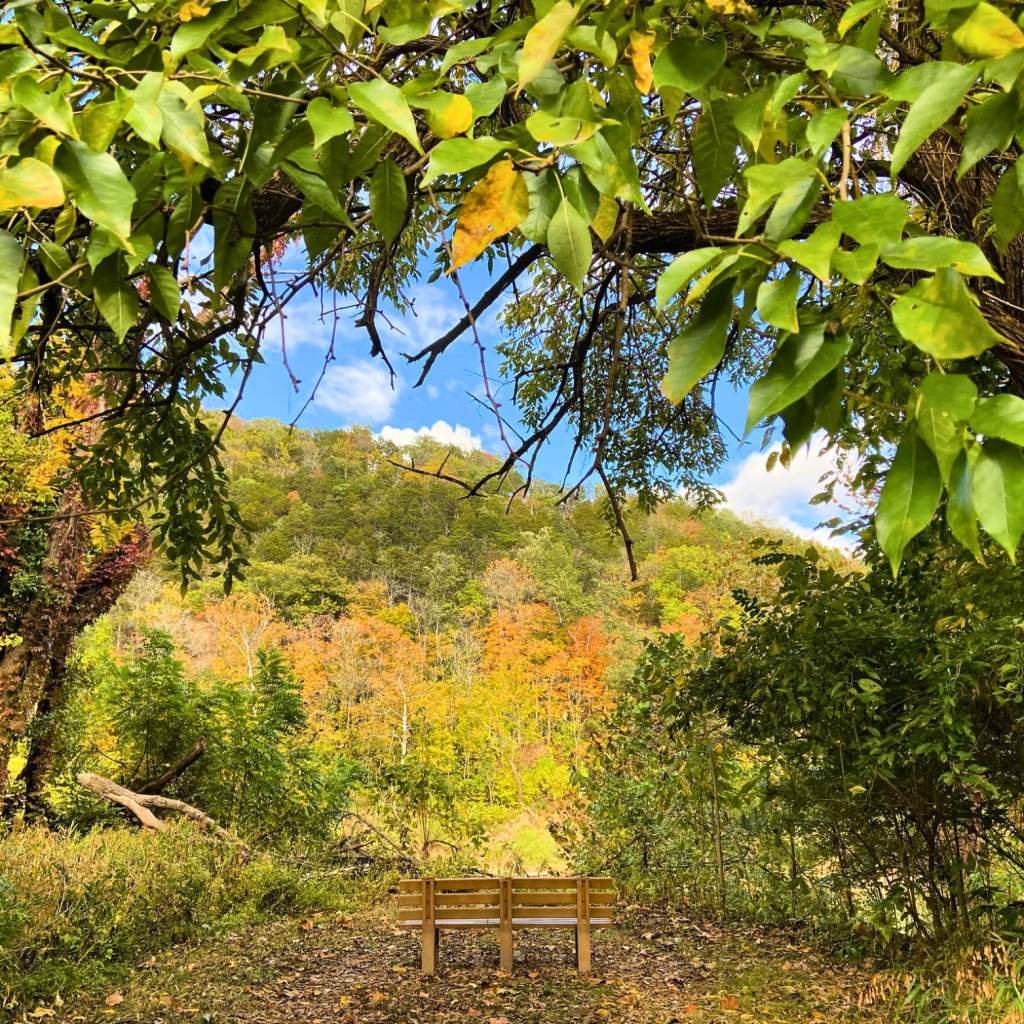
    When I first photograph it
    in Route 66 State Park,
    I do not yet know we will spend
    a year together.

    I am only walking a trail.

    The bench is only a bench.

    The river is moving quickly that day,
    green with spring runoff.

    Leaves unfold overhead.

    Somewhere beyond the trees,
    a train sounds its horn.

    I take a photograph and continue on.

    Then I return.

    A few days later.
    A few weeks later.

    Again.

    Again.

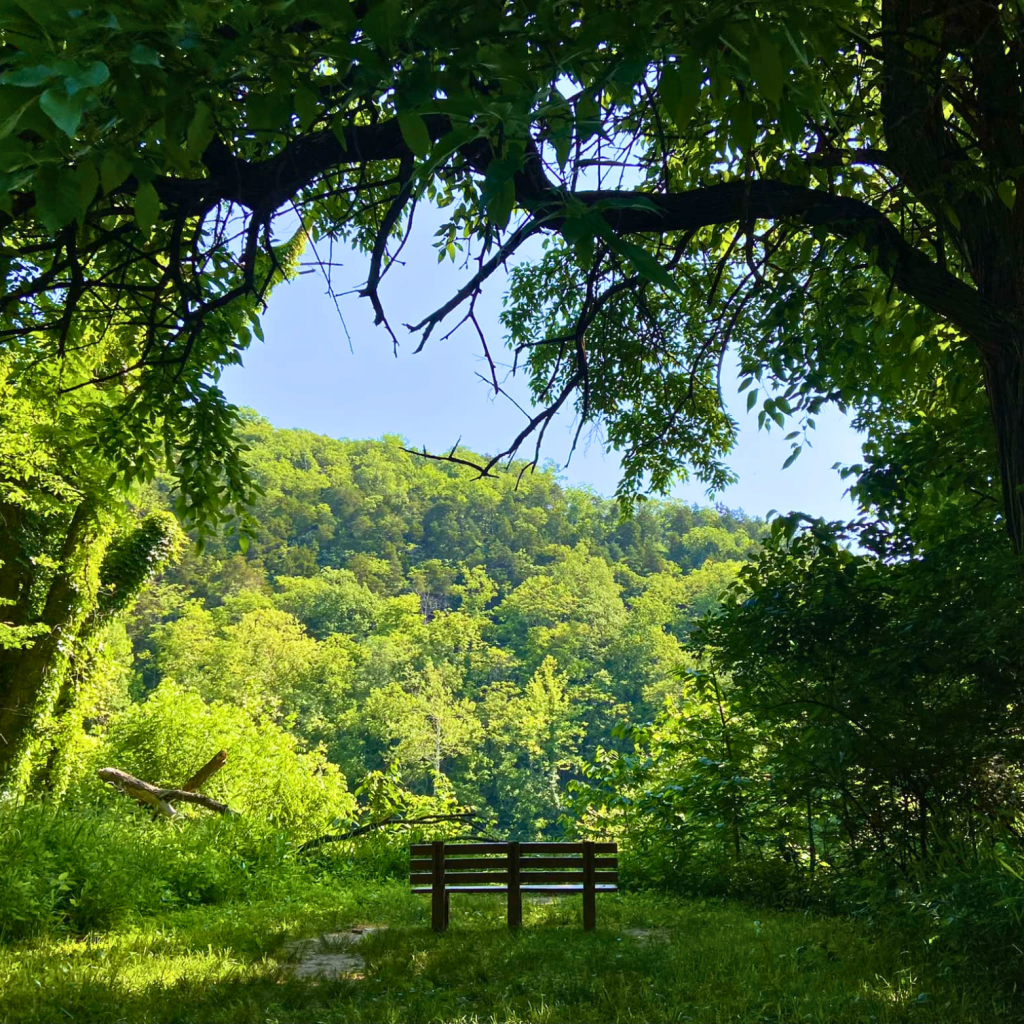
    The river lowers.
    The air grows thick enough to wear.
    Vines climb fallen tree trunks.
    Grass thickens.

    The air hums with insects
    so determined in their purpose
    they seem incapable of doubt.

    Autumn arrives carrying its familiar tools.

    Gold.
    Copper.
    Rust.

    Leaves gather around the legs
    and drift across the seat.
    The birds change shifts in the air
    and the shadows lengthen below.

    Then winter.

    The kind that introduces itself quietly at first.
    A single hard frost.
    Bare branches.
    A thin skin of ice.

    Then snow.

    Then wind.

    Then the sort of cold
    that makes a bright blue scarf question
    perfectly reasonable decisions.

    I walk a mile through a wind chill
    of thirteen below zero
    to take another photograph.

    The bench, meanwhile,
    has traveled nowhere at all.

    By then,
    a question has begun following me
    up and down the trail.

    At what point does a bench
    become an acquaintance?


    Not a friend.
    That would be absurd.

    The bench knows nothing about me.
    It cannot recognize my footsteps.
    It has never once asked
    how I am doing.

    Yet I find myself looking for it
    before I look for the river.

    I notice when a branch falls nearby.
    I wonder how it fared
    when tornado sirens blared.
    I am relieved to find it waiting
    where I left it.

    The year continues assembling itself.

    Rain after rain.

    Season after season.

    Photograph after photograph.

    One afternoon I stand beside it
    and look across the water.

    A hawk flies overhead,
    followed by a kettle of vultures,
    circling.

    "Something is about to be eaten,"
    I say out loud to no one,
    and I'm a little bit surprised
    there is no answer.

    The trees are busy becoming
    whatever comes after this.

    For a moment,
    neither of us is in a hurry.

    Above the river,
    a branch sways gently in the wind.

    And light moves across the bench
    like a hand.

    —Iris Lennox

  • Borrowed Earth


    At the bathroom mirror
    of a rented casita
    somewhere in Flagstaff,
    I discover
    half the desert
    came home with me.

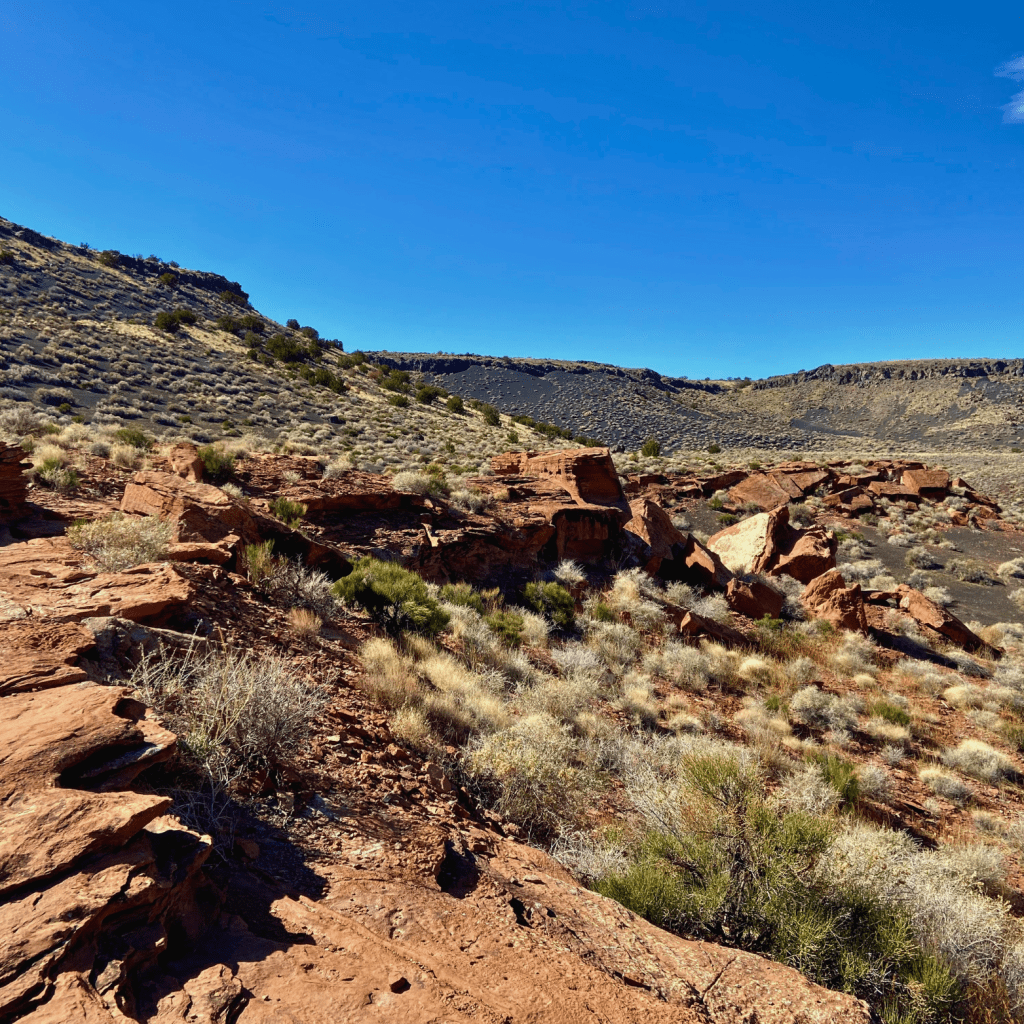
    Red dust
    gathers along my collar,
    settles into the seams
    of my brown canvas backpack,
    which used to be cream-colored,
    and fills the tiny crease
    above my sock line
    where the trail
    outsmarted me.

    When I untie my boots,
    sand pours
    onto ceramic tile
    in two soft cones.

    The room suddenly feels
    like a painting,
    “Composition of Woman
    and Borrowed Earth.”

    Juniper pollen
    clings to the cuffs
    of my sleeves.

    There’s grit
    beneath my fingernails,
    iron-rich and stubborn,
    the color of old brick
    after rain.

    OPI might name it
    Jazz Hands In the Desert.

    I touch my scalp
    and feel dust there too,
    worked deep into my hair
    through wind,
    sweat,
    sunlight,
    and twelve miles
    of canyon trail.

    Good.

    Today earned its right
    to linger a little longer.

    Some people
    spend all day
    trying not to stain themselves.

    I understand the instinct.

    There are white couches.
    Important emails.
    Polished shoes.
    Entire industries
    built around remaining untouched.

    But somewhere between
    mile four
    and the moment
    I sat directly on a warm rock
    without checking
    for dust,
    my body remembered
    something older
    than neatness.

    Children know it first.

    Mud puddles.
    Finger paint.
    Grass stains.

    At one point
    I crouched low
    to photograph
    a cluster of desert marigolds
    forcing themselves
    through fractured stone.

    When I stood again,
    one palm carried sap,
    and a line of sweat
    ran slowly
    from my neck
    down the center
    of my spine.

    Perfect.

    By late afternoon,
    my shoulders glowed pink,
    my lips tasted faintly
    of salt and sunscreen,
    and every object
    inside my backpack
    had acquired
    the thin orange film
    of Arizona.

    Even the map.

    Especially the map.

    I ate trail mix
    with dusty fingers
    and decided
    the extra crunch
    only improved it.

    Somewhere near the ridge,
    a woman passing me said,
    “Beautiful day.”

    Then both of us
    kept walking
    without needing
    to improve
    upon the sentence.

    There's nothing important
    to say
    out there.
    Beauty speaks
    and we simply listen.

    And feel.
    And I'm convinced—

    The body experiences
    some landscapes
    on a cellular level.

    Scientists eventually
    gave the phenomenon
    a long Latin name
    after discovering
    certain microorganisms
    in the soil
    can calm the nervous system.

    Mycobacterium vaccae.
    But I think we should call it
    thereasonpeoplecry
    when kneeling in the dirt.

    Meanwhile,
    every child
    who ever came home
    with muddy shoes
    was already conducting
    the experiment.

    Back at the casita,
    the sink runs briefly
    orange-brown
    when I wash my hands.

    Dust circles the drain.

    I pull one sock
    inside out
    and enough sand falls free
    to start a small dune
    beside the bathmat.

    I hope my Airbnb rating
    doesn't take a hit.

    The shower waits.

    Still,
    I linger a moment longer
    in the mirror,
    sun-tired,
    windblown,
    grinning slightly
    at the woman
    standing there
    with desert
    still gathered
    in every visible place.
    Tonight,
    Arizona leaves slowly.

    One grain at a time.

    —Iris Lennox
    This poem appears in The Giving of Weight.
  • Languidity


    This red shelf
    was a frame

    and now it's a stage
    upon which I stand
    alongside the kind of beauty
    usually reserved for dreams.

    To gaze upon
    is different than
    to stand upon
    so I suddenly feel the
    weight of my own
    inadequacy to speak.

    Vibrant beauty steals the voice.

    Perhaps that's why
    our mouths naturally open
    in the midst of awe.

    The desert speaks for me.

    "Sit down, city girl.
    I'll take it from here."

    And so I do.

    Daypack on dirt.
    Dust on denim.
    Knees bent below me
    like a student
    poised to receive.

    The lesson will be shown.

    First
    by what bends.

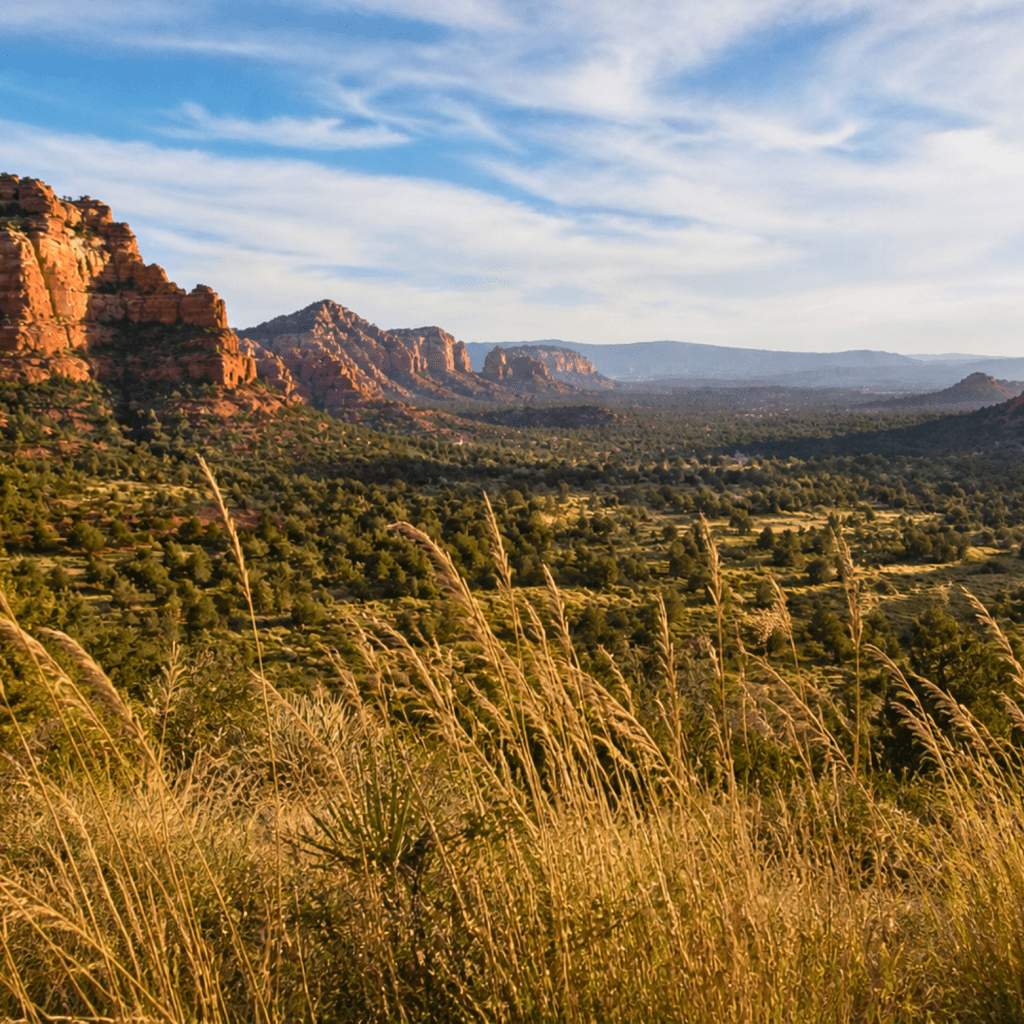
    Just north of the wash
    where blue grama,
    needle grass,
    and rabbitbrush
    catch the last light
    before the canyon
    yawns and stretches
    into the stars,

    thousands of stems
    lean west

    all at once.

    Then east.

    Then halfway back,
    seed heads suspended
    between pull
    and release.

    A gust slips down
    through juniper,
    over shale,
    between ocotillo thorns,

    and the grasses

    begin again.

    Is it a dance?
    A conversation?

    Slow.

    Loose-hipped.

    Unashamed.

    They dance
    with the sky
    like old lovers
    who no longer
    need music.

    Only then
    do I notice

    who has been
    watching
    all along.
    I'm not the only audience
    here.

    I'm no audience at all.

    Nothing here is done
    for me. I'm more like a
    stow-away. But—

    Sandstone
    watches
    keeping its spine.

    Basalt
    keeps its counsel.

    A saguaro
    holds both arms
    where it left them
    the year I was born,
    suspending the final
    clap.

    From a distance
    it looks
    like contrast.

    Up close,

    it looks
    more like trust.

    One body
    bending.

    One body
    witnessing.

    One learning
    through motion.

    One learning
    through stillness.

    And the wind,
    passing through them all,

    enjoying the secrets
    each one keeps—
    the loyal wind knows
    and withholds the details.

    So I sit here,
    dusty
    studying the grasses' sway

    while cactus,
    juniper,
    and cliff face

    watch.

    Where does this movement
    exist
    outside this valley?

    Where
    else does yielding
    carry this much strength?

    In kelp forests
    thirty feet below
    where sunlight cascades
    and breaks?

    In the chest
    of a sleeping child
    who trusts her blanket
    to stand guard?

    In the cottonwood,
    the heron,
    the mare,
    the marriage,
    the woman

    who has learned
    to stop fighting
    every fall,
    to stop tightening
    at every pull,
    to stop mistaking
    the giving of weight
    for the losing of self.

    Perhaps languidity
    has been here all along.

    In muscle.

    In memory.

    In old roots
    and older love.

    In anything
    that has learned

    when to lean.

    —Iris Lennox