The first time Jack asked
why I never had children,

we were sitting by the front window
of a little coffee shop
where the floorboards bowed
slightly toward the door
and every time someone came in,
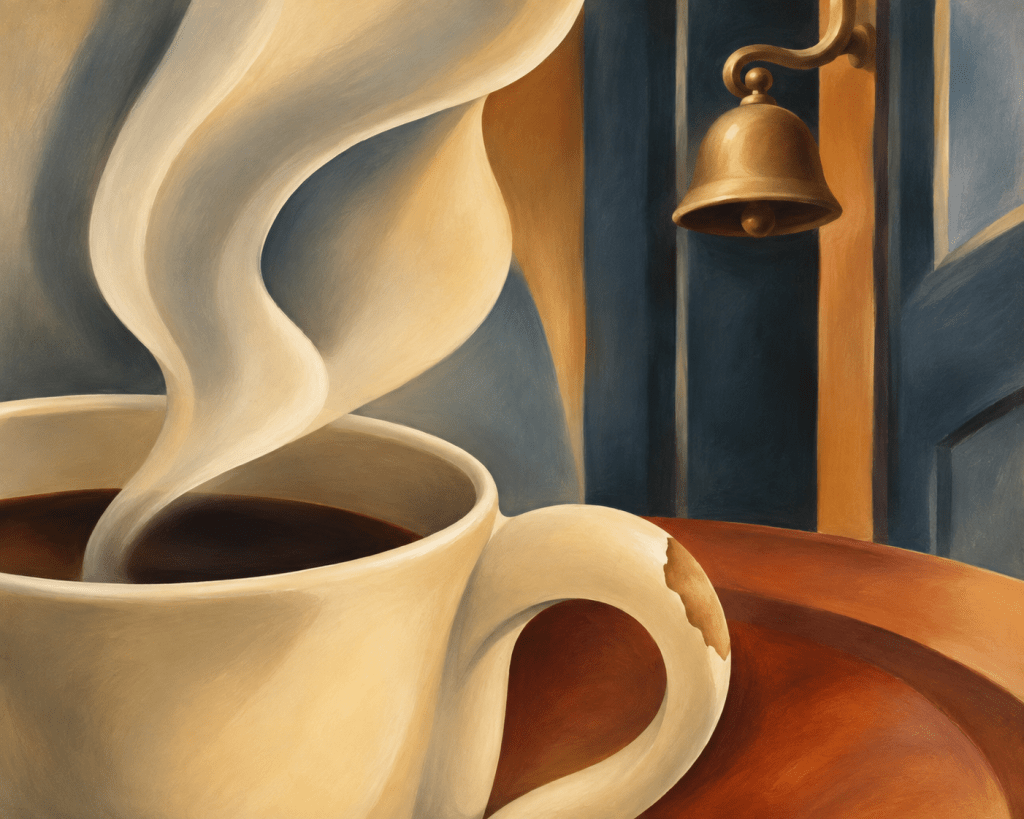
a brass bell
interrupted every conversation.

It was late November.

The kind of afternoon
when the sky can’t decide
whether to snow
or watch the birds
begin their migration
for warmer states.

I remember because
my coat was still on
and my tea had gone untouched,

steam lifting
in thin pale ribbons
between us,

curling past his hands.

His cup was black.

Mine was chipped cream,

a small crescent missing
from the handle
where someone before me
had held on too tightly
or not tightly enough.

Life is that way, isn’t it?

There is more than one way
to break a thing.

Outside,

a young mother
pushed a stroller past the glass,

one mitten in her teeth,
one shoelace loose,
her little boy turned backward
so he could watch
something he’d already passed
on the pavement
but wasn’t done admiring.

Probably a bug.

Little boys tend to linger
over bugs.

Then Jack asked,

Why haven’t you had children?

Not suddenly.

Not heavily.

As though he were asking
whether I preferred blue
to red,

or hardcovers
to paperbacks,

or why I always chose
the corner seat
facing the door.

I smiled first.

People do that
when the body
is buying time.

I wrapped both hands
around the mug,

felt warmth press
into the center of my palms,

and said
what had become
second nature by then—

The Lord just hasn’t given us children.
We tried for a long time.
It never happened.

Jack lowered his eyes
for just a moment,

thumb brushing
against the folded edge
of his sleeve,

as though what I’d handed him
required care.

Then he looked up
and smiled
through two pauses
and a beat.

You would have made
a wonderful mother.

And something in me,
quiet for years,
sat up.

Or maybe tripped?

A hinge.

A draft.

A room
I thought
I'd already closed.

After that,

life kept happening.

Conversations
that began with nothing—

music,

students,

road construction,

the shape of clouds—

and before I understood
how far we’d traveled,

the man who first asked
why I’d never had children

was speaking
as though he already knew
what ours might look like.

Months later,

there were little white pills
lined up
beside my bathroom sink,

half a cracker,

a glass of water,

the morning moving slowly
through the blinds.

And still—

Jack spoke of blue eyes.

A crooked smile.

Long fingers.

A laugh
that would sound
like mine.

And somewhere
between longing
and nausea
from the pills
meant to keep her away,

our daughter
had a name.

Clara.

I said it once
alone in my kitchen,

bare feet on tile,

the dishwasher humming,

afternoon light
moving across the counter
so slowly
it looked like a memory.

Now when I think of her,

I don’t see a child.

I see steam.

A chipped handle.

A shoelace
dragging through November.

And a man
who looked
like winter sunlight—

warm enough
to trust,

cold enough
to leave.

—Iris Lennox