I crouch where the sandstone breaks into shallow shelves the color of old bone, one knee in dust, the other on loose grain that slides downhill with every shift of my weight.
The rock is so warm I imagine an ancient woman setting a kettle here and boiling water for tea.
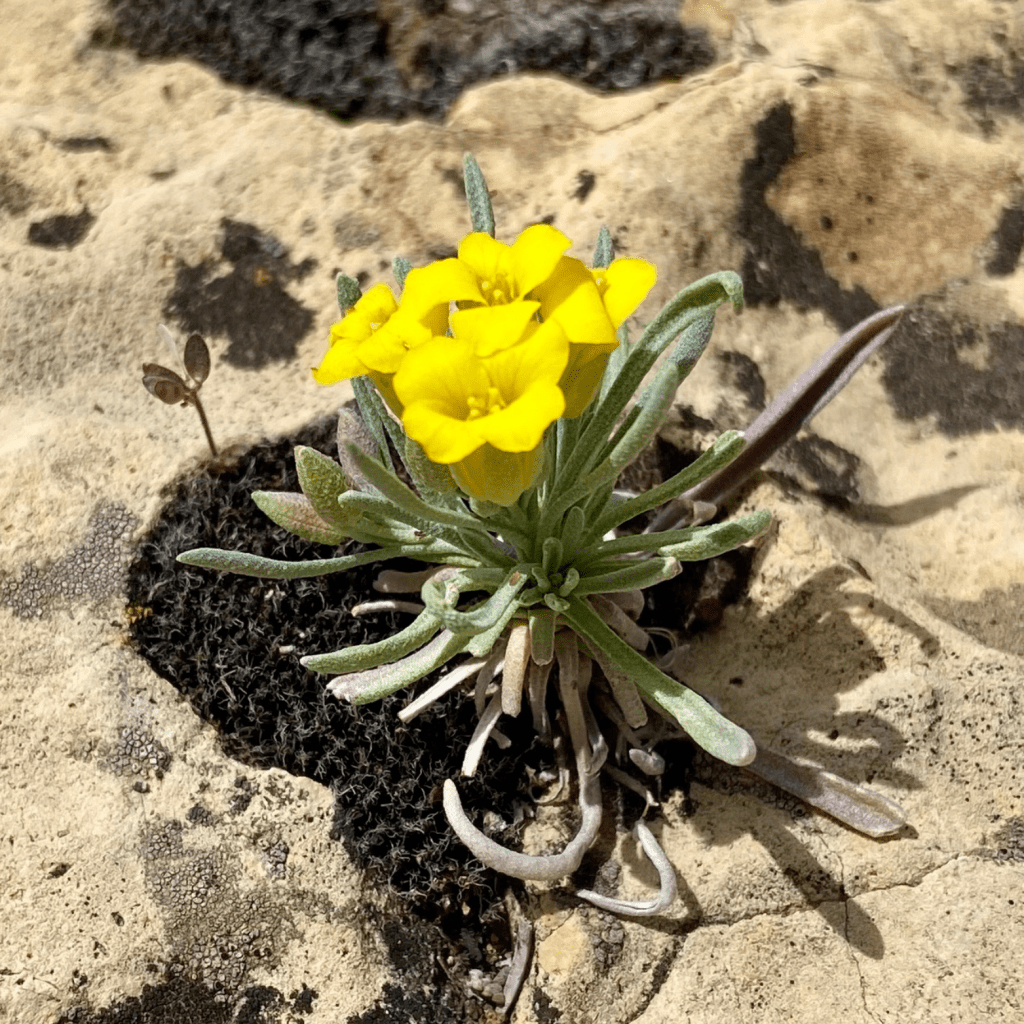
Emerging from the crevice—
yellow.
I admire the Painter through the painted and wonder at the Breath and the breath it takes to stay, in this place,
alive.
Four open cups lifting from a seam no wider than the edge of my thumb, petals folded back shamelessly in the morning light.
I lean so close I can smell the yellow. Or is that the bone? I've never smelled either so it's hard to say.
My hair falls forward and brushes the soil, one strand catching on a blade of green— I feel like an intruder,
slowly, hooking it behind my ear, then lower my face again— this time with more care— close enough to see grains of pollen caught in the folds, gold dust gathered at the center.
Treasure left out in the open.
A bee was here.
Maybe an hour ago. Maybe it's only been ten seconds.
How long do bees stay gone? Quickly,
I peer below the bloom. Silver leaves spiral outward in every direction, coated in tiny hairs that catch dust, light, and whatever the wind decides to leave behind.
I run one finger along the stem—
green at first, then red, then pale where the shadow begins and sunlight never quite made the turn.
I guess there are things even the sun never sees.
The stem narrows, twists once, then disappears into a seam too thin for my fingernail.
Still— there it goes.
Down through lime, through grit, through powdered shell, through pockets of black soil pressed deep between layers of stone older than language.
Roots no thicker than thread find water that probably does not splash.
I sit back on my heels, dust coating my jeans, my hand still warm from the rock, and watch one yellow cup
tilt upward another fraction toward the sun.
—Iris Lennox literary pen name of Jill Szoo Wilson
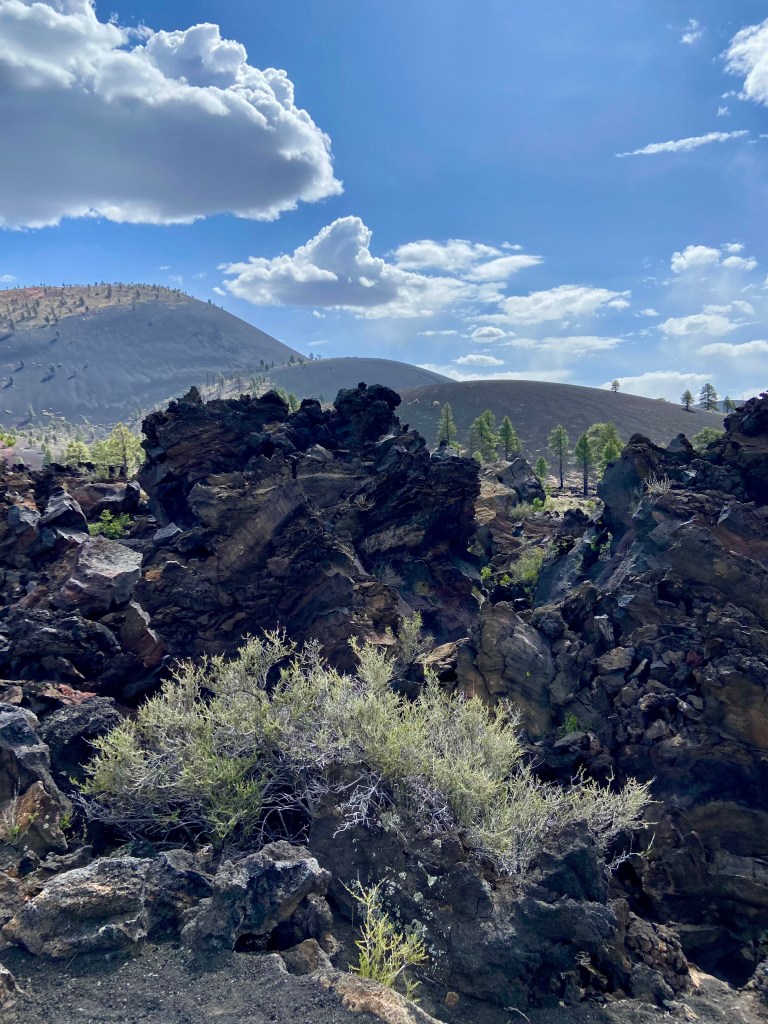
At the edges of Sunset Crater Volcano National Monument, stone lies where it came to rest.
Dark, porous, each piece holding the memory of heat, each surface fixed in the moment of its becoming.
Across the field— fragments.
Lifted, scattered, set in place by force and the long settling after.
In the slow passage of it— through wind, through cold, through the steadfast work of seasons— a different order solidifies.
Between the stones— vibrant lime green equally brilliant yellow
Pushing through fissures, rooted in spaces of fracture, drawing from elements above and below, rising from where the earth was devastated.
A bird alights on a twisted branch.
And we, who come searching for shape, stumble through the surface, reading the ground for what we imagine, while beneath our steps roots move among the stone, threading through death and life.
On the surface— rock, jagged silent warnings emanating from frozen faces.
Beneath— a rumbling of breath, forced tilling turned to growth, through time's signature shocks of courage.
The land holds both together, dividing nothing, choosing neither.
In the keeping of it, in the settling of what has been cast down and the quiet rising that follows, God gives:
what remains where it has fallen, set in the ground as it came to rest—
and what takes root within the break, drawing life from the opened places—
and healing— not as the return of what was, but as something new set among the fractures, color rising—but more, the story not only of wreckage but of life where the ground came apart.
 Iris Lennox