When I was a sophomore in high school, I had an English teacher I admired greatly. She taught me how to properly structure essays and understand the mechanics of writing. One afternoon, I was called into her classroom to work on an essay she had given a failing grade. I was flummoxed by her judgment in the moment and let her know.
“You have to learn how to do it correctly before you can break the rules of writing. Right now, we are learning the right way.”
A couple of years after I graduated, I went back to visit her. We remembered that moment together, and I thanked her for the discipline she forced me into.
While I’m grateful for that lesson, it isn’t what I remember most.
The treasure I carry from her is this:
“Don’t ever justify yourself in writing. Don’t say ‘I think’ this or ‘I believe’ that. Just say what you mean and move on.”
I’ve written that way ever since.
For me, at fifteen, her advice was revolutionary. Girls are raised to be nice, to soften their language, and to defer to more established voices. Truth is often framed as something to be approved before it can be spoken.
I give this advice to every student who comes to me in the writing center or in class, and I feel a special conviction for it when I’m speaking to young women:
Write the truth. Stand behind it. Don’t justify your own thoughts.
At some point, you learn to recognize the difference between a sentence that is reaching outward and one that already says what you mean, in confidence. You can feel it when it settles, when the words hold their weight and don’t need to be subject to equivocation. That is the place to write from. Not as a performance or a plea, but as a statement. Something known, something claimed, something set down with the full understanding that you might change your mind tomorrow or next year, but for today, this is exactly what you meant to say.
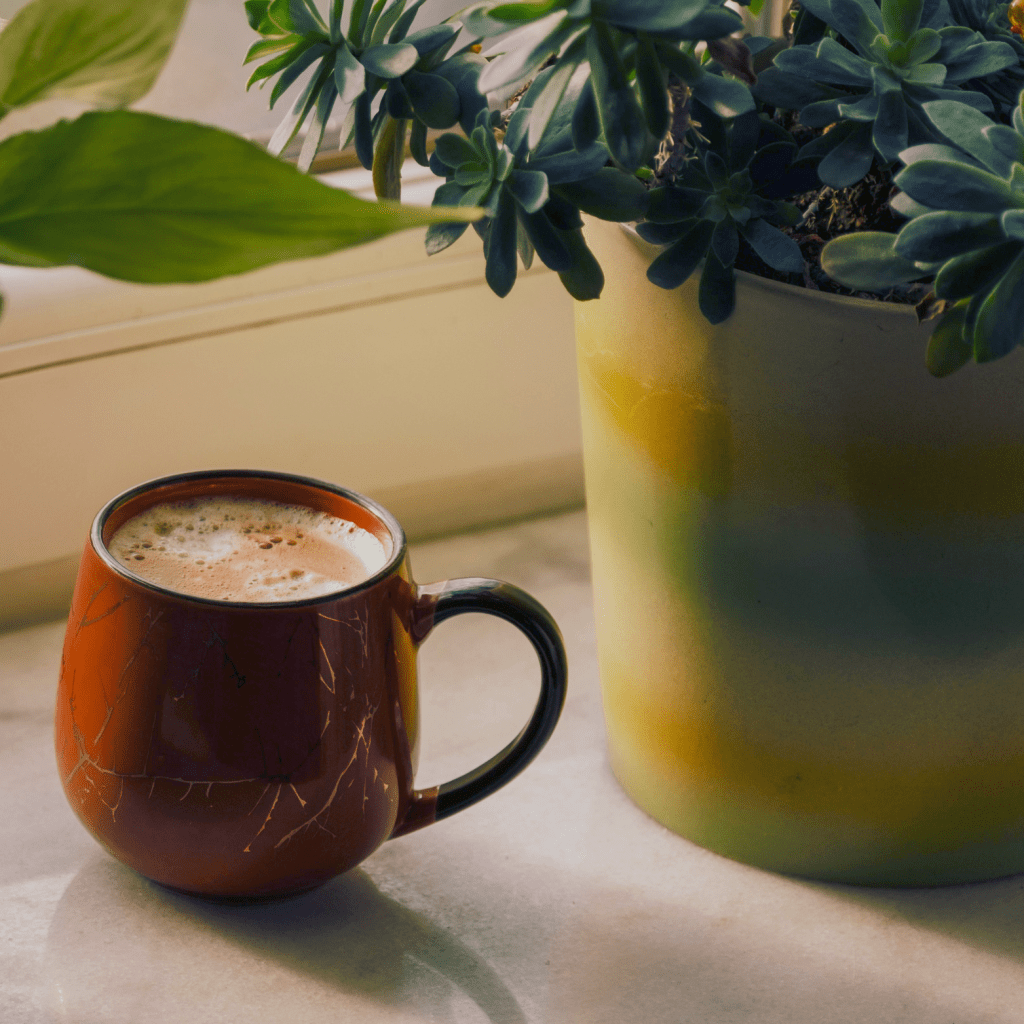
The morning sun draws itself in lines across my hand as I lift the shades. Three succulents on the sill squint and awaken.
I fill the kettle with filtered water, set it on the stove, and wait as heat gathers, quietly like the introduction of a song before the singing begins.
I scoop the grounds into the press— piñon nut coffee from New Mexico, dark, resinous, faintly sweet, holding desert sun in its edges.
The water stirs before it speaks. I watch the surface tremble, then rise into a low, certain boil.
At the window, my black cat claims his post. A squirrel meets him there, small hands braced against the glass. They study each other as if to ask, "Oh, just you? Again?"
In the living room, my white cat stretches long across the rug, pressing herself into the day. A small felt cat rests beside her— a careful replica, stitched into stillness.
The kettle calls me back. I pour.
Water meets grounds, and the air deepens— coffee blooms, expands, releases what it has carried.
I stir once, twice, set the lid, and press the timer: four and a half minutes.
I lean into the counter where the sun has already shifted.
Steam lifts from the press, moves through the room beckoning even the walls to wake.
The squirrel disappears. My black cat stays, newly enthralled by a robin hopping through grass.
My white cat settles beside her smaller self. They rest in the same light, one breathing, one not.
The timer sounds. I press the plunger down, slow, steady, feel the quiet resistance give way— a practice in patience amid anticipation.
I pour the coffee. I lift the cup. I take the first sip.
Another morning where God makes morning and succulents and sunlight and cats,
As he leaned down toward the sand, his knees creaked under cotton trousers and then grew quiet again.
Kneeling, he sunk his finger between a million grains to write a message there— first a W and then an H, followed by a Y?
He drew a circle around the word as though the spelling alone lacked power to catch the eye of anyone who might be qualified to enter the quandary with him, for him, take it from his hands, lift the weight, and carry it away.
His hair used to be black— until it was grey— and in the wind that hovered above land, after being cast from the sea, his curls lifted and fell like waves, answering the whims of the moon and gravity.
He placed his hands on top of his thighs and stood, once more facing the mystery of tossing foam, his question scrawled below and below— in the center of himself— doubt churned under a stomach filled with acid and disaster.
Like bricks, a collage of faces, a map filled with places, melancholy traces, unending races erected a wall inside his soul too high to climb, too wide to choose whether left or right might end the mounting fight.
Hiding in plain sight, he felt alone until he was not— she stepped in close from a shadowy distance to share his pool of light, breaking through the clouds, illuminated by the night. The two stood staring, astonished—
“How did you find me?” he asked— she had no certainty to give. “I don’t know,” was all she said— he brought one hand up to his mouth as though to stop the words from coming out. “I needed to be found.”
They stood above the crudely scribbled “Why?” and respected its presence as a minnow respects a shark. However, they refused to bow their heads in reverence for the question and, instead, they walked together hand in hand, and waited for answers to roll in with the tide.
Ask the old ones. Not for stories— for dates, distances, what came first and what followed.
Has anything like this happened before?
A people hearing a voice from the middle of fire and continuing to breathe after the sentence ended.
Fire does one thing well. It finishes what it starts.
Yet there they stood, faces lit from below, listening to licks and flares carry meaning without turning kindling to ash.
Or this—
a nation taken out of another nation, not quietly, but with signs that carved faces and covered the sun, by a hand that did not hide itself, with a kind of persistence that left artifacts in places and on the skeletons that witnessed it.
Ask Egypt, if ruins could answer.
Ask the sea, which briefly agreed to try on the accoutrements of land and then returned to its original fashion.
They were shown these things so they would know— this is how the account records it.
Not suspect. Not wonder.
Know that the voice was not one among many, not a possibility, a debate between equally convincing objections.
Above, below— no second version waits to be discovered later.
This is the claim as it has been carried forward.
So they are told to keep it.
Not out of fear, though fear was present. Not out of habit, though habit will come.
Keep it so that when their children ask what happened in those days, they will not offer a softened account.
Tell them they heard something that should have undone them and did not.
Tell them they walked through what closed behind them.
The builders understand the angles— how weight settles into a beam, how a line must lean before it can stand.
They take the time to dream, to envision, to let something unfinished sit beside them like a quiet companion.
In the late hours, when the world settles into dew and the last light leaves the window, they see it— not yet formed, but certain enough to return to.
They move toward it slowly.
Hands learning the material— the first press too hard, the surface pushing back, then giving slightly under the thumb.
There is a patience to it— a willingness to begin again without pretending that nothing failed along the way.
And when it sits just right in the place where positive and negative space hold one another— where the weight rests without shifting,
when something rises that did not exist before,
they step back grateful to recognize it—
not as completion, but as process and maybe cohesion.
Something new to sit beside. Something to enter.
Those who tear down move in starts.
They do not linger in spaces where people or places or ideas are becoming.
They look for structures already standing and rest their heads against pillars—cracked, flaking at the edges— trusting what still holds to hold for them.
Their attention sharpens there— at the point where structure meets strain, where something held together might give way— a thumb pressed once at the weakened place.
They have no questions— not how it was made, not why.
They do not stay long enough to understand what it required to stand at all.
Instead, they borrow from what surrounds them— picking up a word already spoken, wearing it as if their name were stitched inside,
and hold it just long enough for the next voice to take its place.
They wait for the world to hand them a reflection they can accept without question.
And while they wait,
they pull—
at the edge, where the fabric thins, at the seam where threads begin to separate,
at the place where something is most alive and therefore most vulnerable.
It does not take long.
What took time to imagine, to hold, to bring into form—
can be undone in a moment— a shift, a break in tension— and it gives.
Surrounded by air and invisible strings attaching to all corners of the universe, there lies a star in the sky. The star’s name is Vincent, his moniker bearing the stamp of the famous painter on Earth to whom his mother was introduced when one of his paintings was lost in space and drifted across her gaze.
Vincent is lazy, and his breath is a series of inhalations and exhalations shaped by boredom. He has learned not to expect entertainment from his fellow floating orbs. The splendor of their illumination is juxtaposed by their inability to sing or dance or, in any way, delight his fancy. They lie scattered across the galaxy, telling stories about the things they’ve never done, the places they’ve never been, and the memories they’ve never actually made.
The sky is not liquid, but it is still. Except when comets come screaming past their stuck counterparts, or when a star burns out and drifts away, movement is not allowed. Change rarely occurs. Vincent is fixed in a fixed state, and he has given in to the stuckness of his existence.
Vivienne is newer. Relatively new. She has not yet lost the fervor of her “what if” and dreams of destinations beyond the darkness and points of light by which she is surrounded. Vivienne is vivacious and full of wonder. Her curves have not yet been chipped away by the chisels of time or NASA’s rumbling past her looser rocks. She is intelligent, bright, an artist at her core who does not spend time lamenting her lack of limbs. Instead, she fills the sky with her songs and laughter and tells stories born in the dreams she has when she closes her eyes to sleep.
One day, a spacecraft flown by human hands nicked the side of Vincent’s ribs. It was clearly an unintended greeting, and it caused Vincent a lazy amount of consternation.
“The NASAs don’t understand space, am I right?” he dribbled out sarcastically as his body reacted to the impact, shifting ever so slightly to the right.
As his roundness rotated by infinitesimal degrees, Vincent suddenly saw a new perspective. The view he had held for centuries had been just slightly off to the left. As his eyes adjusted, he whispered into the darkness, “What the—”
Newness.
Vincent shook his head and closed his eyes. Then he opened them again, trying to adjust his vision. A bit near-sighted, he had to refocus once more. When his eyes opened the second time, his heart filled with wonder. He could see stars he had never seen before. A draft brushed against his back in an unfamiliar way. The stars newly visible to him were sleeping, ignoring the NASA that had just shifted his perspective.
One of the stars he had never seen before was snoring.
As Vincent would later learn, the snoring star’s name is Dick. Dick, known as Richard to those with whom he is not well acquainted, wears a smoking jacket and smokes a pipe in his mind. He pontificates on matters such as the romantic lives of the earliest stars and prides himself on knowing intimate details about the moons surrounding each of the planets.
For centuries, a rumor circulated that Dick once sent notes of love and longing to Europa. Europa, one of Jupiter’s moons, has a voice like a hushed flute, high, soft, arresting. Dick’s love notes were legendary, poetic, stirring a romance so engaging that hardly any stars within several light-years slept during the centuries of their affair.
Until Europa broke his heart by falling in love with another of Jupiter’s moons, Ganymede. Since then, Europa and Ganymede have whispered to one another, keeping their romance private. Ganymede is not nearly as showy a suitor as Dick.
And so, the sky lost its drama. It returned to the mundane: blackness, occasional pirate songs, the same stories told to the same stars, over and over again. The order of the sky began to resemble the Moose Lodge from The Flintstones, the same people, the same stories, the same faces.
Until the gods allowed a NASA to nick Vincent’s side.
That small disruption sparked the possibility of new sightlines, new encounters with stars whose old stories would be new to him. When two personalities meet for the first time, it is not only their lives that shift. Those around them feel it too. Energy renews. Sometimes for the better. Sometimes not. Always for the new.
Vincent widened his eyes and took it in: the lighter shade of black in the upper right corner of his vision, the way surrounding light now touched the edges of his face, the unfamiliar stars whose voices he had heard but never seen.
A sense of wonder filled his old heart. Something stirred inside him. It sounded like a triangle tapped lightly, like Tibetan bells ringing, like a finger drawn slowly across the surface of a gong. A deep, peaceful awareness of life, and his aliveness.
Vivienne yawned, long and breathy, and opened her eyes as a NASA sped past her head. She blinked once. Then again.
And in that second blink, she became aware of two eyes she had never seen before.
They were looking back at her.
She blinked again.
Vincent wanted to speak, but instead, he blinked too. Four blinking eyes, fanning something into flame. A steady fire.
From that moment until now, Vincent and Vivienne hang on opposite ends of the sky. They do not speak. They do not sing. They do not send notes on the backs of passing NASAs.
They hang, separately, gently, precariously, held by invisible strings attached to all corners of the universe.
And they blink.
And open.
And blink.
And open.
They cannot move toward one another. They will never touch the surface of each other’s being. Even so, they remain connected, by the turning of Vincent’s perspective and by the quiet recognition that passed between them.
"When someone shows you who they are, believe them."
I'll try.
Believe them the first time, before an accumulation of words or glances offerings and reactions— retractions or silence.
I'll try.
But what about trust?
Projection can be a weapon unfair and blind but so can trust. So, what do we do with trust?
We've been told: trust but verify give to get extend until there is a reason
not to.
Surely, to give is to offer your vulnerability to open with an invitation to see— the world through safety and people through intimacy.
Exhale.
But what if they stab— not with iron but with words or quiet or gossip or lies?
A lesson wrapped in the progression of choosing to trust and learning wisdom.
And what of the mirror? Is it still true that we are who we are every time? The first time?
Time here is brief. Experience anything and you'll see— they and you and we can be the same the first time, the second time, and again until the end, or
we and you and me can become.
So, believe who they are but be gentle, too. They can change.
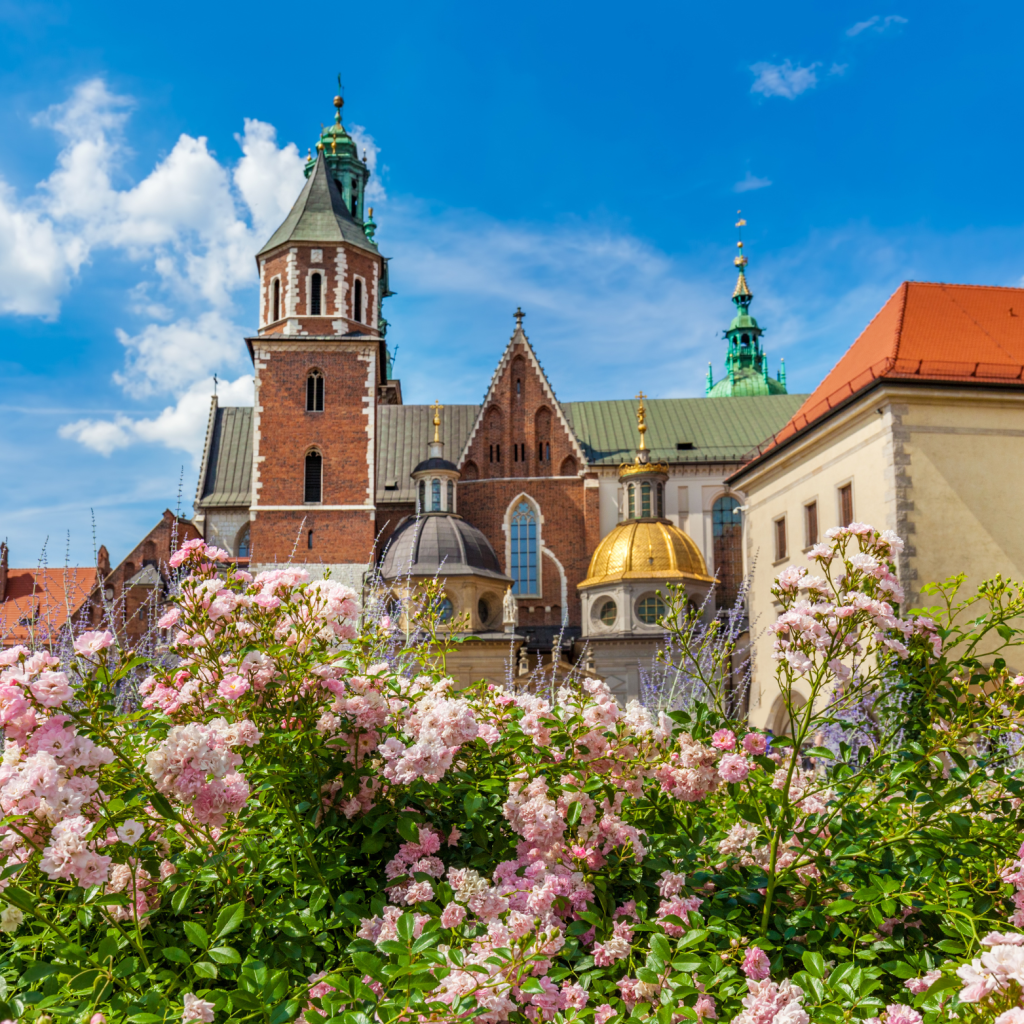
In Krakow, under the mutual agreement of cobblestones and centuries, I stopped for lunch because hunger, like history, does not wait for proper context.
A restaurant offering pierogi seemed more convincing than the Hard Rock Cafe, which had installed itself with great confidence in the wrong century.
A young woman greeted me.
Blond hair, a practiced smile, the unmistakable economy of someone who has already lived this day once before.
We spoke.
Nothing of consequence— which is to say, everything necessary.
And then the thought arrived with equal parts whimsy and angst:
why are our lives intersecting here?
She will remain— serving, walking, returning, knowing which streets curve and where to her laundry.
I will leave— to my kitchen, my coffee, my purple toothbrush, which performs its duties faithfully without ever asking where it is in the world.
Meanwhile—
each of us continues as the center of a system no telescope has fully mapped:
families in orbit, memories in storage, songs that arrive unannounced, conversations that replay with slight editorial improvements.
Entire infrastructures built without engineers.
Whole histories proceeding without witnesses.
We sit across from one another for less than an hour— long enough to exchange currency, not long enough to exchange lives.
She brings the food. I thank her.
This is recorded nowhere.
And yet—
somewhere in the vast accounting of everything that happens and is immediately forgotten,
our meeting persists as a minor, precise event—
like a crumb on a table, like a word almost remembered, like the brief and mutual illusion that we have interrupted each other’s lives.
Meanwhile, her life continues in all directions.
Mine does too.
Both of us, at intervals, certain of our centrality.
Both of us, entirely surrounded by things we will never know.