It begins with a question as most things do— standing still and not understanding and then, why? Sometimes, how?
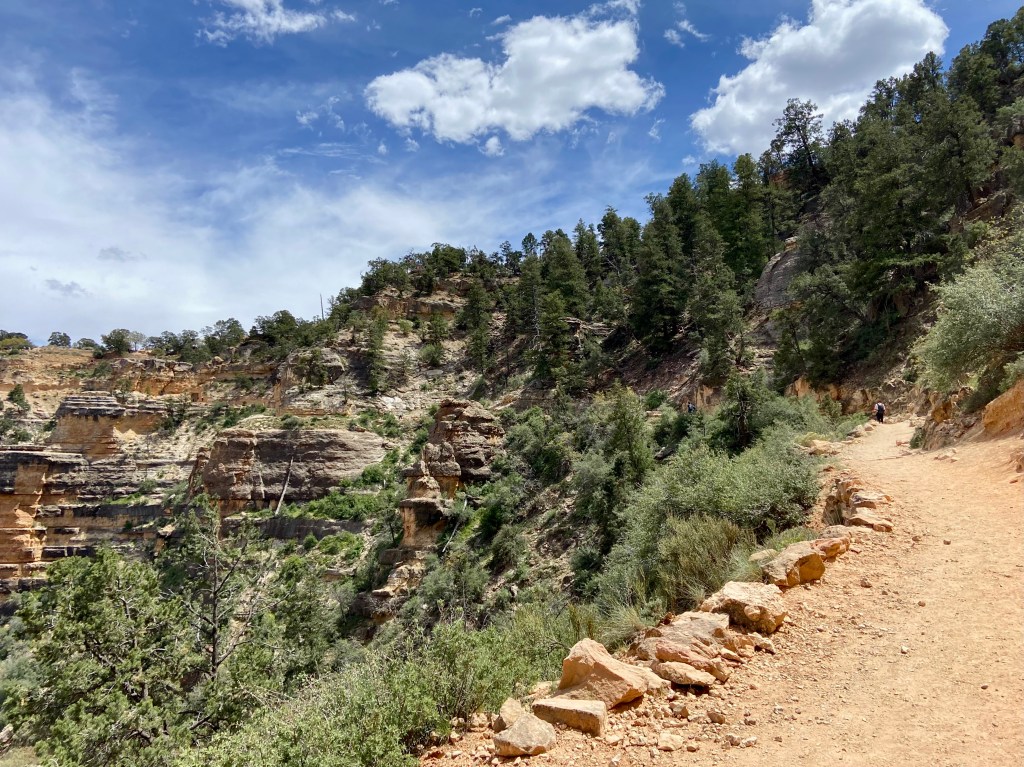
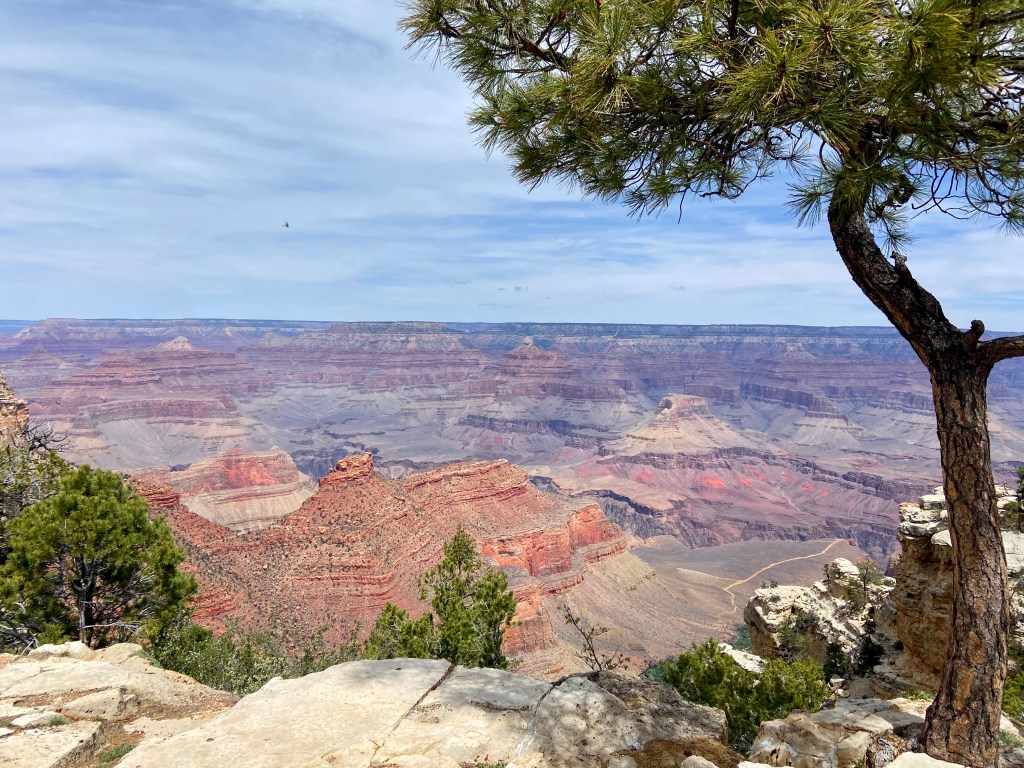
Before me— bands of color arranged with conviction, clearly the earth has already decided what each layer means and is in no hurry to explain itself.
The greatest beauty rarely does.
Someone wearing a mud-stained hat and pants that swoosh when he walks has named them. Kaibab Limestone at the rim. Toroweap beneath it. Coconino Sandstone—once dunes, moved grain by grain under a wind that no longer blows.
This was a desert, then a sea, then something in between that does not translate cleanly into a single word.
Mystery mingling with majesty.
I look at the red— Hermit Shale, perhaps— soft once, willing to be shaped, now holding its position like a memory that has settled into fact.
Further down, older still, Vishnu Schist— stone that endured heat, pressure, nothing erased, everything contained and displayed— a record I cannot read, written in a language I have not learned. But I recognize this:
Resilience.
Two billion years, give or take. The number means nothing to me other than "Wow."
The mind attempts a comparison— a human life, a century, a civilization rising and falling somewhere between two lines of rock.
It does not help.
Below it all, the river— still working. Still carrying what it has loosened. Still, rippling with stories that continue.
The Colorado meanders. It does not rush for anyone's benefit, the way an old man has learned to slow down. It cuts because that is what water does when given time and a way through.
I find myself asking questions that have no immediate use.
Who first noticed that this was once sand? Who looked closely enough to see ripple marks held in stone?
Who intuited that knowing this made the view larger and more intimate at the same time?
The tree beside me leans into its own inquiry, roots set in an answer that does not require words.
Its needles move in present tense.
No concern for uplift, erosion, continental drift— that long, slow negotiation between plates.
As for me—
I want to know how something becomes— how pressure instructs what to keep and what to release.
How absence— of water, of time, of witness— enters the record.
Curiosity does not simplify. It accumulates.
Another name. Another era. Another process quietly at work beneath the visible.
And suddenly the canyon is no longer wide.
It is specific.
I stand at the edge with a growing suspicion—
that beauty increases with knowledge,
and that time, unmeasured and indifferent, is not empty distance but the most patient artist I have ever encountered.
The photo is courtesy of Pixabay because my iPhone 12 didn’t quite cut it.
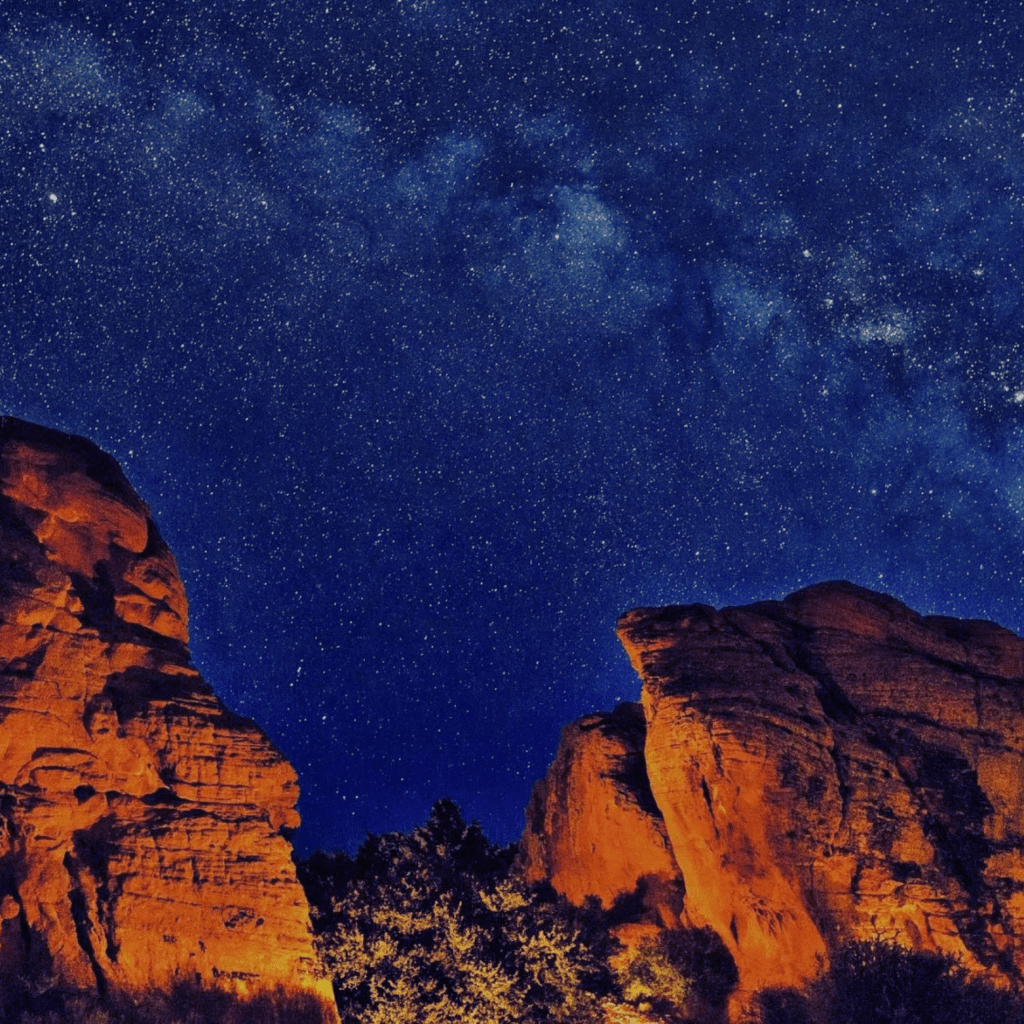
Night settles over the desert and the sky draws back like a curtain on opening night.
Stars peer from the wings and then enter from every direction— innumerable, but every one commanding attention.
I lay my head on my daypack no longer needed because . . . well, night . . . light arrives from distances I cannot measure, each point steady, each one burning fiercely but without sound.
Around me, the land falls into a hush that is greater than quiet— stillness.
Stone cools. Air thins. The last traces of what the sun gave rise from the ground and into the sky, probably trying to join in the celestial production.
Lucky.
Here we are in the chaos— for a time— but above, order.
Not scattered, not random, but placed.
Line after line, field after field, a vastness that neither moves toward me nor recedes.
Tightrope walkers, all of them. The theatre? Or a circus? None of my metaphors matter.
Every person stops— and you can understand why
why the eye lingers, why the body quiets, why the heart bends and breaks and mends and unfolds all in one inhale.
The sky doesn't look back. It doesn't need to. There is nothing we can give to it except wonder.
Brilliant, unreachable, unaffected.
And still— it draws.
The ground beneath me, the sky above me, the measure between them—
all set in order, all kept in place, all speaking without voice.
In the keeping of it, in the placing of each light and the distance between them, God gives:
what is set in the heavens and seen,
what fills the eye and commands attention—
and wonder— not as something given,
but as what rises in us at the sight of it,
returning, not to the sky above, but to the One who directs its course.
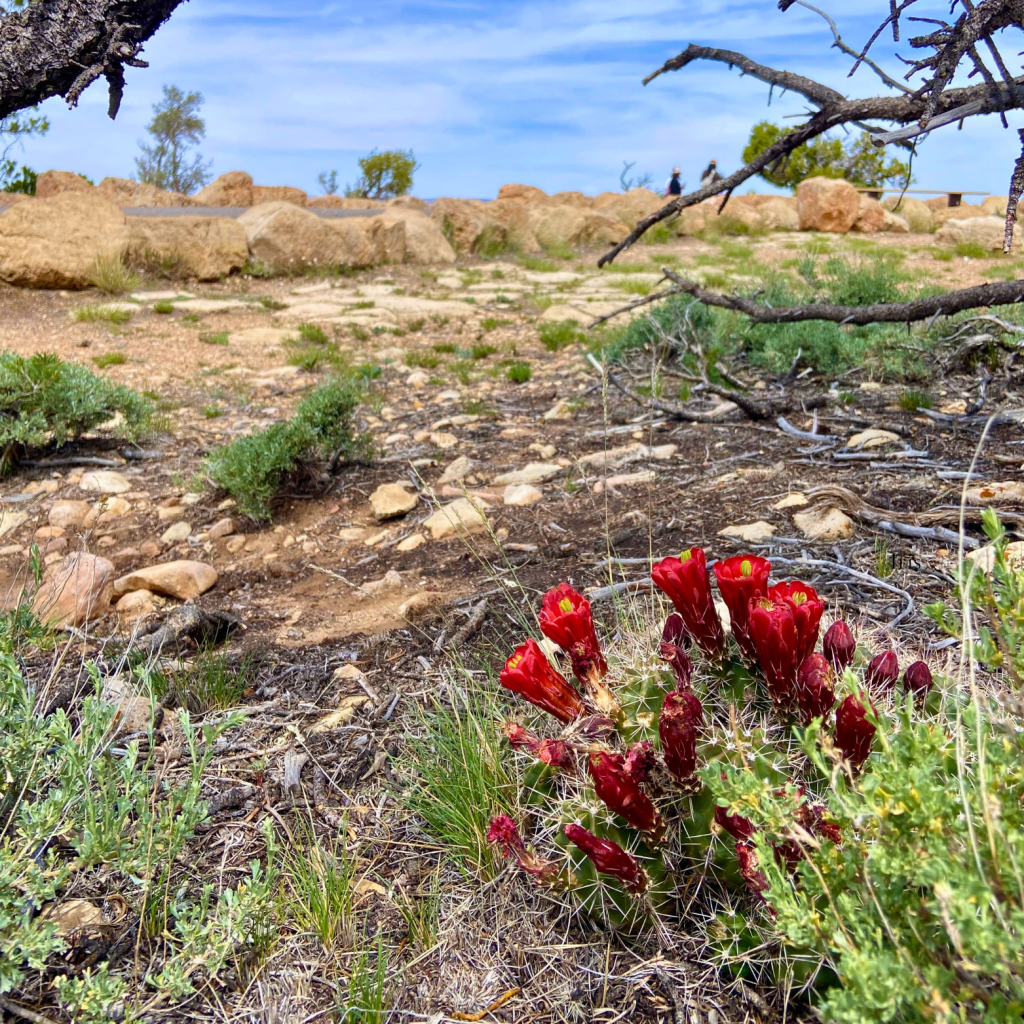
At the rim of the Grand Canyon, Without widening, announcing, or calling the eye— it gathers.
Close to the ground, armed at every point, it holds what little comes— light taken in, water kept, time pressed inward until it thickens.
In the long discipline of it— through heat, through absence, through the steady refusal of the earth to give— a form is made that does not bend outward.
It keeps its boundary.
And then— at the very places of defense— a breaking open.
Not of the structure, but from within it.
Red, rising at the tips, petals pushing through the same points that once kept distance, softness unfurling precisely where sharpness was required.
The form remains— spine, circle, the careful architecture of survival—
and yet, from that same design, another shape appears.
On the surface— color, sudden, plain to the eye.
Beneath— a long keeping, a measure held without witness, without haste.
The cactus carries both at once, dividing nothing, choosing neither.
And we, drawn to what widens, what opens easily to us, pass by— standing at the edge of what is vast, naming that grandeur, and missing what has taken form among the spines.
In the keeping of it, in the exactness of boundary and the timing of its release, God gives:
what holds its form, what keeps its boundary under pressure, without collapse—
and what opens only where it has been formed to open,
until what has been gathered in silence appears, not everywhere, but precisely—