Tag: Observation

  • The Museum Bench


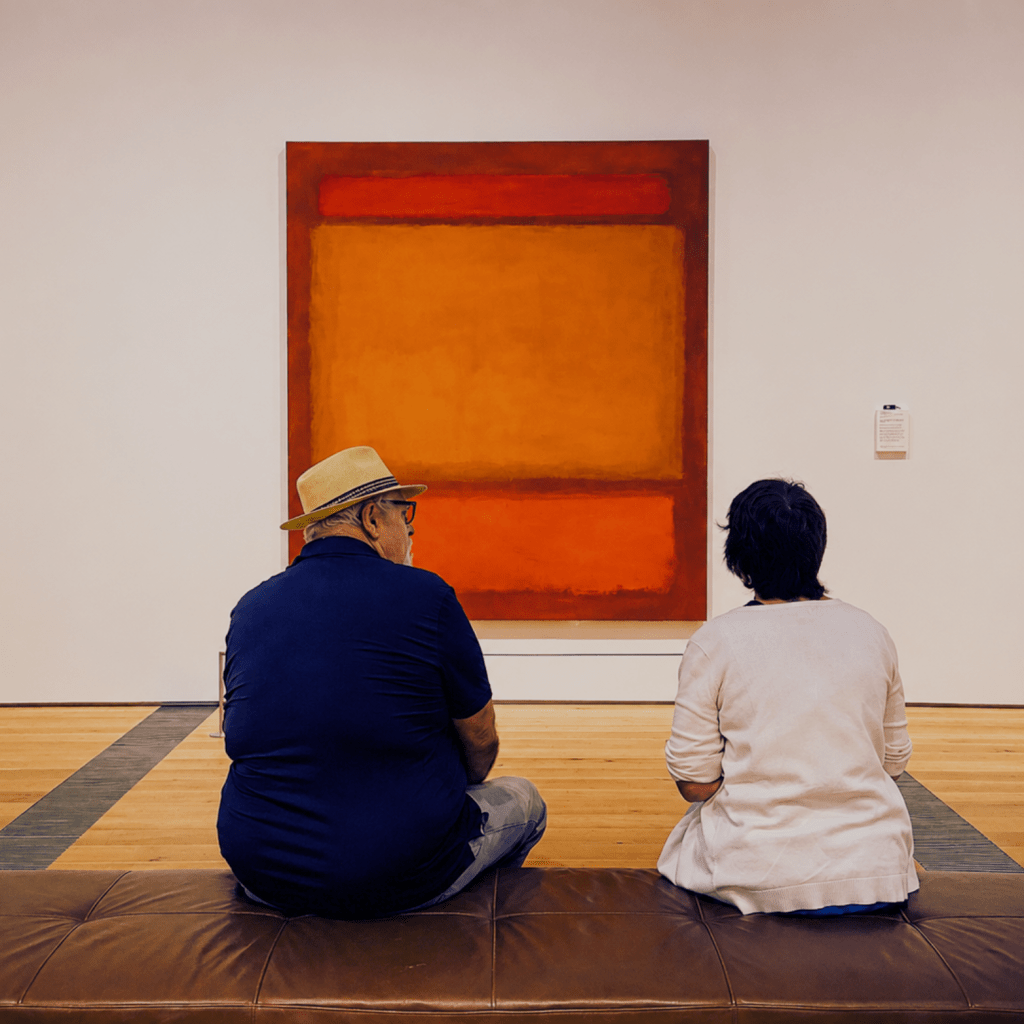
    I took this photo at the Saint Louis Art Museum. The poem gathers moments from several galleries rather than describing this exact scene.

    The bench waits
    in the Saint Louis Art Museum,

    brown leather
    stitched into broad squares,

    creased by coats and palms,
    its low frame
    square to the wall.

    A woman sits first.

    Across from her,
    a field of yellow wheat
    leans beneath a green sky.

    She looks at it
    until she is eight again,

    standing beside her father
    while grasshoppers strike
    the cuffs of his faded blue jeans.

    A boy hops and then runs in
    dragging one shoelace.

    He climbs beside her
    and points at the clouds.

    That one looks angry.

    His mother reads the plaque
    and tells him the painter
    died in 1890.

    The boy tilts his head to the right.

    He was angry that he died?

    At the other end,
    a man removes his glasses

    and polishes them
    with the corner of his white shirt.

    He tells me he has come
    for the renaissance,
    That's three rooms away,
    I say

    but he stops here.

    The woman beside him
    is wearing a red blouse and a black skirt
    and a perfume
    that I remember.

    He must remember it too.

    He steps toward her.

    Neither of them speaks.

    Their sleeves touch once
    when they lean forward—
    red and white
    and so pink.

    Across the room,
    a man takes a picture
    with his phone.

    The painter’s thumbprint is here!

    His voice echoes
    around the room,
    and I try to remember
    the last time I was that excited

    about anything.

    The guard walks past
    with his hands behind his back.

    Another bench
    holds a couple in silence—
    the kind of silence
    that twirls her hair
    and swings his ankle,

    two men whisper in the corner,

    a question about God,

    half an argument,

    and a truce
    after one of them says,

    My wife loved this one.

    After a respectable time,
    everyone rises
    like popcorn—
    not like a wave.

    The paintings remain stoic
    or maybe they sigh
    inside their frames.

    Once you're created
    in paint
    must you always be
    be performing?

    The bench where I sat
    seems to linger on the image
    I left—

    of a woman who has heard
    and seen
    and carried
    and forgiven
    a million stories
    but has no one to tell.

    —Iris Lennox
  • Route 66


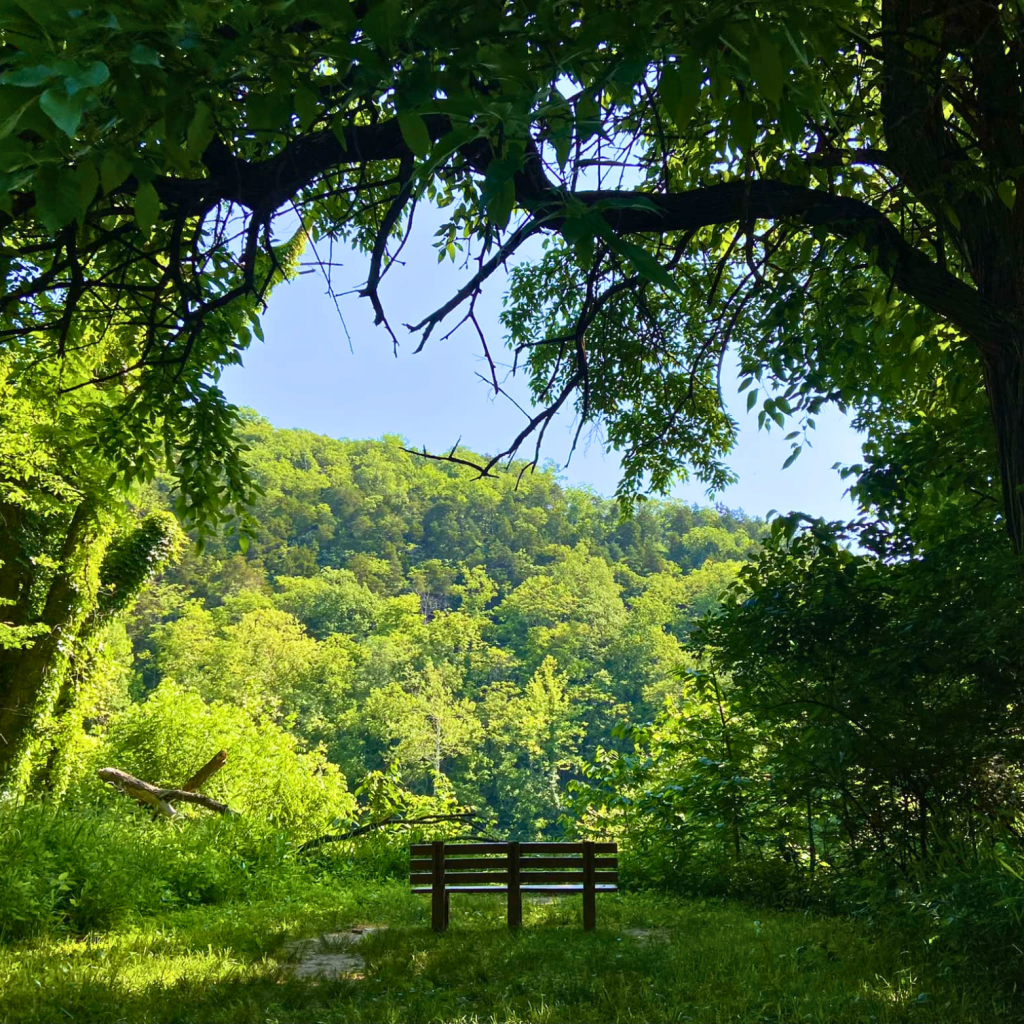
    A bench possesses very few options.

    It cannot follow the river
    when the Meramec rises beyond its banks.

    It cannot seek shade in July
    or shelter in January.

    It cannot complain about mosquitoes,
    cottonwood fluff,
    fallen branches,
    or the weight of snow.

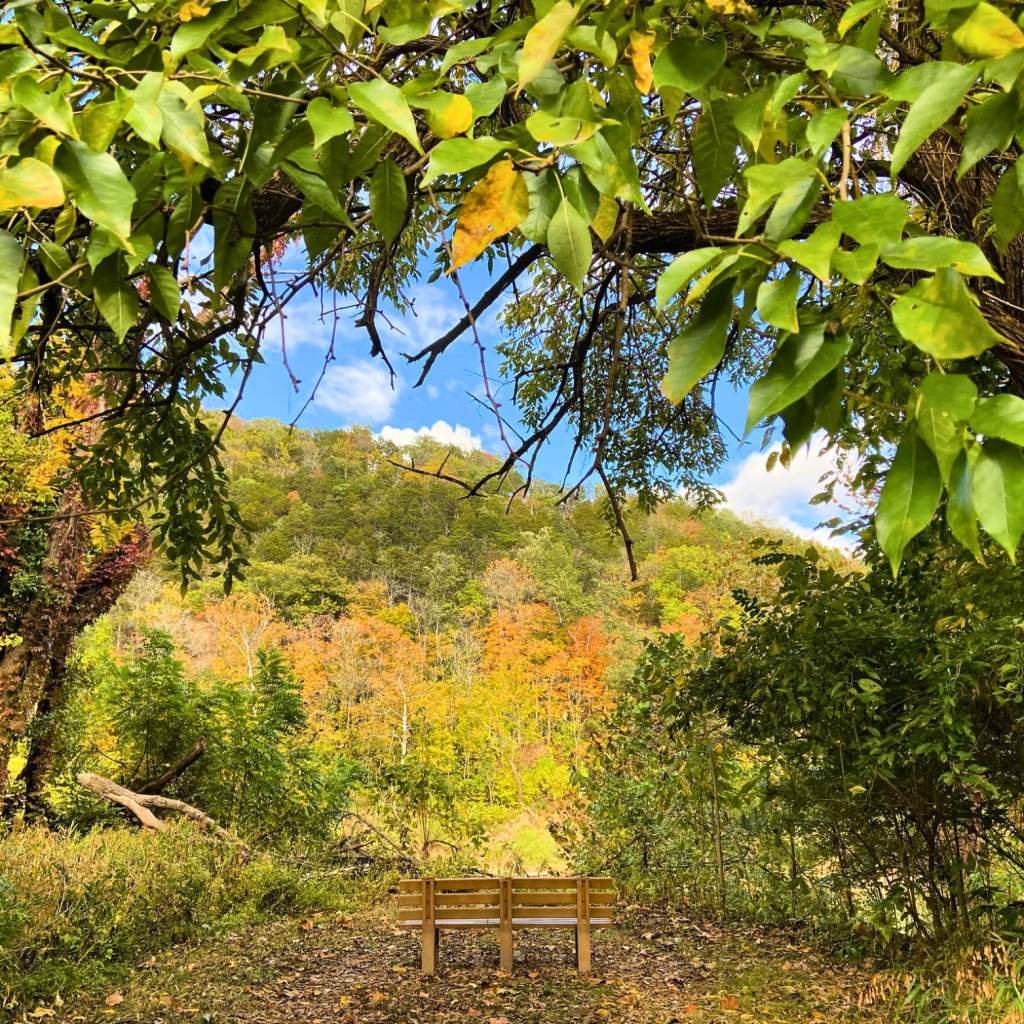
    Someone chose its view:
    One sliver of sky.
    The trees.
    A long curve of water
    moving northeast toward someplace else.

    When I first photograph it
    in Route 66 State Park,
    I do not yet know we will spend
    a year together.

    I am only walking a trail.

    The bench is only a bench.

    The river is moving quickly that day,
    green with spring runoff.

    Leaves unfold overhead.

    Somewhere beyond the trees,
    a train sounds its horn.

    I take a photograph and continue on.

    Then I return.

    A few days later.
    A few weeks later.

    Again.

    Again.

    The river lowers.
    The air grows thick enough to wear.
    Vines climb fallen tree trunks.
    Grass thickens.

    The air hums with insects
    so determined in their purpose
    they seem incapable of doubt.

    Autumn arrives carrying its familiar tools.

    Gold.
    Copper.
    Rust.

    Leaves gather around the legs
    and drift across the seat.
    The birds change shifts in the air
    and the shadows lengthen below.

    Then winter.

    The kind that introduces itself quietly at first.
    A single hard frost.
    Bare branches.
    A thin skin of ice.

    Then snow.

    Then wind.

    Then the sort of cold
    that makes a bright blue scarf question
    perfectly reasonable decisions.

    I walk a mile through a wind chill
    of thirteen below zero
    to take another photograph.

    The bench, meanwhile,
    has traveled nowhere at all.

    By then,
    a question has begun following me
    up and down the trail.

    At what point does a bench
    become an acquaintance?


    Not a friend.
    That would be absurd.

    The bench knows nothing about me.
    It cannot recognize my footsteps.
    It has never once asked
    how I am doing.

    Yet I find myself looking for it
    before I look for the river.

    I notice when a branch falls nearby.
    I wonder how it fared
    when tornado sirens blared.
    I am relieved to find it waiting
    where I left it.

    The year continues assembling itself.

    Rain after rain.

    Season after season.

    Photograph after photograph.

    One afternoon I stand beside it
    and look across the water.

    A hawk flies overhead,
    followed by a kettle of vultures,
    circling.

    "Something is about to be eaten,"
    I say out loud to no one,
    and I'm a little bit surprised
    there is no answer.

    The trees are busy becoming
    whatever comes after this.

    For a moment,
    neither of us is in a hurry.

    Above the river,
    a branch sways gently in the wind.

    And light moves across the bench
    like a hand.

    —Iris Lennox

  • Yes


    No one sees
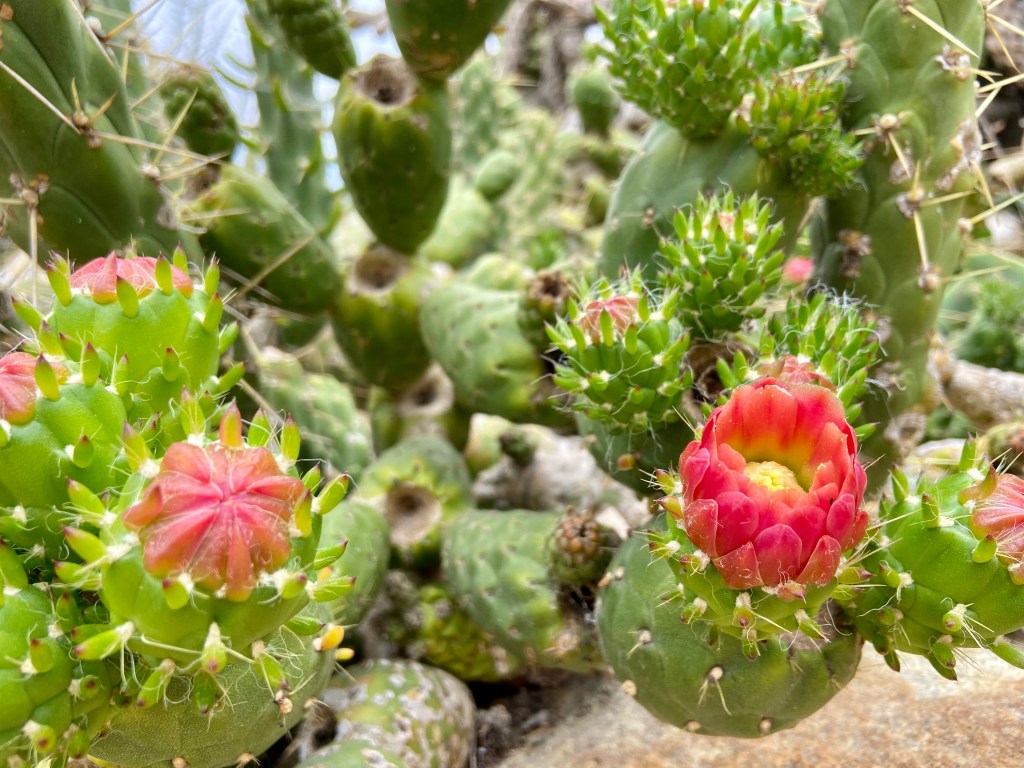
    how long the green has held.

    How it learned
    to keep its softness guarded—
    small spines at the edges,
    just enough to say
    not yet.

    There is a kind of patience
    that looks like stillness
    from the outside.

    Inside, something is gathering.
    Color pressing forward.
    A quiet yes
    that will not be rushed.

    And then—
    not all at once—

    a seam opens.

    Red, where no one expected it.
    Tender, where everything suggested otherwise.

    Not because it was safe.

    Because it was time.

    —Iris Lennox