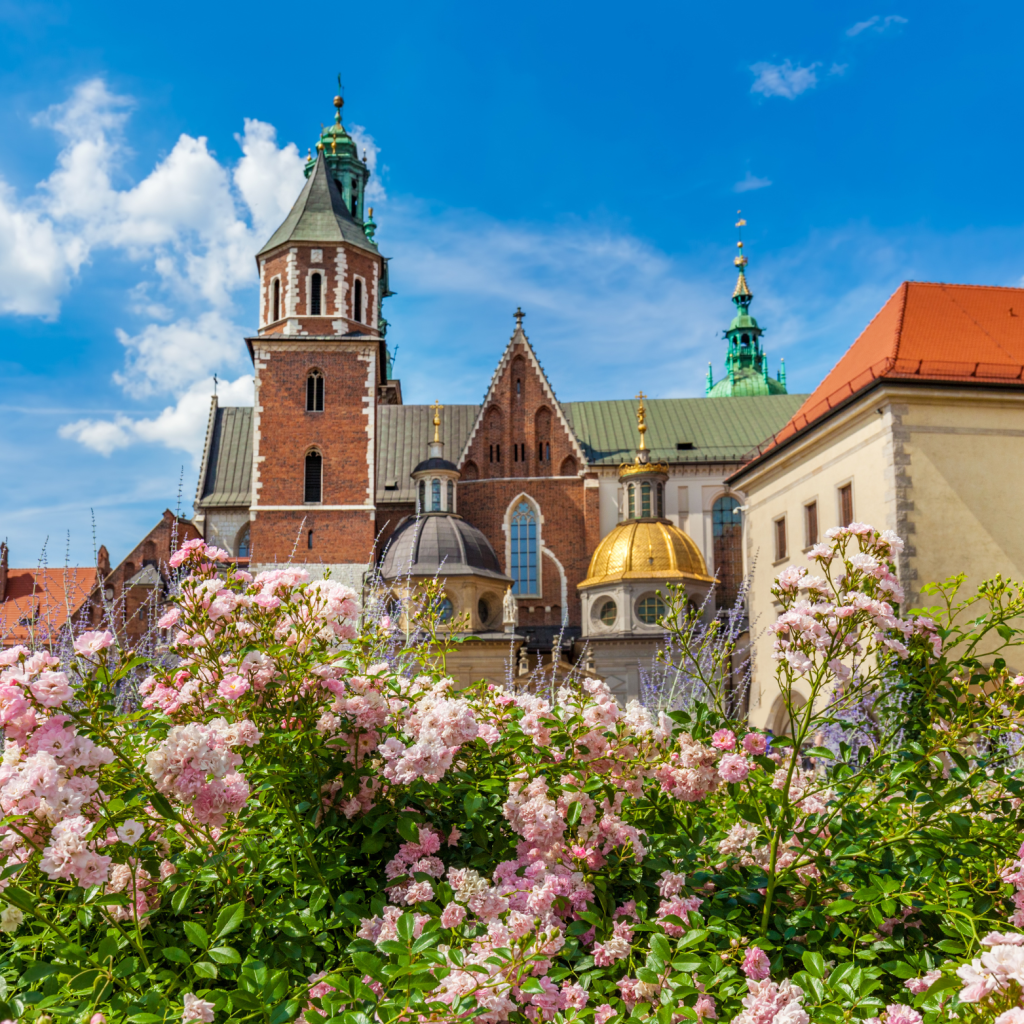
In Krakow, under the mutual agreement of cobblestones and centuries, I stopped for lunch because hunger, like history, does not wait for proper context.
A restaurant offering pierogi seemed more convincing than the Hard Rock Cafe, which had installed itself with great confidence in the wrong century.
A young woman greeted me.
Blond hair, a practiced smile, the unmistakable economy of someone who has already lived this day once before.
We spoke.
Nothing of consequence— which is to say, everything necessary.
And then the thought arrived with equal parts whimsy and angst:
why are our lives intersecting here?
She will remain— serving, walking, returning, knowing which streets curve and where to her laundry.
I will leave— to my kitchen, my coffee, my purple toothbrush, which performs its duties faithfully without ever asking where it is in the world.
Meanwhile—
each of us continues as the center of a system no telescope has fully mapped:
families in orbit, memories in storage, songs that arrive unannounced, conversations that replay with slight editorial improvements.
Entire infrastructures built without engineers.
Whole histories proceeding without witnesses.
We sit across from one another for less than an hour— long enough to exchange currency, not long enough to exchange lives.
She brings the food. I thank her.
This is recorded nowhere.
And yet—
somewhere in the vast accounting of everything that happens and is immediately forgotten,
our meeting persists as a minor, precise event—
like a crumb on a table, like a word almost remembered, like the brief and mutual illusion that we have interrupted each other’s lives.
Meanwhile, her life continues in all directions.
Mine does too.
Both of us, at intervals, certain of our centrality.
Both of us, entirely surrounded by things we will never know.
 Iris Lennox