I sit on the splintered bench
where the trail drops close
to the river’s edge,
one boot untied,
laces dark from morning grass.

The wood pricks through my jeans
only when I swing my legs
so I have to choose between
comfort and carefree—
the mosquito zigzagging
around my wrist
reminds me to
slow down.

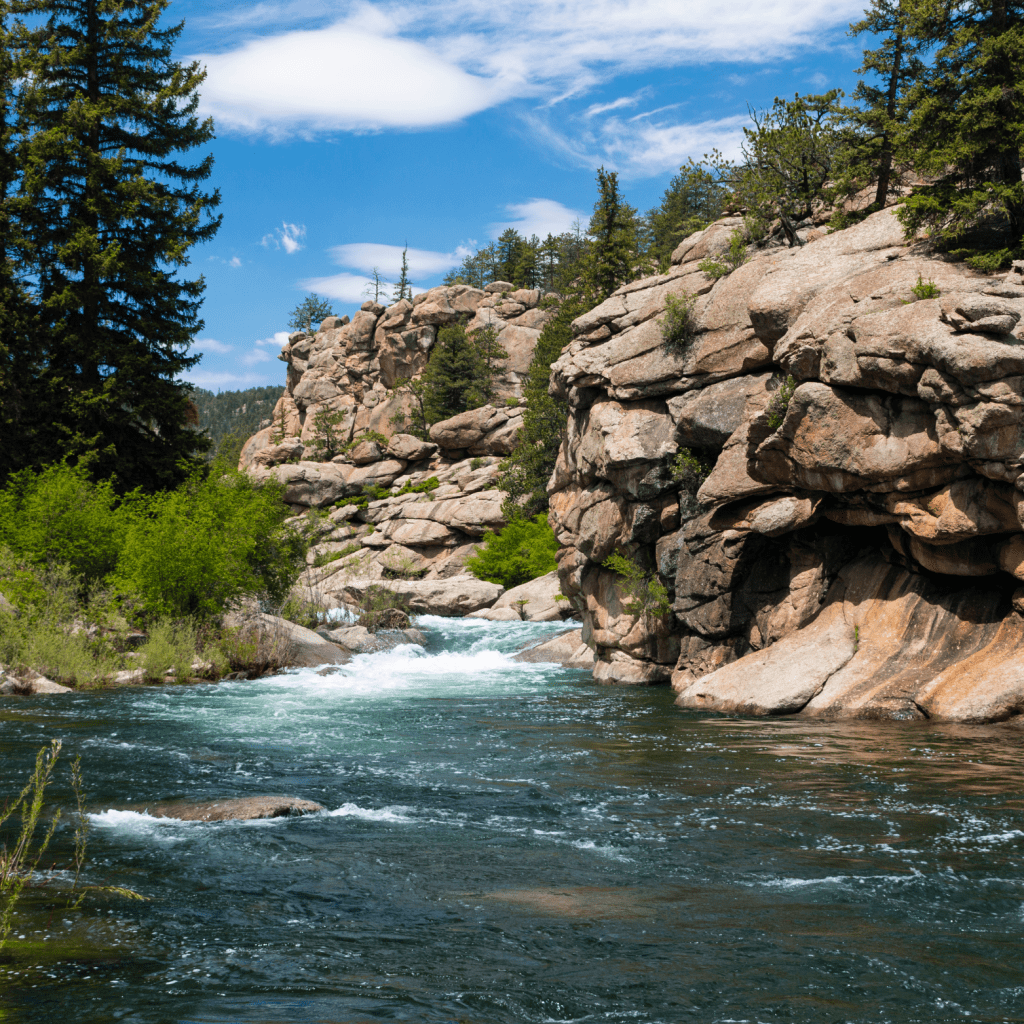
Below me, water folds over stone,
slides around a half-sunken branch,
catches for a second
on something I cannot see,
then keeps moving.

A world within a
world
within a
world.
Each with its own
beginning, middle, and
end.

I rest my elbows on my knees
and watch cottonwood seeds
land on the surface,
play Russian roulette
with the current and sometimes lose.

But sometimes they win.

There used to be an island here
but now
only swimming for fish
and food for one crane whose beak
was made for moments
like this.

Across the bank,
a sycamore leans like a dancer—
if I tried that move I might hurt myself.
But the sycamore—
graceful,
roots half exposed,
holding a wall of mud
through another season of rain.

What happens here at night?
Does the dancer feel lonely?

I run my thumb
along the groove
someone carved into the bench
years before I found it.
There used to be a heart
scribbled here.
Was it time
or circumstance
that rubbed it away?

Where do all the lovers go
who leave their hearts
on benches
in trees
and in one another's hands?

The river keeps carrying
branches, leaves, foam,
the occasional flash of silver,

and twenty feet downstream
a man in a fishing boat
has a pole for an arm,
a hat for eyes,
and a dream I cannot see—

I stay on the splintered bench
swinging my legs
watching the sunlight

feeling the shade.

—Iris Lennox
literary pen name of Jill Szoo Wilson
You might as well befriend the moon— embrace her clouded peekaboos. And music…
Receive the tune— no time to choose— alone in a crowd or no one in view. And a smell…
Wafts past your nose— what was that? Or who?
Perfume on skin or a place that you knew.
Pause.
No need to wonder— you know who that was— and who you are as nostalgia winds the second hand round.
“Time is a straight line,” said he. “It moves consecutively, watches as it goes behind and below, like walking a path that winds into— well— no one knows.”
“No one knows, that’s right,” said she. “Simply put, I do agree. But there’s no line to speak of. Time bends—not like a knee— more like a finger touching its thumb or a rainbow finding its spherical end and answering with a gentle, Come.”
Time returns to the places we’ve been.
One says, “That memory is far.” Another, “The moment is here.”
Yesterday can be set down, but the nows of that day rise from the ground without notice or sound—
to delight or confound— it depends on the seconds into which they were bound.
Moments become recollections. Recollections, seeds with a life of their own.
Promises and hope, gentleness and rage, a touch, a glance, a well-appointed room or a half-written page—
all sown into skin, finding rest in smiles and tears, repose and toil, love and loss, freedom and cost, and the way sunlight lay across the earth at the end or when it all began.
“That was back then,” said he. “That is today,” said she.
The minutes listened.
“There is wisdom in both.”
Time smiled— crouched, quiet— behind an autumn tree, waiting for the final leaf to fall.
It begins with a question as most things do— standing still and not understanding and then, why? Sometimes, how?
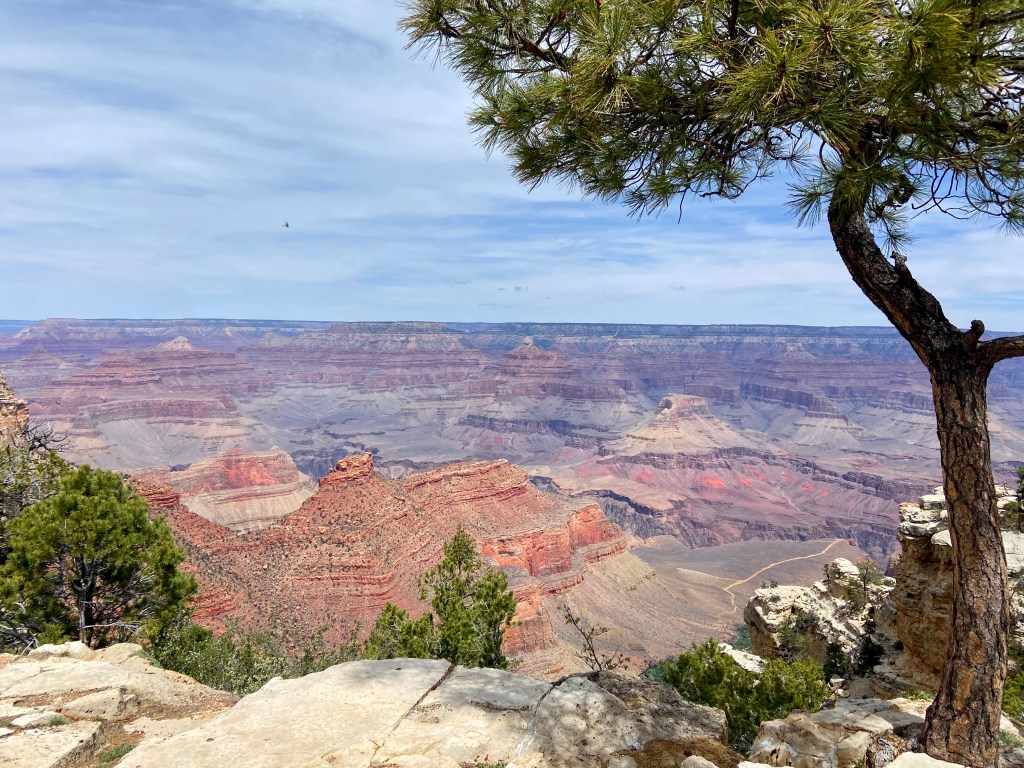
Before me— bands of color arranged with conviction, clearly the earth has already decided what each layer means and is in no hurry to explain itself.
The greatest beauty rarely does.
Someone wearing a mud-stained hat and pants that swoosh when he walks has named them. Kaibab Limestone at the rim. Toroweap beneath it. Coconino Sandstone—once dunes, moved grain by grain under a wind that no longer blows.
This was a desert, then a sea, then something in between that does not translate cleanly into a single word.
Mystery mingling with majesty.
I look at the red— Hermit Shale, perhaps— soft once, willing to be shaped, now holding its position like a memory that has settled into fact.
Further down, older still, Vishnu Schist— stone that endured heat, pressure, nothing erased, everything contained and displayed— a record I cannot read, written in a language I have not learned. But I recognize this:
Resilience.
Two billion years, give or take. The number means nothing to me other than "Wow."
The mind attempts a comparison— a human life, a century, a civilization rising and falling somewhere between two lines of rock.
It does not help.
Below it all, the river— still working. Still carrying what it has loosened. Still, rippling with stories that continue.
The Colorado meanders. It does not rush for anyone's benefit, the way an old man has learned to slow down. It cuts because that is what water does when given time and a way through.
I find myself asking questions that have no immediate use.
Who first noticed that this was once sand? Who looked closely enough to see ripple marks held in stone?
Who intuited that knowing this made the view larger and more intimate at the same time?
The tree beside me leans into its own inquiry, roots set in an answer that does not require words.
Its needles move in present tense.
No concern for uplift, erosion, continental drift— that long, slow negotiation between plates.
As for me—
I want to know how something becomes— how pressure instructs what to keep and what to release.
How absence— of water, of time, of witness— enters the record.
Curiosity does not simplify. It accumulates.
Another name. Another era. Another process quietly at work beneath the visible.
And suddenly the canyon is no longer wide.
It is specific.
I stand at the edge with a growing suspicion—
that beauty increases with knowledge,
and that time, unmeasured and indifferent, is not empty distance but the most patient artist I have ever encountered.